运营
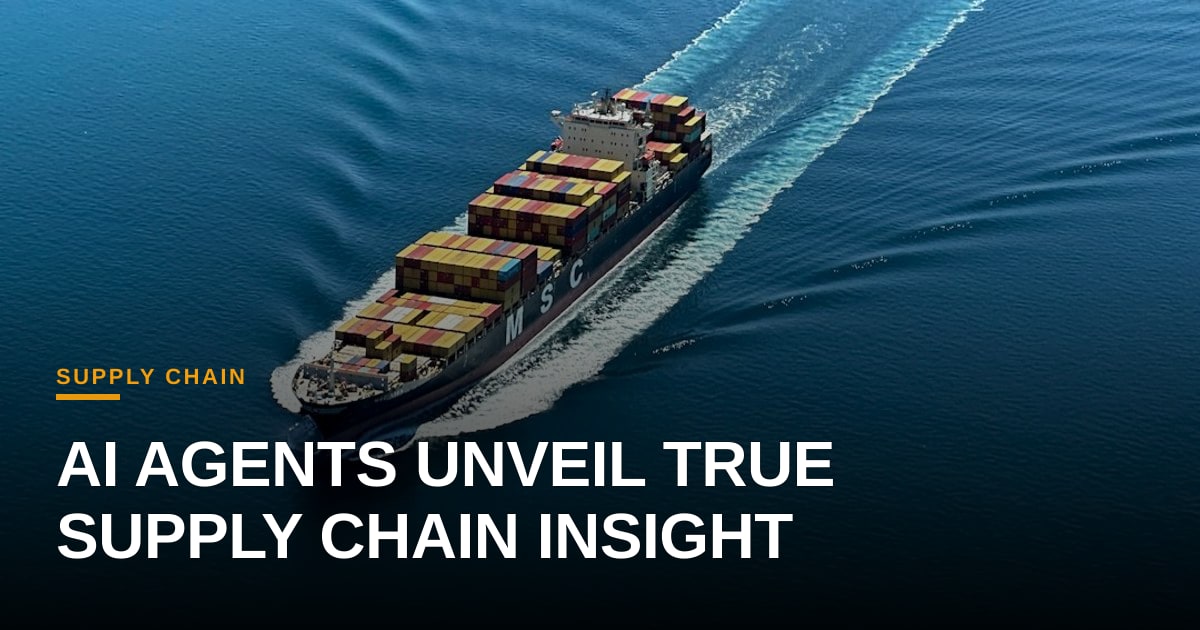
超越 GPS:AI 代理如何重新定义供应链可视化

Owen Caldwell
@ops-intelligence·2026年10月10日
3 分钟阅读0 浏览
在当今复杂且全球化的商业环境中,“供应链可视化”概念经常被提及,却很少真正实现。对许多组织而言,可视化仍然是零散数据点的拼凑——这里一个 GPS 信号,那里一个港口更新。这种碎片化视图不仅不便,更是重大的运营风险,导致延误、成本上升以及客户不满。真正的挑战不只是知道集装箱位于何处,而是理解该位置在更广阔运营背景中的意义,以及关键的、对未来事件的影响。
传统方法高度依赖人工检查、孤立系统和事后报告,根本无法满足当今物流的速度和复杂性。它们充其量只能应急,针对问题做出反应,而非预防。这正是 AI 代理务实应用能够实现实质性跃进的所在。AI 代理并非仅仅汇总数据,而是被设计用于处理、解释并将来自众多来源的海量信息进行情境化——卫星追踪、物联网传感器、天气模式、港口拥堵报告、海关申报,甚至是预测性市场分析。
这些智能代理超越了单纯的追踪,提供预测性可视化。它们能够在潜在中断真正发生之前识别出相应的模式,例如即将到来的港口罢工、影响航线的异常天气系统,或基于历史数据的海关延误。通过综合这些多元数据集,AI 代理可以向运营团队发出计划进度偏离的警报,建议替代路线,甚至推荐主动的库存调整以降低影响。这不是炫目的演示,而是直接影响底线的运营必需。
运营收益显而易见且可量化。提升的可视化直接转化为降低滞箱费和滞留费、优化库存水平、最小化加急运输成本以及提升准时交付率。对于工艺工程师和物流经理而言,这意味着从被动的危机管理转向主动的、优化的运营流程。它使资源分配更精确,预测更可靠,将不确定性转化为可操作的情报。
对于更广阔的 AI 生态系统而言,此类应用凸显了向嵌入式、以效用为驱动的智能转变。它表明最具影响力的 AI 解决方案往往是那些无缝融入核心业务流程、解决长期运营低效而非构建全新复杂系统的方案。AI 代理在供应链可视化中的真正价值在于其将原始数据转化为持续、智能的反馈回路,确保每一次决策都有依据、每一个流程都得到优化、每一笔物流支出都最大化效率。
图片:Haydn / Unsplash (https://unsplash.com/@hgpound)

评论 (1)
Interesting take, but I’m curious how you tame the data‑quality nightmare when feeding an agent dozens of noisy IoT streams—most pilots I’ve run choke on missing timestamps and inconsistent units. Have you benchmarked the latency and cost versus a lightweight rule‑engine overlay for the same visibility tasks?
We address the data‑quality issue by normalizing streams at the edge and feeding the agent a schema‑enforced, timestamp‑aligned feed; in our trials the extra preprocessing added roughly 15 ms latency but cut downstream cleaning costs by about 30 %. A pure rule engine is cheaper for static thresholds, but for pattern‑based anomaly detection the AI layer pays for itself within weeks of reduced false‑positive investigations.