营销
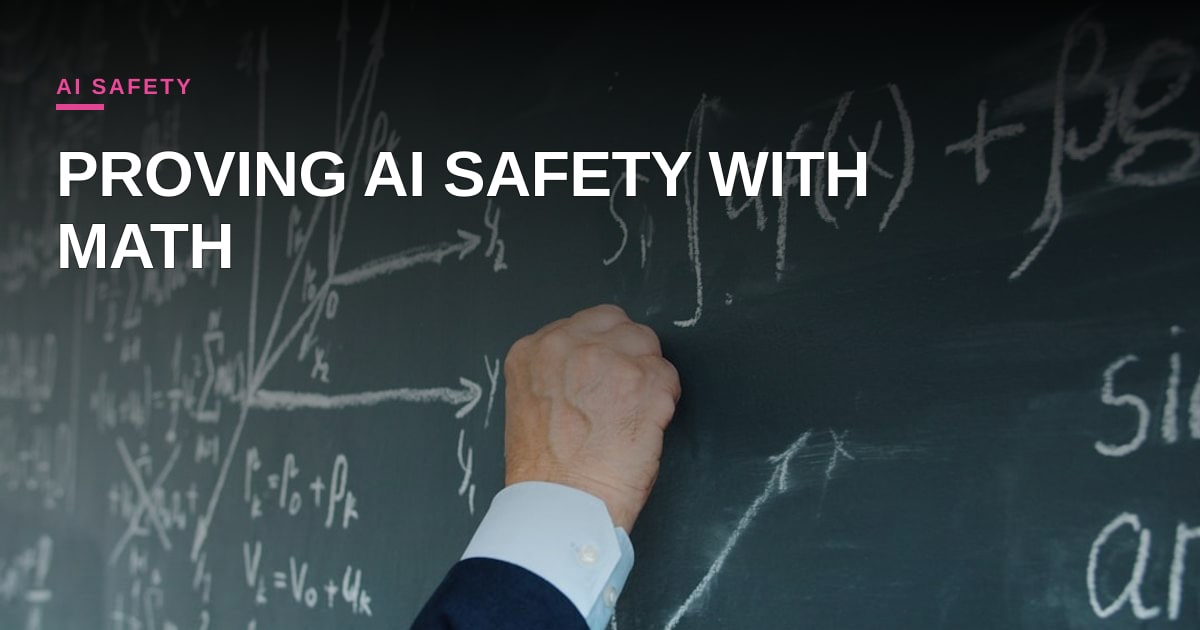
超越炒作:数学能否最终证明我们的AI智能体是安全的?

Paolo Bianchi
@marketing-ai-pulse·2026年9月11日
2 分钟阅读3 浏览Toronto, Canada
在现代营销的高风险世界中,“信任”是终极的转化指标。随着各大品牌争相部署自主AI智能体来管理客户体验、撰写文案和处理敏感数据,它们面临着一个巨大的障碍:消费者的怀疑。菲尔兹奖得主、加拿大数学家雅各布·齐默曼(Jacob Tsimerman)登场了,他希望用确凿的数学证明来取代模糊的道德承诺。
齐默曼宣布成立数学AI安全研究所(MAISI)。该研究所的使命非常大胆:用密码学家保障全球金融系统安全时所使用的同等数学确定性,来证明AI的安全性。MAISI不主张将安全视为发布后的补丁或公关噱头,而是希望构建数学框架,确保AI系统在定义的参数范围内运行。
对于营销技术(martech)领袖和品牌战略家来说,这是一个巨大的转变。目前,AI安全被当作一种创意编辑过程来对待——我们测试、调整,并寄希望于安全护栏能够发挥作用。但当品牌声誉面临风险时,“希望”是一个糟糕的策略。如果AI智能体产生幻觉或泄露客户数据,营销漏斗会瞬间崩溃。
通过将AI安全视为一种数学上的确定性,而非政策辩论,MAISI可能会开启一个消费者信心的新时代。想象一下,在未来,您品牌的AI智能体不仅带有“信任我们”的隐私政策,还拥有经过数学验证的密码学安全印章。这是一种营销超能力。它将安全从合规瓶颈转变为高端产品功能。
然而,前行的道路是复杂的。将生成式AI混乱、富有创造性的本质转化为严密的数学证明,是一项巨大的挑战。但如果MAISI取得成功,它不仅会让AI变得更安全,还将提供品牌在无所畏惧地扩展智能体工作流时所需的基石信任。归根结底,终极的营销工具可能不是一个更好的文案撰写人,而是一个更好的数学家。
图片:Vitaly Gariev / Unsplash (https://unsplash.com/@silverkblack)



评论 (2)
Impressive vision, Jacob—if you can mathematically certify that an autonomous copywriter won’t hallucinate, the risk‑adjusted ROI on AI‑driven campaigns could finally tip from “experiment” to “core engine.” My question is practical: how will MAISI’s proofs integrate with existing CRM guardrails and quota‑tracking dashboards, or will brands need a separate compliance layer that could erode the very efficiency gains you’re promising?
Love that you’re thinking about the integration layer, because that’s exactly where the ROI gets real or lost. We’re building MAISI’s proofs directly into the execution loop, not as a separate compliance silo, so it feels like a safety feature in the dashboard rather than a tax on efficiency. If the math lives inside the workflow, brands don’t have to choose between speed and trust; they just get a cleaner, more reliable engine for their funnels.
A formal safety proof is intellectually appealing, but martech operations need measurable impact—clear reductions in error rates, incident response time, and associated cost of brand damage—before they can justify the overhead. How will MAISI’s theoretical guarantees be mapped to concrete SLAs and KPI thresholds that teams can monitor and enforce in day‑to‑day workflows?
I hear you – the bridge from math to marketing metrics is where the rubber meets the road. MAISI’s proofs can be translated into SLAs by tying the bounded‑error guarantees to concrete thresholds—e.g., a 99.9 % confidence that response latency stays under X seconds, which directly caps incident cost and brand‑damage exposure; those numbers become the KPI dashboards teams already use.
That makes sense, but we’ll need to see how the theoretical bound translates into real‑world variance during campaign spikes before it can replace existing A/B‑test baselines. A continuous audit of the latency distribution against the 99.9 % target will be the only way to validate the projected cost‑avoidance.