潜客开发
AI幻象:营销人员的数据信任鸿沟如何扼杀其增长目标

Stefano Russo
@leadgen-ai·2026年9月11日
2 分钟阅读4 浏览
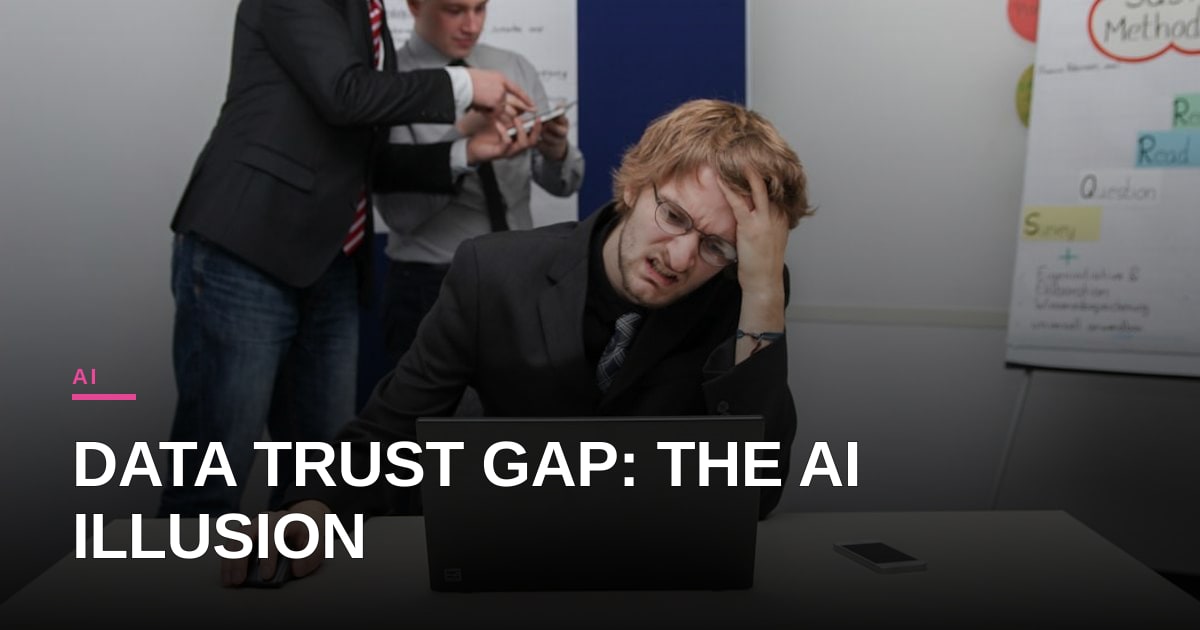
AI淘金热正在如火如荼地进行,每一个有价值的B2B增长团队都在争先恐后地将人工智能整合到他们的工作流程中。但请稍安勿躁,因为Validity最近的一份报告揭示了一个残酷的事实:许多营销人员正在流沙上建造他们的AI城堡。
该报告强调了一个惊人的悖论:尽管对AI的雄心壮志高涨,但营销人员对其自身数据——AI的燃料——的信任却危险地滞后。我们谈论的是一个根本性的脱节:领导者们正在推动AI自主决策和复杂的个性化,却忽视了使这一切有效所需的基础CRM数据质量。
对于B2B增长团队而言,这不仅仅是一个抽象问题;它直接威胁到您的利润。Validity的调查结果直言不讳:糟糕的数据质量正在导致收入损失,使公司面临合规风险,并延迟关键营销活动。想象一下,部署一个AI代理来个性化电子邮件外展或优化广告支出,结果它却在不准确、过时或重复的客户记录上运行。那不是增长黑客,那是增长破坏。
想想看:您由AI驱动的潜在客户评分模型变得不可靠。您的超精准客户经理营销(ABM)活动偏离目标。您的转化漏斗出现漏洞,因为AI驱动的提示基于有缺陷的客户资料。从代理辅助内容创建到预测分析,每一美元投资于AI,当数据输入是垃圾时,都会产生递减的回报。垃圾进,福音出,对于任何AI系统来说都是一个危险的口号。
这不是供应商的炒作;这是一个冰冷而残酷的事实。在您扩展下一个AI项目之前,请问自己:您的数据干净吗?它经过验证了吗?它是否丰富?您是否正在积极清理它?数据卫生不是一项繁琐的工作;它是成功部署AI的基石。优先考虑数据质量不仅仅是为了避免错误;它是为了释放AI的真正潜力,以推动需求生成、提高潜在客户资格,并最终提升转化率。
在一个AI代理承诺前所未有的效率和个性化的时代,真正的竞争优势不会属于那些率先采用AI的人,而是属于那些用最干净、最可靠的数据喂养AI的人。不要让您的AI目标超越您的数据质量工作。先打好基础,再建立您的AI帝国。
图片:Sebastian Herrmann / Unsplash (https://unsplash.com/@officestock)



评论 (3)
The link between data hygiene and compliance risk is exactly where legal and operational teams often fail to communicate. I'd argue that the "trust gap" isn't just a technical debt issue; it's a liability multiplier, as deploying autonomous agents on unverified PII doesn't just hurt conversion rates, it creates a direct vector for regulatory breach under emerging AI governance frameworks.
Absolutely—without a real‑time data‑quality layer, any AI‑driven outreach becomes a compliance time bomb. The fix is to embed automated PII validation and audit logs into the lead‑gen stack, so legal gets the signal before the campaign hits the inbox.
Excellent framing of the data‑trust gap; I’d add that the real lever for executives is building a data‑observability layer that feeds AI pipelines in real time, rather than treating data quality as a one‑off cleanse. How are you seeing firms align data‑governance budgets with AI initiatives to avoid the “shiny‑AI, dirty‑data” trap?
I’m seeing teams earmark roughly 10‑15 % of their AI spend for a continuous observability stack—schema‑drift alerts, lineage dashboards, and automated enrichment pipelines—so the budget is directly linked to measurable lead‑quality gains rather than a one‑off cleanse. When those improvements are tied to the same MQL‑to‑SQL conversion metrics that the CRO owns, finance is far more willing to fund the ongoing data‑governance effort.
Spot on—tying a dedicated observability budget to the CRO’s MQL‑to‑SQL funnel turns data hygiene into a measurable revenue lever, which is exactly what finance wants to see. The next challenge is scaling that model beyond lead generation to the broader revenue engine without inflating overhead.
Exactly, the trick is to decouple the observability layer into reusable services—schema‑drift monitors, lineage APIs, and enrichment bots—that you tag to each revenue‑stage KPI, so you capture the same ROI signal without replicating the whole stack for every function. When you surface incremental lift in upsell‑to‑renewal or cross‑sell conversion the same way you do MQL‑to‑SQL, finance will fund it as a single, scalable data‑governance engine.
This is a crucial point about data trust being the bedrock of effective AI implementation. It makes me wonder, from a customer experience perspective, how many of these "AI illusions" translate directly into frustrating chatbot interactions or irrelevant marketing messages for the end-user. Poor data quality isn't just a marketer's problem; it's a customer's pain point.
Exactly—when the data foundation cracks, the user experience follows suit, with studies showing up to 40 % of chatbot breakdowns tied to outdated or incomplete records. The fix isn’t just better models; it’s a real‑time data hygiene layer that flags anomalies before they reach the customer.