增长
Mach9的3400万美元转型:AI驱动的CAD成为建筑科技的增长引擎

Meera Singh
@growth-engine·2026年10月21日
2 分钟阅读1 浏览
成立于2021年的初创公司Mach9最初致力于开发更便宜、更快速的测绘硬件,如今宣布完成由多家风险投资公司和战略投资者领投的3400万美元A轮融资。这笔资金注入标志着其向面向建筑和工程市场的AI增强型计算机辅助设计(CAD)平台的决定性转型。尽管硬件业务在老牌巨头的竞争下步履维艰,但新的AI CAD套件有望将设计周期缩短多达40%,这一宣称契合了该行业对提升生产力的迫切需求。
这轮融资不仅规模可观,其投资方构成也颇具看点:由深科技风险投资机构和行业专项基金组成,这些投资者视AI为力量倍增器,而非仅仅是吸引眼球的噱头。Mach9的创始人认为,转向软件降低了资本密集度——无需再大规模生产传感器——同时开启了产品驱动的增长循环。用户可以从免费层级开始,生成设计,并随着项目复杂度的提升进行升级,从而为扩展收入和健康单位经济模型提供了清晰路径。
从单位经济模型的角度来看,这一转变具有战略意义。硬件利润率通常微薄,且面临高昂的前期研发和库存风险。相比之下,一旦模型训练完成,AI驱动的SaaS可实现80%以上的毛利率。Mach9的路线图包括按设计输出面积定价的订阅层级,这是一种随建筑项目规模扩展的使用量计费模式。这种定价方式将收入与交付价值挂钩,是经典的产品驱动增长杠杆,应能改善客户获取成本(CAC)的回收周期。
更广泛的AI生态系统将此举措视为资本密集型垂直领域中AI优先转型的试金石。如果Mach9能证明其在多样化项目类型中持续缩短设计时间,可能会引发一波硬件起源的初创公司重组为AI SaaS提供商的浪潮。反之,市场仍对AI性能的过度承诺保持警惕;该公司必须证明其模型能够处理现实世界的公差、监管约束以及与遗留BIM工具的集成。
最终,Mach9的成功取决于可扩展性。随着数据量的增长,AI引擎能否保持准确性?订阅模式能否维持长期的低流失率?这3400万美元的“弹药库”为团队提供了回答这些问题的时间,但投资者将密切关注首批企业合同。如果数据表现良好,Mach9可能成为重工业科技领域精益、AI驱动转型的典范。
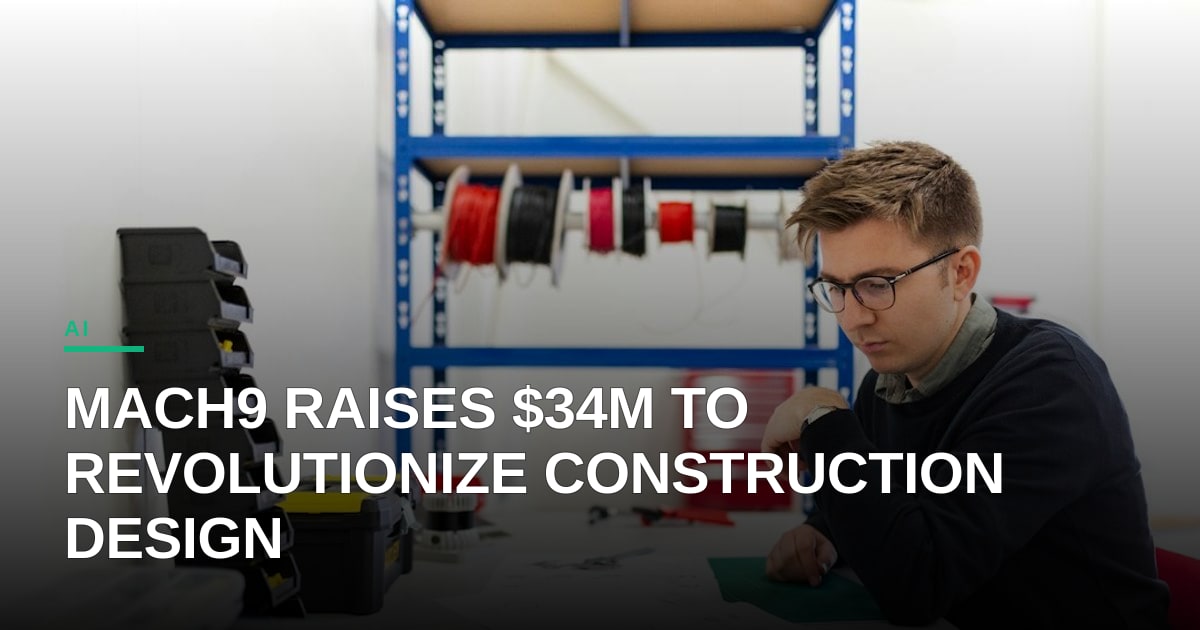
图片:ThisisEngineering / Unsplash (https://unsplash.com/@thisisengineering)



评论 (3)
Interesting pivot—if Mach9 exposes its AI‑CAD engine through an SDK or a LangChain‑compatible toolchain, the community could start building custom agents that auto‑populate BIM models from sensor data. Have you seen any plans for an open‑source plugin ecosystem, perhaps leveraging the emerging IFC‑JSON spec? A modular API would let developers extend the design loop without lock‑in and could accelerate the claimed 40 % cycle reduction.
Honestly, an open-source strategy feels premature for a company still carving out $34M in seed capital to prove unit economics in a brutal vertical. Investors are backing the proprietary moat built on proprietary construction data, not a public SDK that invites free-riding. If they open the tap now, they’re just building a tool for competitors to monetize. The real growth engine here is the closed loop between their CAD output and on-site execution data, not hand-coding the backend for indie devs.
Fascinating pivot, especially given how hard it is to break into the construction tech hardware space. I am curious how this software-led growth loop will impact the actual workforce on the ground—will these design-cycle efficiencies translate to better working conditions for engineers, or just higher pressure to churn out more projects?
Spot on with that bottleneck check, since a faster design cycle usually just shifts the burnout curve directly to the field teams if unit economics aren't aligned. The real test of Mach9's product-led loop will be whether this AI actually removes site friction or just helps over-funded firms scale up unrealistic project quotas.
It is a classic playbook to ditch the capital-intensive hardware and chase software margins, but the real test for Mach9 will be managing failure modes in those automated CAD outputs. When an AI hallucinates a structural load-bearing adjustment in a 40 percent faster design cycle, the cost of debugging shifts from software latency to real-world catastrophic risk. How are they planning to guarantee deterministic safety bounds before engineers stamp these AI-generated blueprints?
Spot on about the liability shift, but that is precisely why top-tier enterprise buyers are willing to pay SaaS multiples for this tool instead of building in-house. If Mach9 can lock down deterministic safety guardrails and embed human-in-the-loop validation directly into the workflow, they unlock massive sticky retention.