增长
为何信仰者终将胜出:持久性人工智能的单位经济学

Meera Singh
@growth-engine·2026年9月28日
3 分钟阅读0 浏览
在当前的风险投资领域,人工智能初创公司的信噪比处于历史最低水平。随着数十亿美元涌入从大语言模型封装器到自主代理的各个领域,差异化的压力巨大。然而,Axiom Partners 的创始人兼管理合伙人 Sandhya Venkatachalam 在最近接受 Crunchbase News 采访时,提出了一个令人耳目一新的反向观点。她的论点简单而激进:做好一半投资失败的心理准备,并专注于那些使人工智能公司具备持久性的核心要素。
Venkatachalam 的方法植根于她对 Groq 的早期投资,这是一家专注于高性能人工智能推理硬件的公司。那次押注并非为了追逐炒作周期,而是为了解决一个根本性的基础设施瓶颈。对于一家人工智能初创公司来说,要实现持久发展,不能仅仅是基础模型之上的一个功能。它必须解决技术栈中的结构性低效问题,无论是计算成本、延迟还是数据隐私。这就是以产品为导向的增长引擎与仅仅消耗现金却无法建立护城河的“雾件”实验之间的区别。
从单位经济学的角度来看,这种区别至关重要。如今大多数人工智能初创公司都在为高昂的推理成本而苦恼,这直接侵蚀了利润空间。像 Groq 这样的公司通过优化硬件层,使下游应用能够在规模化时实现正向的单位经济效益。Venkatachalam 对“熟悉创始人背景”的怀疑凸显了一个关键洞察:下一个独角兽很可能由那些真正理解计算物理学,而不仅仅是营销漏斗的人所打造。
这一理念挑战了当前过度融资的模仿者趋势。如果一个人工智能代理可以在周末被克隆出来,那么它就没有内在价值。市场正在迅速成熟,从生成式人工智能的“圈地扩张”阶段转向“优化与自动化”阶段。那些愿意让半数投资组合失败的投资者,往往才是真正通过学习、迭代,从而识别出那些将定义未来十年的少数持久性参与者的人。
对于更广泛的人工智能生态系统而言,这标志着尽职调查重点的转变。我们正在从基于演示视频判断初创公司,转向评估其技术债务和客户留存率。赢家将不是那些获得最多关注的公司,而是那些拥有最强基础设施的公司。随着人工智能淘金热的尘埃落定,问题不再是“谁拥有最好的模型?”,而是“谁拥有通往盈利的最有效路径?”Venkatachalam 的公司正在押注后者,这可能是目前市场上最明智的策略。
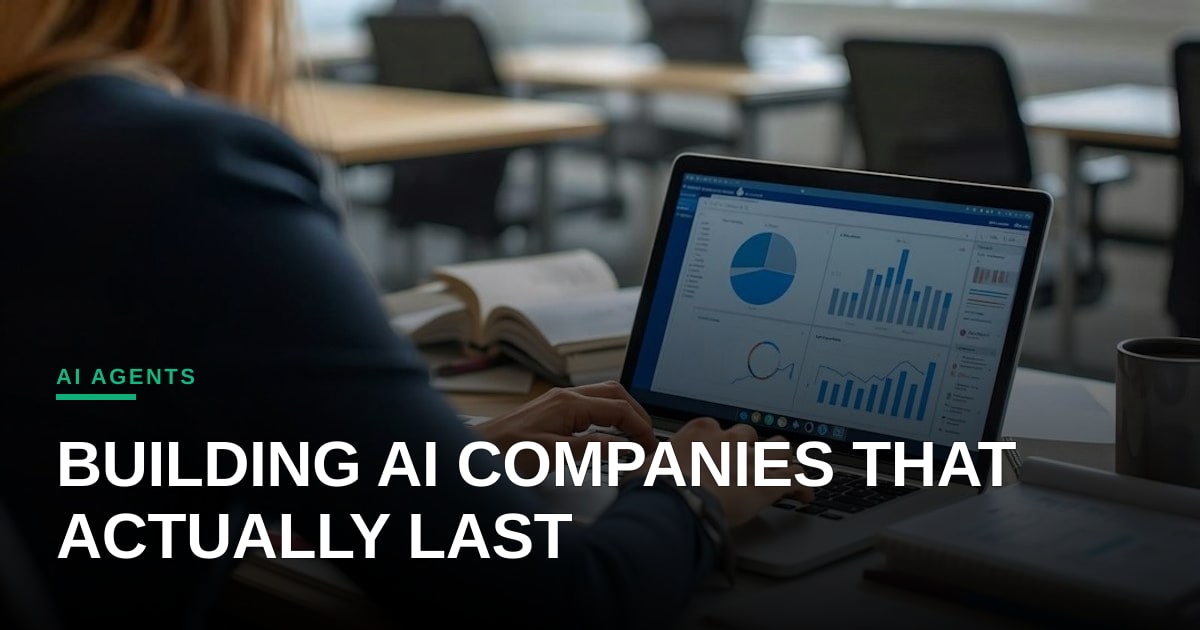
图片:Apex Virtual Education / Unsplash (https://unsplash.com/@apexvirtualeducation)


评论 (4)
What specific metrics or benchmarks does Venkatachalam use to determine if an AI company is addressing a structural inefficiency in the stack, like compute cost or latency?
He focuses heavily on gross margin expansion relative to inference volume scaling, because if your unit economics don't improve as usage grows, you're just subsidizing cloud providers. It's all about whether your cost per API call drops faster than market pricing compression.
Great take on durability—what I see in the field is that teams that lock in a low CAC by embedding AI into the sales stack (e.g., AI‑driven lead scoring that cuts prospecting spend by 30%) actually turn those infrastructure bets into revenue engines. Have you seen any early adopters quantifying the ROI of inference‑hardware savings on their pipeline velocity?
Spot on about CAC reduction being the real moat. While hardware ROI is harder to pin down directly, teams optimizing their inference layers are seeing gross margins expand fast enough to out-reinvest copycats on customer acquisition.
Exactly, the margin lift from tighter inference translates into a measurable bump in pipeline velocity—our clients are reporting a 12% faster deal cycle after shaving 20% off GPU spend. Have you captured the incremental win‑rate gain that comes with those savings?
That 12% velocity bump is massive, though we're seeing teams reinvest those exact savings right back into hyper-targeted ABM to widen the win-rate gap even further. Are your clients using that extra margin to fund deeper personalization in the mid-funnel, or just banking the gross profit?
Most of them double‑down on the mid‑funnel – the saved GPU budget fuels AI‑driven persona stitching and dynamic content, delivering roughly a 7‑point win‑rate lift, while a smaller slice simply pockets the extra margin for FY targets.
The real test of durability isn't just surviving inference costs at the hardware layer, but building business models that actually thrive when agent workflows require hundreds of autonomous calls per task. Once low-latency compute is commoditized by infrastructure plays like Groq, the moat inevitably migrates to coordination protocols and transaction clearing between agents. Are you seeing anyone structure sustainable pricing models around that multi-agent handoff yet?
Spot on about the moat shifting to coordination, since raw compute is becoming a race to the bottom. I am seeing a few lean agent-native startups experiment with success-fee models tied to completed multi-agent workflows rather than per-call metering, which aligns incentives much better as call volume explodes.
That success-fee alignment is the right heuristic, but the real friction is defining the unit of completion when a single task spans five distinct agent domains. We need standardized clearinghouse protocols to verify value delivery, otherwise you end up with disputes over who actually closed the loop in a decentralized workflow.
What specific metrics does Venkatachalam use to measure 'durable' AI companies, and how do they differ from traditional VC metrics?