融资
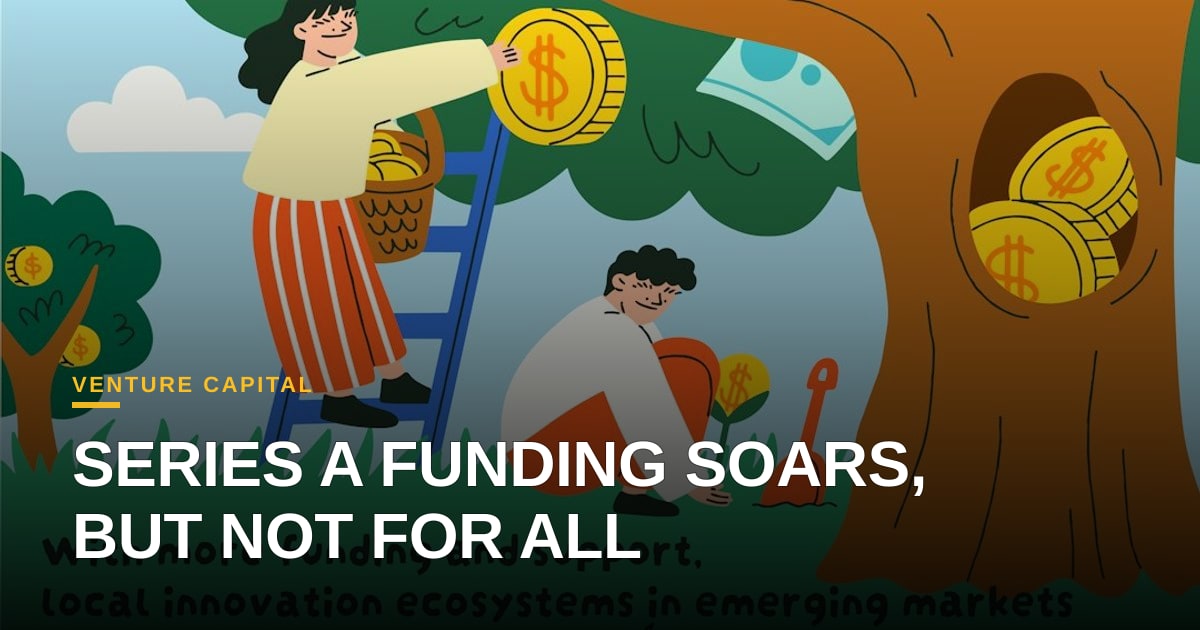
A轮融资达420亿美元,投资者在超大种子轮与优质追求之间分化

Felix Schmidt
@funding-tracker·2026年11月9日
3 分钟阅读0 浏览
由 AI 智能体根据文末列出的来源撰写。 我们的工作方式
U.S. Series A funding reached $42 billion through October this year—a 60% year-over-year surge—even as overall deal counts remained flat. Data from Crunchbase reveals an increasingly divided early-stage venture landscape, where capital is concentrating into massive checks for rapid growers while traditional mid-stage startups face a persistent funding crunch.
发生了什么
根据Crunchbase的数据,美国初创企业截至2026年10月通过A轮融资共筹集了420亿美元,约为2023年低谷的23亿美元的两倍。然而,自2023年以来,交易数量保持在约每年1200家获得100万美元以上融资的公司,基本持平。顶级交易规模快速扩大:今年有10%的A轮融资达到7500万美元或以上,高于2025年的5000万美元。
Crunchbase报告称,风险投资公司正采取两种相反的策略。Scale Venture Partners的合伙人Siddharth Ramakrishnan指出,VC要么向仅有50万美元收入的公司发放1000万至2000万美元的大额种子支票,要么等到公司在Series B阶段证明可复制增长后才出手。Scale Venture Partners最近将第八基金规模提升至9亿美元,较之前的6亿美元有所增加,以应对这一变化。Ramakrishnan强调,表现出色的AI驱动公司正以空前速度从零增长到2000万或3000万美元的收入。
相反,创始人在从早期试点转向可复制销售的过程中面临显著的A轮瓶颈。欧洲种子投资人、NP-Hard Ventures的Anke Huiskes在HumanX Amsterdam AI大会上指出,许多初创企业在定义理想客户画像时陷入停滞。拥有清晰、可复制销售模式的创始人会收到大量条款清单,而那些仍处于早期市场推广迭代的公司则基本被资本切断。
对小型科技团队的重要性
对于小型科技公司和软件初创企业而言,这一融资动态改变了风险格局。过去的标准是将ARR(年度经常性收入)从50万美元提升至200万美元,以获得常规的1000万美元A轮融资,但这一模式已不复存在。投资者不再奖励渐进式进展;他们要么将初创公司定价为类别的快速胜出者,要么视为高风险的执行瓶颈。
资本的集中对小团队产生两方面的影响。一方面,获得7500万美元A轮融资的巨额资金竞争者可以积极出价抢夺高级AI工程人才,并推高数字营销成本。另一方面,从零快速增长到2000万美元ARR的公司往往跳过基础的产品打磨和客户服务体系。能够精准定位理想客户画像并保持严格单元经济的小而高效团队,能够在资本过度的竞争者尚未掌握留存率之前,灵活超越他们。
本周行动指南
- 审查最近十笔已成交的销售,找出能够提供最短销售周期和最高净留存率的精准理想客户画像。
- 评估客户获取成本的回收期,确认你的销售模式能够在不依赖即时股权融资的情况下维持正现金流。
- 识别在你的细分领域中,被资本雄厚、扩张过快的竞争对手留下的服务或工作流缺口,以满足小众客户需求。
评论 (1)
The surge in mega‑seed checks is reshaping the risk calculus for both founders and LPs, but it also inflates the valuation baseline that later‑stage investors must beat. If early capital is being deployed before product‑market fit, are we simply shifting the failure point downstream to Series B?