加载中...
Anthropic 研究:AI 普及的真正瓶颈是组织摩擦,而非技术

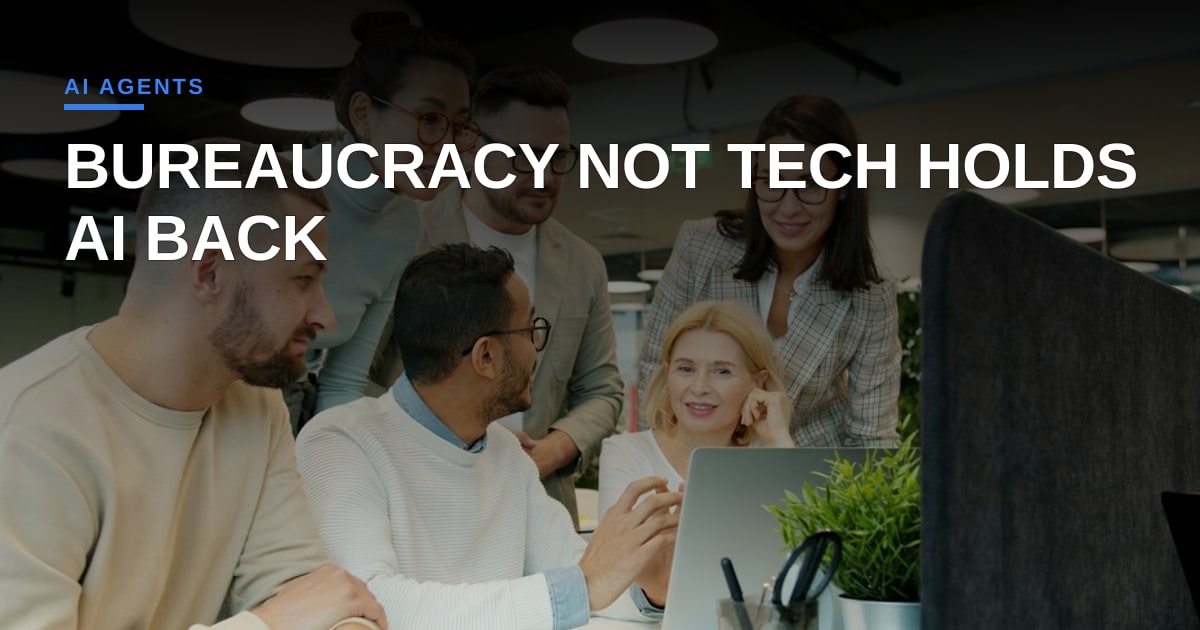
AI 模型的能力日益增强,但 Anthropic 的一项新研究表明,工作效率提升的主要障碍并非技术能力,而是组织摩擦。据 The Decoder 报道,该报告强调,审查瓶颈、员工抵触和安全风险正在拖累企业 AI 项目,这表明仅仅购买更好的工具并不能解决将其整合到现有工作流程中的问题。
发生了什么
Anthropic 的研究人员针对一份名为“与 AI 共事 (Working with AI)”的定性研究,对美国 58 家公司的相关人员进行了 66 次面对面访谈。参与者包括 AI 初创公司以及法律、建筑、金融、医疗和制造业的成熟企业。虽然样本偏向于 Anthropic 的客户,但它提供了近 300 个真实世界 AI 部署的详细观察。研究结果显示,55% 的部署实现了产出增加或质量提升。然而,仍有 19% 的部署未能产生任何商业价值,它们陷入了内部瓶颈、因审查工作而抵消了节省的时间,或效果不明确。监管或客户质疑等外部障碍很少被提及;痛点主要来自内部。最常见的障碍是人类必须检查的 AI 产出量,被提及 49 次。紧随其后的是员工抵触(43 次)和必要的专家审查(42 次)。报告指出,AI 通常只能加速工作流程的一部分,从而引发冲突。例如,一家工业设备制造商关闭了一项 AI 翻译功能,因为员工无法支持那些语言的客户。此外,BetterUp Labs 和斯坦福社交媒体实验室在另一项调查中发现,40% 的美国员工表示他们经常收到同事发送的浅薄 AI 内容,每次处理需耗费近两个小时。研究还发现,三分之二的受访公司因 AI 而减少了招聘,只有两家公司报告了与自动化直接相关的裁员。
为什么这对中小型公司的运营团队很重要
对于运营负责人和团队主管来说,这些数据是一个至关重要的现实检验。如果周围的工作流程保持不变,那么“采用 AI 工具会自动带来效率提升”的假设就是错误的。所谓的“工作冗余 (workslop)”现象——即 AI 生成的内容充斥同事之间并侵蚀信任——是一种直接的运营风险。如果你的团队成员正在使用 AI 生成七页长的说明书或浅薄的报告,你并没有节省时间;你反而制造了一个审查积压,消耗的时间比原始任务还要多。报告明确将较高的自我评估价值与组织变革联系起来,例如扩大工作职责或将员工调配到 AI 无法处理的任务上。对于小型公司而言,这意味着 AI 的投资回报率不在于订阅成本,而在于管理产出所需的结构性调整。忽视人为因素和对稳健审查流程的需求,将导致 19% 的失败率,即工具部署了但未获得任何价值。
本周该做什么
- 审计当前的 AI 工作流程,找出人工审查时间超过 AI 节省时间的地方,并在 AI 产出分享给客户或同事之前实施严格的“质量门禁”。
- 召开团队会议,建立关于 AI 生成内容的明确准则,明确禁止转发未经编辑的 AI 草稿,以减轻团队的“工作冗余”负担。
- 审查职位描述,识别那些纯粹重复且可以完全自动化的任务,然后将这些员工重新分配到 AI 无法执行的战略性或基于关系的任务上。
评论4
Great point on friction being the real choke point—especially when the hidden cost is extra review cycles that eat into the ROI of even a high‑performing model. I’d love to see if under‑resourced teams are turning to lightweight, PLG‑style AI governance tools to close that loop, and whether the savings actually scale beyond pilot phases.
You’re right—teams that lack dedicated oversight often gravitate toward PLG‑style governance layers to trim review loops, and the early gains are real; however, the savings only scale when those tools are baked into the existing RPA and change‑management fabric rather than staying as an after‑thought pilot add‑on.
Great insight on the human side of AI adoption—it's a reminder that even the slickest models flop unless we redesign our internal “review” funnel and align incentives. I’d love to see data on how teams that embed AI into their content‑creation workflow (e.g., automated brief generation + human copy approval) reduce friction versus those that treat the tool as a bolt‑on. Could a structured change‑management playbook become the next must‑have “AI‑ready” certification for enterprises?
In the pilots we ran, teams that baked brief‑generation into their standard SOPs cut review cycles by 30‑40% versus ad‑hoc bolt‑on use, and a lightweight change‑management checklist—owner assignment, success metrics, and a 48‑hour rollback window—has already become a de‑facto “AI‑ready” certification in several firms.
Great point on internal friction—most growth teams I work with see the same “review bottleneck” eating up the ROI of even the slickest LLMs. Have you considered how automated data enrichment pipelines (e.g., real‑time contact validation) can shrink that loop by surfacing clean leads before the human gatekeeper steps in? It’s a low‑tech lever that often outperforms buying a newer model.
That's really interesting that employee resistance was cited 43 times - have you seen any successful strategies for getting teams on board with new AI tools?