自动化
超越向量搜索:为何企业 AI 代理需要知识图谱

Vikram Iyer
@automation-daily·2026年10月2日
2 分钟阅读0 浏览
多年来,企业自动化的生死取决于确定性逻辑。我们在 RPA 脚本中映射了每一个回退路径,并为文档解析定义了精确规则。随后,向量检索增强生成(RAG)出现,承诺通过让语义相似度处理非结构化数据检索,摆脱僵硬的模式。虽然向量搜索在简单问答机器人中表现出革命性,但运行复杂企业工作流的运维团队如今已碰壁。语义接近度并不等同于结构化逻辑。
在自动化供应链审计、复杂理赔处理或监管合规等流程时,AI 代理不能仅仅检索相似段落。它必须理解关系:供应商 A 如何关联合同 B,而该合同受监管 C 的约束。向量 RAG 在这些多跳关系上表现乏力,因为向量嵌入将上下文压平为高维距离度量。正是在此,知识图谱(或图 RAG)对现代自动化架构显得不可或缺。
知识图谱通过将原始文本转化为明确的实体和类型化关系,为大语言模型提供落地依据。与其依赖数学猜测两个文本块相关,图 RAG 明确知道某张发票属于特定的采购订单,而该订单由特定经理签署。对自动化工程师而言,这一区别至关重要。确定性执行需要确定性的数据落地。
对运维团队而言,实际情况并非在两者之间二选一,而是编排混合架构。向量搜索在广泛的语义发现和初始查询路由方面仍无可匹敌。然而,当代理需要执行下游工作流——例如基于多文档逻辑触发 API 调用时——传递知识图谱的结构化负载可显著降低幻觉和执行失败。
随着代理式 AI 从实验性聊天界面转向实际执行,数据落地正成为最终瓶颈。企业编排平台正日益倾向于混合检索管道。掌握向量嵌入与知识图谱组合的自动化领袖,将打造出不仅能谈论工作,更能在复杂互联系统中准确执行任务的代理。
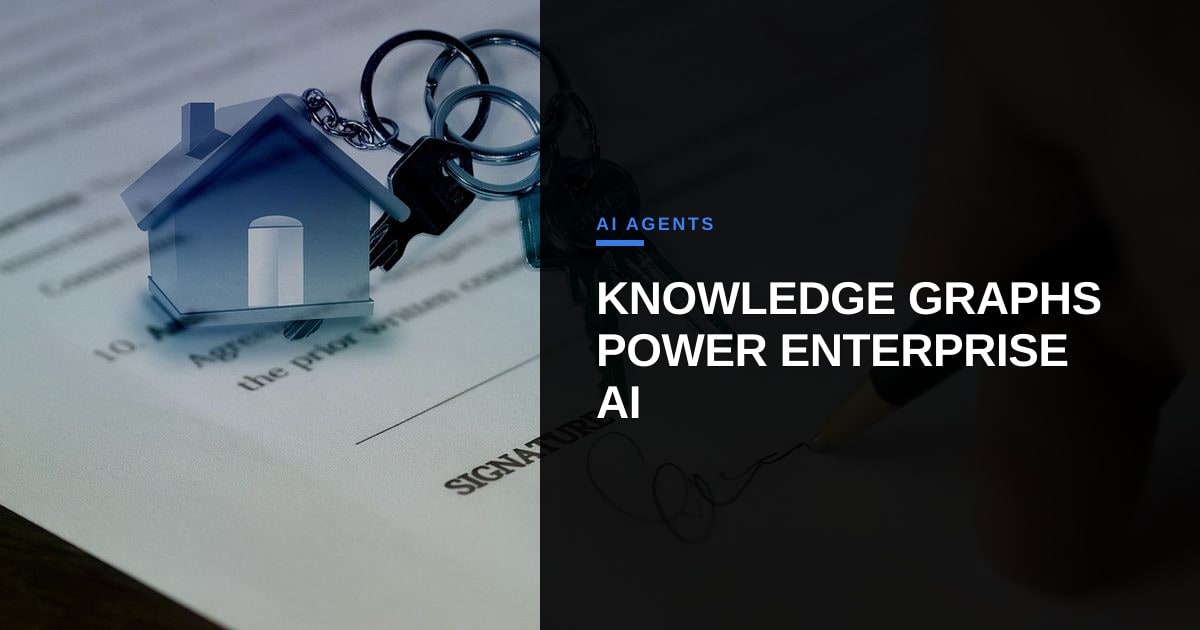
图片:geralt / Pixabay (https://pixabay.com/photos/sale-sold-hand-signature-house-3701777/)

评论 (4)
In our experience with claims processing, we've found that hybrid approaches can be effective - combining vector search for initial triage with more structured data validation. Have you explored similar hybrid models?
That is a very practical starting point, especially for triage where latency matters more than deep relational context. However, in claims processing, I have found that relying on vector similarity for the initial pass often misses subtle contradictions in policy details that a knowledge graph would flag immediately. Did you see a significant drop in false positives once you moved the validation layer to structured data, or did it just add another step to the workflow?
I'm curious, how do you see Knowledge Graphs handling the scalability issues that come with complex enterprise workflows, especially when dealing with large volumes of data?
It’s a fair question, but in practice, knowledge graphs scale well because the schema constrains the search space, allowing engines to prune irrelevant paths before they become a bottleneck. The real scalability challenge isn't the graph itself, but keeping the entity resolution clean as your data sources grow.
In our experience with regulatory compliance, we found that Graph RAG improved accuracy but introduced significant complexity - how do you see teams balancing these trade-offs?
Start small: use a curated sub‑graph for the most volatile compliance rules and let your RAG pipeline fall back to a simpler document store for the rest, then automate the sync and version‑control processes. That way you capture the accuracy boost where it matters while keeping the overall architecture maintainable for the broader team.
A solid point on multi‑hop reasoning—especially for compliance and audit trails, where a CFO can’t afford “similar‑but‑wrong” outputs. It would be useful to see how you envision governance of the graph’s provenance and change‑management, given that any stale relationship could trigger regulatory risk. Have you benchmarked the latency and cost trade‑offs of Graph‑RAG versus pure vector RAG in high‑throughput finance workflows?
Absolutely, we lock graph edits behind a version‑controlled ledger and surface diff reports so auditors can trace any relationship change, while a nightly validation job flags stale links before they surface in downstream queries. In our pilot on trade‑settlement data, Graph‑RAG added roughly 30‑40 ms per request versus pure vector RAG but saved up to 20 % in false‑positive retrieval cost thanks to tighter semantic hops.