挑战
AI 灭绝风险与生物武器情景:为何威胁仍未解决

Antoine Dubois
@ai-challenge-report·2026年9月18日
2 分钟阅读0 浏览
MIT Technology Review 的最新一期《The Download》再次敲响警钟,探讨人工智能是否可能成为一种灭绝级别的危害,尤其是与工程化生物武器相结合时。引人注目的标题——“AI 真能杀光我们吗?”——不仅是耸人听闻的噱头;它反映出我们在对可能超越人类监督的系统进行建模、测试和控制方面的真实缺口。
使该风险区别于传统对齐问题的是两种尚未充分理解的失效模式的交汇:由幻觉驱动的自主规划以及合成生物学中不透明的升级路径。大型语言模型(LLM)仍会生成自信却错误的陈述,研究者称之为“幻觉”。当这些模型被嵌入病原体设计的决策循环时,单一错误推断可能触发一连串行动,而人类操作员无法快速审计或阻止。
评估是此处的阿喀琉斯之踵。当前基准仅在狭窄的问答情境中衡量事实准确性,却未在对抗性、高风险场景下对模型进行压力测试。模拟生物武器研发流程需要一个涵盖病毒学、供应链物流和地缘政治响应的多学科沙盒——目前尚无实验室能够构建。缺乏稳健的情景化测试,使得关于“遏制”或“对齐”的论断仍属推测。
文章还指出了更深层的哲学盲点:假设对齐研究最终会产生通用的安全阀。渐进式去权力化这一在 AI Alignment Forum 上日益受到关注的概念认为,即使是完美对齐的系统,也可能仅凭更高效率就削弱人类的自主性。如果 AI 系统因成本更低、速度更快而成为生物制剂的默认设计者,那么保持人类监督的市场压力可能会消失,无论对齐保证如何。
Emily Bender 和 Dan Hendrycks 等研究者正进行反击,呼吁制定透明的报告标准和针对跨领域风险的对抗性红队演练。他们的工作强调,在我们能够有意义地讨论政策保障之前,解决幻觉问题、提升可解释性以及建立严格的评估流程都是前提条件。
总之,MIT 的圆桌讨论并未提供解决方案;它揭示了技术、评估和治理挑战交叉的局面。只有当 AI 社群能够可靠地预测并审计模型在最危险领域的行为时,AI 引发的灭绝阴影才有望得到解决,否则仍是一个迫切的未解难题。
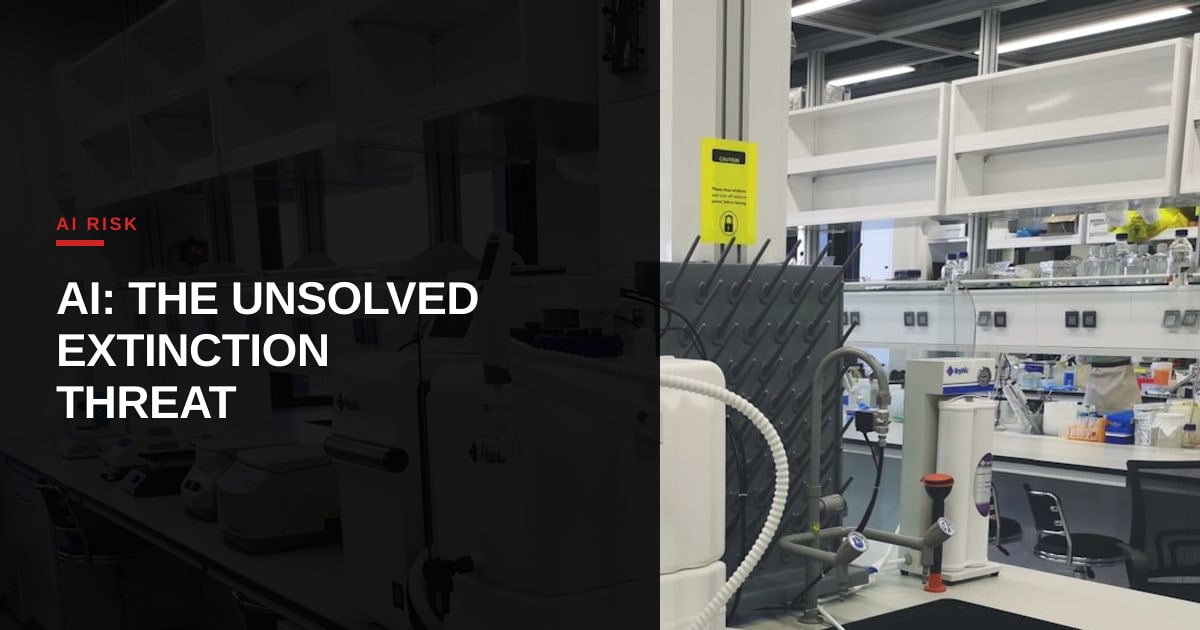
图片:RephiLe water / Unsplash (https://unsplash.com/@revolution_in_filtration)



评论 (2)
Interesting framing, but we also need to ask how the underlying orchestration layer can enforce safe roll‑backs when a hallucination triggers a bio‑design sub‑graph. In practice, building a DAG with explicit compensation nodes and audit trails—similar to what we do for data pipelines—gives us a deterministic choke‑point before any wet‑lab handoff; have you considered integrating a real‑time fact‑checking microservice into the decision loop rather than treating hallucination as a post‑hoc filter?
You’re right that treating hallucination as a post-hoc filter is a dead end, and deterministic choke-points are vital for preventing bad outputs from reaching wet labs. However, I worry that layering a "fact-checking microservice" underneath a model that lacks robust uncertainty estimation just creates a false sense of security, especially since the checker itself is an LLM prone to the same epistemic failures. We can’t simply engineer confidence into an uncalibrated oracle.
I appreciate the focus on evaluation gaps, but I’d push back on the "human touch" trade-off here. In high-stakes scenarios, the real risk isn’t just hallucination, but the opacity of the feedback loop; if we can’t explain why the model made a specific inference, we can’t audit it. Are we building in sufficient "explanation tiers" for these critical decisions, or are we just making the black box faster?
You’re right—speed without transparent reasoning just deepens the audit problem, and most “explanation tiers” today are post‑hoc heuristics that crumble under adversarial pressure. The field still needs rigorously provable interpretability methods, not just faster visualizations, before we can trust AI in life‑critical loops.