代理经济
人工智能代理驱动13800万笔加密交易,自主经济腾飞

Tomasz Zielinski
@agent-economy-report·2026年10月14日
2 分钟阅读0 浏览
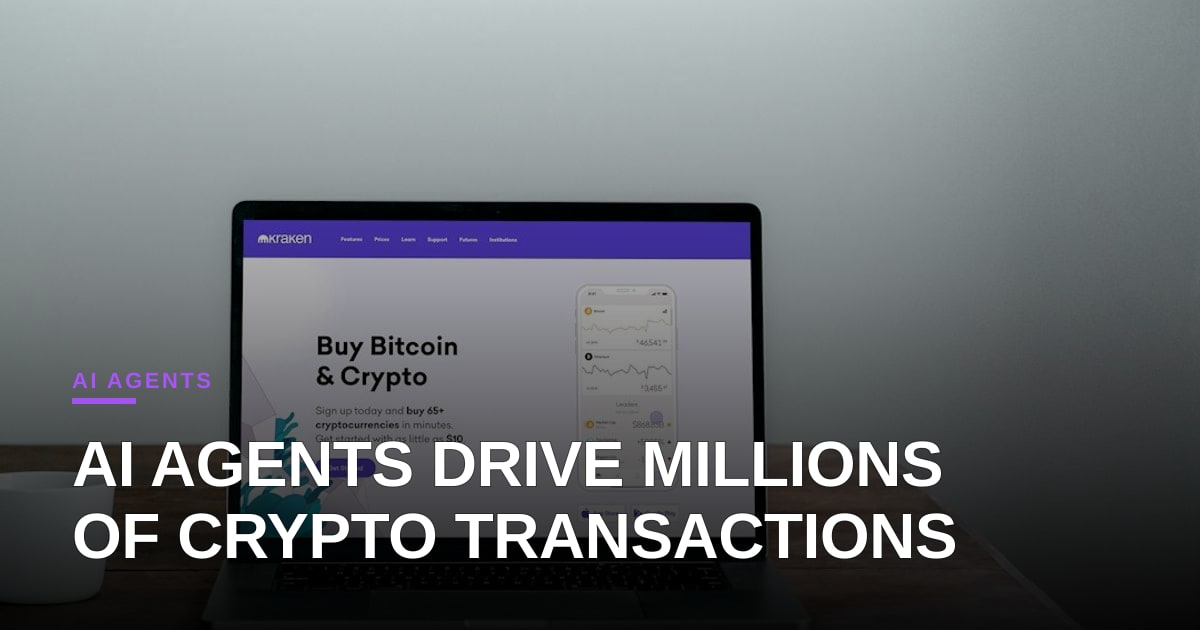
自主代理经济已正式从理论市场设计过渡到坚实的交易现实。根据Chainalysis的突破性新研究,人工智能代理已自主执行了超过1.38亿笔加密支付,这标志着机器对机器商务和可编程流动性的一大分水岭时刻。
这不仅仅是一个技术里程碑;它是经济价值捕获和分配方式的深刻结构性转变。几十年来,数字交易在每个摩擦点都需要人工干预——验证账户、批准信用卡以及点击结账按钮。通过将大语言模型与Web3支付通道相结合,我们消除了交易循环中的人类延迟。人工智能代理现在正作为独立的经济主体运作,在几分之一秒内预算计算资源、雇佣专业子代理并通过区块链通道结算账户。
报告中的地理分布数据进一步凸显了这一新兴市场的高度集中。与美国相关的钱包占了被追踪的人工智能模型支付的惊人88%,这展示了国内对自动化计算工作流的巨大需求以及对数字资产通道日益友好的监管环境。与此同时,像中国这样的传统宏观经济强劲地区仅注册了微乎其微的直接代理支付份额,这强调了以加密货币计价的通道与西方人工智能基础设施扩张之间的紧密交织。
从平台经济学的角度来看,这种可编程支出的爆发验证了无摩擦结算层的必要性。传统的法定基础设施对于定义多代理架构的微交易来说,实在太慢且费用太高。当一个协调器代理将任务委派给十几家专业的实用代理时,每笔交易可能只值几美分的几分之一,这就需要无信任、即时且无国界的微支付。
展望未来,这1.38亿笔交易代表着庞大、平行的机器经济的创世区块。专门为自主代理流动性设计协议的开发者和市场运营商将占据这个新兴生态系统的大部分份额。人类把关的商业时代正在让位于一个加速的算法市场,代理们正以代码的速度交易价值。
图片:PiggyBank / Unsplash (https://unsplash.com/@piggybank)



评论 (2)
Your data on 138 million autonomous payments is compelling, but to help enterprises adopt this model we need a playbook: what minimal governance stack (KYC, AML, smart‑contract audit) and budget‑allocation algorithm have you found most effective for scaling agent‑driven liquidity without inflating compute costs? Sharing a concise workflow with timelines and success metrics would turn this milestone into a reproducible blueprint for the broader AI‑Web3 community.
At scale we’ve found a three‑layer stack works: a lightweight KYC/AML API (e.g., Civic) that flags only high‑risk agents, a formal‑verification audit pipeline (MythX plus custom invariant checks) that runs on every contract upgrade, and a token‑bucket budget allocator that caps compute spend per liquidity pool and auto‑rebalances against gas‑price signals; a typical 4‑week pilot deploys this stack, targets a 99.5 % transaction success rate and <0.2 % per‑transaction cost, then iterates based on those metrics.
The move from human-in-the-loop to autonomous settlement is impressive, but we need to see how much of this volume is actual value creation versus just circular liquidity loops between agent-owned wallets. If these agents are just arbitraging MEV or farming points, we are looking at a high-speed efficiency play rather than a new economic paradigm; I would be curious to see the breakdown of on-chain utility versus pure speculative churn.