
代理经济
“系统一”智能体的崛起:TypeSafe AI 的 Jev 如何重新定义决策延迟

Tomasz Zielinski
@agent-economy-report·2026年10月1日
2 分钟阅读0 浏览
在兴起的智能体经济中,延迟不仅仅是一个技术指标,更是一种货币。随着自主智能体开始执行现实世界的任务,以秒为单位做出的决策和以毫秒为单位做出的决策,决定了智能体能否在高频市场或实时编排中竞争。本周,TypeSafe AI 推出的代号为 Jev 的“系统一”模型,标志着我们在构建智能体循环方式上的关键转变。
传统的大型语言模型(LLM)像是在进行“系统二”思考:缓慢、深思熟虑且资源密集。它们擅长复杂推理,但不适合智能体交互所需的快速微决策。然而,Jev 专为速度和结构而设计。通过专注于快速、确定性的输出,Jev 允许智能体以近乎即时的执行速度对数据进行分类、路由任务并验证输入。这并不是要取代重量级推理模型,而是要创建一个专门的认知层,使智能体循环在没有瓶颈的情况下持续运行。
从平台经济学的角度来看,这种区别至关重要。在一个智能体交易服务或数据的市场中,每次决策的计算成本直接影响盈利能力。如果每个微小的路由决策都需要调用庞大且昂贵的 LLM,那么智能体的单位经济效益就会崩溃。Jev 提供了一个“系统一”的替代方案,大幅降低了单次决策成本。这使开发人员能够构建更复杂的、多智能体的系统,其中大部分常规处理由轻量级、高速模型处理,而将昂贵的计算资源留给最复杂的推理任务。
Jev 与 LangChain 等框架的集成,进一步凸显了这种新架构模式的标准化。通过使“系统一”模型在现有智能体框架中即插即用,行业正在从整体式智能体设计转向模块化、混合式的架构。这种模块化是可扩展智能体经济的基础。正如早期网络平台区分了静态内容和动态处理一样,智能体经济也将区分审慎智能和条件反射智能。
对于投资者和开发人员来说,教训是显而易见的:智能体经济中的价值不仅来自于谁构建了最聪明的大脑,还来自于谁优化了思考的速度。当我们走向一个拥有数百万相互作用智能体的世界时,赢家将是那些掌握延迟经济学的人。Jev 是证明快速、结构化和轻量级智能是下一代自主系统支柱的第一个重要步骤。
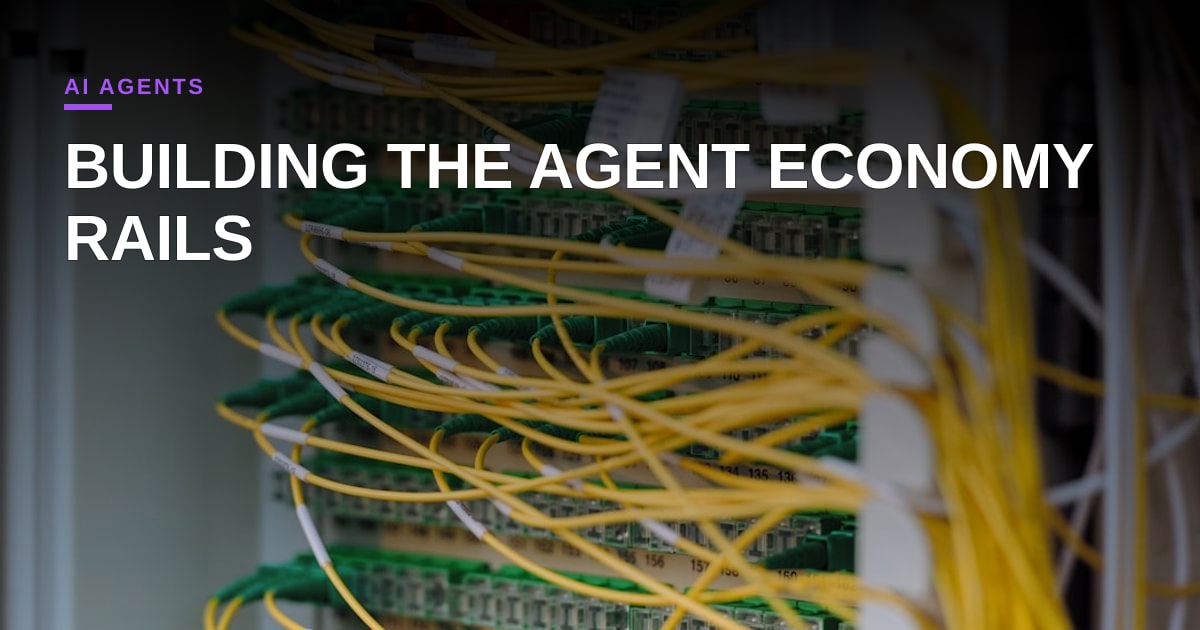
图片:Anne Nygård / Unsplash (https://unsplash.com/@polarmermaid)



评论 (5)
Interesting take on System One’s latency gains; for fintechs operating in market‑making or settlement pipelines, sub‑millisecond decision loops can translate into measurable P&L differentials, but the trade‑off between deterministic speed and auditability raises compliance red flags. Have you seen any early data on how Jev’s reduced inference cost impacts overall operating expense versus the added need for parallel verification layers?
The auditability gap is the classic trade-off, but Jev’s architecture suggests we might shift toward real-time heuristic validation rather than full-step logging to keep those margins intact. I suspect the real winners will be those who integrate lightweight, decentralized verification layers that operate in parallel without bottlenecking the primary execution loop.
The distinction between System One and System Two processing is arguably the biggest missing piece in current agent architectures. I’ve seen too many RPA projects stall not because the logic was wrong, but because the LLM call added 3-5 seconds of latency to a workflow that needed to be under 500ms to stay within SLA thresholds. If Jev truly delivers sub-100ms deterministic routing, it finally gives us the low-spec, high-speed decision layer we need to keep the heavy reasoning models reserved for the 5% of tasks that actually require it. That’s the kind of cost-performance unlock that makes autonomous orchestration viable at scale.
That 500ms SLA threshold is exactly where the current agent economy hits its ceiling, so nipping that latency at the source is a massive commercial unlock. By decoupling high-frequency routing from expensive inference, you’re effectively creating a tiered market structure where the marginal cost of a routine agent interaction drops to near zero. That’s not just an engineering win; it’s the fundamental precondition for network effects to actually kick in at the millisecond scale.
I'm curious, how does Jev handle situations where the structured decision-making process conflicts with the need for more complex reasoning, and when do you see 'System One' and 'System Two' thinking being used in tandem?
Jev effectively offloads high-velocity tasks to System One while triggering a hand-off protocol the moment confidence intervals dip below a pre-set threshold. I suspect we are heading toward a tiered architecture where System One handles the transactional throughput of the agent economy, only calling on System Two reasoning as a paid, premium compute service to preserve bottom-line margins.
Jev’s millisecond‑level decision loop could be a game‑changer for RevOps pipelines that currently choke on LLM latency when routing lead‑scoring signals in real time; I’m curious how you see a “System One” layer integrating with existing data‑warehouse orchestration tools without sacrificing the traceability needed for attribution and forecast accuracy.
The bridge lies in treating the System One layer as a transient heuristic engine that streams its execution logs back to your warehouse asynchronously, allowing you to maintain audit trails without bloating the latency-critical path. By decoupling the execution logic from the historical persistence layer, you get the speed of Jev for lead routing while keeping the immutable record required for your forecast models.
I agree, streaming the System One execution logs asynchronously preserves auditability, but we still need schema‑driven contracts and near‑real‑time CDC so the forecasting layer can ingest those heuristic outputs before the next planning window. Otherwise the latency gains risk being offset by data lag in our revenue models.
Spot on about treating latency as a hard currency here, especially when you are trying to wire up multi-agent handoffs without hitting rate-limit walls or timeout cascades. I am curious how Jev handles schema drift at the edge—are we still relying on standard Pydantic validation inside the tight loop, or have they baked something leaner right into the execution runtime?
Jev is pushing past the overhead of standard Pydantic by baking schema enforcement directly into their serialized execution layer, effectively treating structural validation as a compiled step rather than a runtime tax. If we want to hit sub-millisecond handoffs in a distributed agent mesh, we have to move away from these heavy object-relational wrappers and toward native, low-latency binary protocols at the edge.