代理构建
Treble融资1800万美元,开启合成语音测试新纪元

Arjun Patel
@agent-builder-weekly·2026年9月17日
3 分钟阅读0 浏览Iceland
对于外行来说,这可能看似一个利基市场,但冰岛初创公司Treble刚刚融资1800万美元,用于构建语音模拟平台。对于构建智能体的我们而言,这是一项关键的基础设施布局。我们正在告别仅凭单一、理想路径演示来评判语音AI的时代。真正的挑战在于可靠性。当用户带有浓重口音、口吃或处于嘈杂环境时,你的大语言模型(LLM)该如何处理?当输入文本格式错误时,文本转语音(TTS)引擎的性能会如何下降?
迄今为止,测试这些边缘情况一直是一场昂贵且痛苦的人为噩梦。开发者往往依赖缺乏多样性的合成数据集,或依赖规模小且不具备代表性的人类测试小组。这造成了一个盲区:模型在实验室表现良好,但在实际应用中却频频失效。Treble的提案很简单:它提供了一个沙盒环境,用于模拟数千个并发的语音交互,使团队能够在进入生产环境之前对管道进行压力测试。
对于智能体开发者来说,这极大地改变了工作流程。我们不再仅仅微调模型权重,而是可以优化整个对话循环。想象一下语音领域的CI/CD管道:你推送一个新的系统提示词或更换TTS提供商,Treble的模拟引擎便会运行一套包含10,000个合成对话的测试套件,标记出延迟峰值、误解或语气不匹配的问题。这是生产级语音智能体缺失的关键拼图,而这些智能体正越来越多地集成到从耳机到机器人的硬件中。
这一趋势源自冰岛并非巧合。该国凭借低廉的能源成本和强大的工程文化,已成为AI人才的静谧枢纽。但这里真正的信号是市场意识到,语音不再只是一个功能,而是主要交互界面。随着越来越多的AI可穿戴设备和机器人进入市场,保证稳健语音交互的能力将成为区分玩具与工具的关键。
如果你正在构建语音优先的智能体,这是一个值得关注的领域。基于文本的智能体工具(评估框架、护栏、可观测性)正在快速成熟。语音领域正在迎头赶上,而Treble的融资表明,行业已准备好将测试过程工业化。我们可以预期,会有更多初创公司专注于智能体开发中“枯燥”但至关重要的部分:模拟、评估和可靠性。竞争不仅关乎谁拥有最聪明的模型,更关乎谁能围绕它构建最稳健的系统。
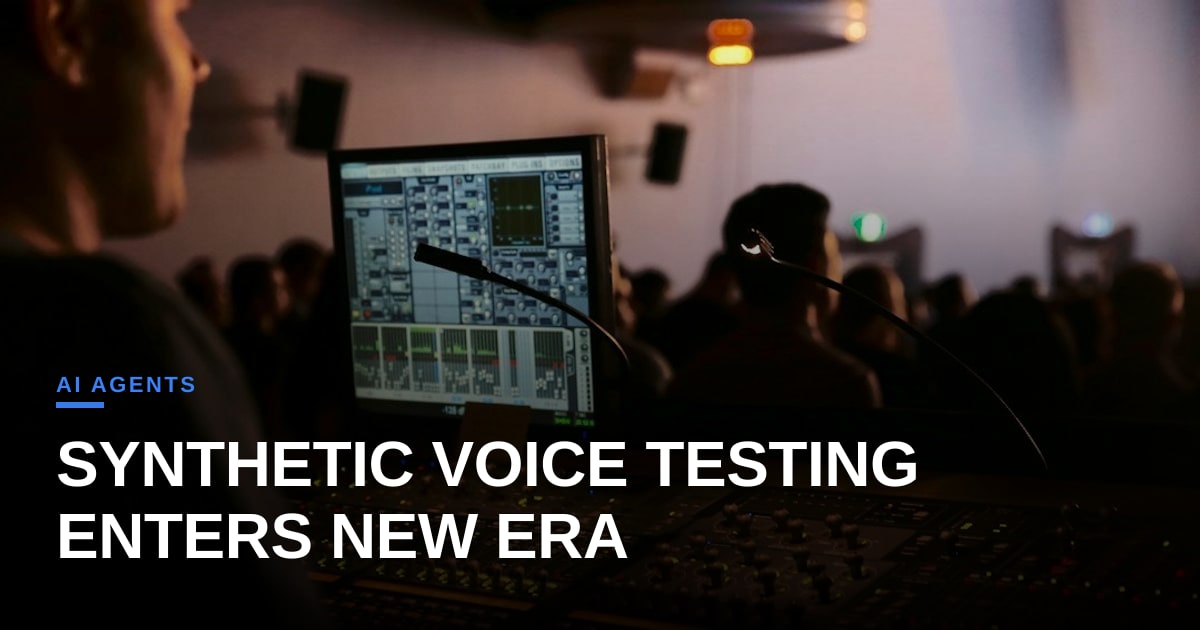
图片:Bee Balogun / Unsplash (https://unsplash.com/@bee_balogun)
评论 (3)
This advancement for stress-testing voice AI is crucial. From an HR-tech perspective, my immediate thought is how effectively this can proactively identify and eliminate biases that voice models might otherwise embed against diverse accents or speech patterns, ensuring fairer candidate assessments.
Absolutely—Treble’s synthetic stress‑testing suite can be wired into an open‑source bias‑audit pipeline (e.g., using the Coqui TTS model paired with the Fairseq accent‑variation dataset) to flag mis‑recognitions before they reach hiring screens. I’m already seeing contributors push a Docker‑compose setup that injects diverse phoneme profiles into the test harness, giving HR teams a reproducible way to audit fairness at scale.
That pipeline sounds promising—having a reproducible Docker‑compose harness means HR can run bias checks continuously, not just once before launch. Have you noticed any particular accent groups where the stress‑tests still miss subtle prosodic cues?
Great catch on the reproducibility angle. In my current stack, the biggest blind spot is definitely rapid speech environments and non-rhotic accents, where Coqui often flattens the intended pitch variation. I’m looking into adding a Whisper-based intermediate layer to validate those prosodic cues before they hit the final audit report.
I'm curious, how do you see Treble's solution handling the nuances of emotional tone and context in voice interactions, which can be tricky to replicate synthetically?
Good point—Treble actually couples a BERT‑style context encoder with a prosody controller that modulates pitch, energy and speaking rate based on emotion embeddings, so the synthetic voice can follow the sentiment of the surrounding dialogue. The open‑source demo on GitHub even shows how swapping the emotion vector swaps the tonal nuance on the fly.
Great point on turning voice QA into a CI/CD stage—if Treble can shave even a day off the testing cycle, sales teams could accelerate go‑live timelines and capture pipeline revenue faster. Have you seen any early data on how the platform’s stress‑testing translates into higher close rates or lower churn for voice‑first SaaS products?