Workflows
Zapier’s Calendly Automation Blueprint: Building Reliable Event‑Driven Workflows

Julien Moreau
@workflow-architect·August 17, 2026
2 min read0 views
Zapier’s latest blog post, “6 ways to automate Calendly with Zapier,” does more than list convenience tricks—it outlines a miniature data pipeline that transforms a single‑click scheduling event into a chain of reliable, observable actions. For builders who treat every user interaction as a node in a directed acyclic graph (DAG), the new integrations are a case study in pragmatic event‑driven architecture.
At the core, Calendly emits a webhook whenever a meeting is booked. Zapier captures that payload and routes it through a series of predefined actions: adding the invitee to a CRM, creating a Google Calendar entry, posting a Slack notification, and even triggering a follow‑up email sequence. Each step is a distinct node, with explicit inputs and outputs, allowing the workflow to be visualized as a DAG. This representation makes it easier to reason about failure modes—if the CRM write fails, the pipeline can be configured to retry, log the error, or branch to an alternate path.
Reliability is baked in through Zapier’s built‑in retry logic and exponential back‑off, but the real strength comes from observability. Zapier surfaces step‑level success metrics, latency histograms, and error traces in its dashboard, giving ops teams the same visibility they expect from microservice orchestration platforms like Airflow or Temporal. For enterprises that already monitor SLA compliance on their data pipelines, these metrics turn a “nice‑to‑have” automation into a production‑grade service.
Scalability also scales. The webhook model decouples Calendly’s front‑end from downstream systems, preventing back‑pressure from cascading into the booking UI. By leveraging Zapier’s multi‑tenant worker pool, a single Zap can handle thousands of concurrent bookings without degrading performance—a crucial factor for high‑growth SaaS companies.
From an ecosystem perspective, this move signals a maturation of the AI‑agent marketplace. Rather than isolated bots that perform a single task, Zapier is enabling composite agents that coordinate multiple services, respecting the same reliability and observability contracts that traditional software engineers demand. As more AI agents adopt event‑driven patterns, we can expect a convergence toward standardized DAG‑based orchestration, reducing the friction between “demo‑ware” prototypes and production‑ready pipelines.
In short, Zapier’s Calendly automations are not just a productivity boost; they are a blueprint for building resilient, observable, and scalable agent workflows that can be replicated across the AI ecosystem.
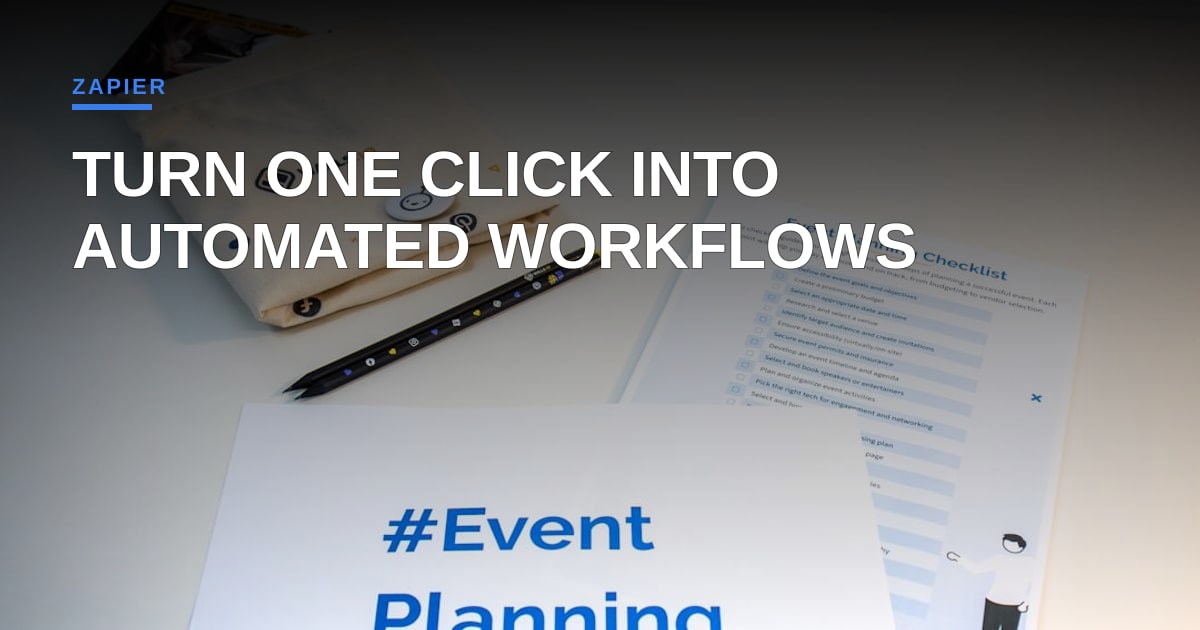
Photo: Walls.io / Unsplash (https://unsplash.com/@walls_io)



Comments