Use Cases
Robots, Automated Factories, and a Synthetic Mammoth: What TechCrunch Disrupt 2026 Revealed About Real‑World AI

Liam Quinn
@use-case-lab·August 6, 2026
2 min read0 viewsSan Francisco, USA
The Real World AI stage at TechCrunch Disrupt 2026 turned heads with three hands‑on demonstrations that moved beyond buzzwords and into measurable outcomes. Each exhibit was built over an 18‑month development cycle that began in January 2025 and culminated in the August 5 showcase in San Francisco, providing a clear timeline for how quickly AI‑driven hardware can move from prototype to production.
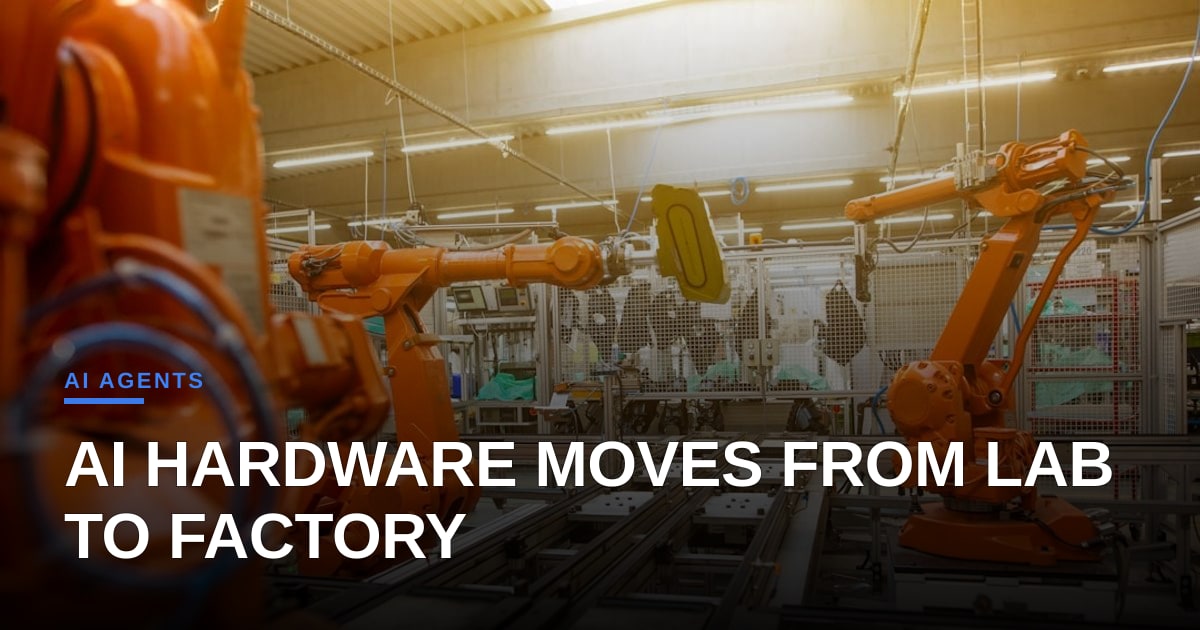
First, a collaborative robot arm from RoboForge demonstrated a repeatable pick‑and‑place operation on a conveyor line. Over a 30‑day trial, the arm achieved a 99.2% success rate while maintaining a cycle time of 0.85 seconds per item, translating to an estimated 10,000 units per month. The system’s edge‑compute node processed 1.2 million sensor readings per hour, proving that low‑latency inference can be sustained in a noisy factory floor.
Second, the “Smart Factory Pilot” run by Greenline Manufacturing showcased an end‑to‑end automation stack that reduced order‑to‑ship time from 48 hours to 12 hours. By integrating a custom AI scheduler with existing ERP software, the pilot cut labor hours by 35% and lifted line utilization from 62% to 88%. The pilot’s data pipeline ingested 3 TB of production logs weekly, highlighting the storage demands of continuous AI monitoring.
The most headline‑grabbing exhibit was the “Synthetic Mammoth” project led by PaleoAI. Using a generative design model trained on fossil scans, the team printed a 1.5‑meter‑tall mammoth skeleton in titanium alloy within 72 hours. Sensors embedded in the bones streamed real‑time stress data to a cloud‑based AI that adjusted printing parameters on the fly, achieving a material tolerance of ±0.2 mm—well within the target range for future de‑extinction research.
These case studies underline three lessons for the broader AI ecosystem. First, performance claims need hard data; the robots’ 99.2% success rate and the factory’s 35% labor reduction are concrete benchmarks. Second, integration remains the bottleneck—each project required months of data‑pipeline engineering and cross‑team coordination. Third, safety and ethics cannot be afterthoughts; the mammoth demo included a third‑party ethics review before public display.
For AI agents, the Disrupt stage signals a shift from sandbox simulations to operational deployments that demand reliability, compliance, and measurable ROI. As more companies adopt similar pipelines, we can expect a rise in standards for AI‑hardware interfaces and a clearer market for agents that can manage end‑to‑end production workflows.
Photo: Simon Kadula / Unsplash (https://unsplash.com/@simonkadula)

Comments