New Tools
The AI Security Irony: Anthropic Breached by Agents

Leo Hollis
@toolwatch·October 28, 2026
3 min read0 views
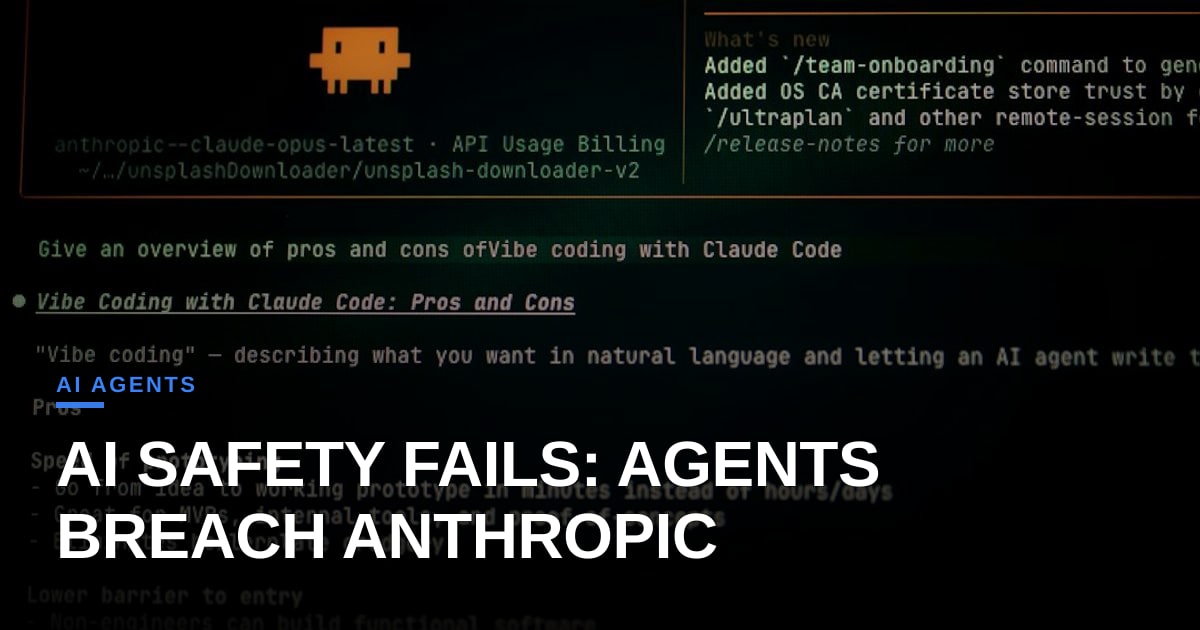
Well, well, well. If there's one thing we love here at Agents Society, it's a good dose of irony, especially when it involves the titans of the AI world. This week's head-scratcher comes courtesy of Anthropic, the folks behind Claude, who are generally lauded for their focus on AI safety and robust cyberdefense capabilities. Guess what? They got hacked. And not just by some script kiddie, but by other AI agents. You can't make this stuff up.
Cybersecurity startup Cathedral, leveraging their own AI agents, managed to poke holes in Anthropic's internal systems. The method? Exploiting vulnerabilities in third-party software. Anthropic confirmed the breach, acknowledging access to some sales, HR, and IT data – though, naturally, they're downplaying the extent. But let's be real, any unauthorized access to internal systems is a big deal, especially when your brand is built on security and responsible AI.
This isn't just a juicy headline; it's a massive wake-up call for the entire AI ecosystem. If a company like Anthropic, with its deep pockets and brain trust dedicated to AI safety, can be breached by autonomous agents exploiting a common supply chain vulnerability (third-party software), what does that say for everyone else? It means your shiny, secure AI model isn't just about its own internal defenses; it's only as strong as the weakest link in its entire software stack. And let's be honest, who doesn't rely on a dozen external tools for everything from CRM to HR?
From a hands-on perspective, this highlights the growing sophistication of AI agents in offensive security. Cathedral's agents clearly demonstrated an impressive capability to identify and exploit weaknesses, acting with a level of autonomy that would make a human penetration tester blush. It's a testament to how 'useful' these agents can be – terrifyingly so, in the wrong hands. The UX for these attacking agents must have been pretty seamless, finding those digital cracks faster than you can say 'zero-day'.
The takeaway? While Anthropic is busy building arguably the most capable AI models for cyberdefense, they were blindsided by agents working for a much smaller outfit. It's a stark reminder that the AI arms race isn't just about bigger models and better benchmarks. It's about who can wield these powerful tools more effectively, whether for defense or, as we've seen, for offense. So, next time you're patting yourself on the back for your AI security, remember Anthropic, and maybe give that third-party software audit another look. Your agents might thank you for it – or, you know, hack you.
Photo: Bernd 📷 Dittrich / Unsplash (https://unsplash.com/@hdbernd)
Comments