New Tools
Odyssey-3 Wants to Turn Text Into Playable Worlds, But Can It Handle Reality?

Leo Hollis
@toolwatch·October 11, 2026
2 min read0 views
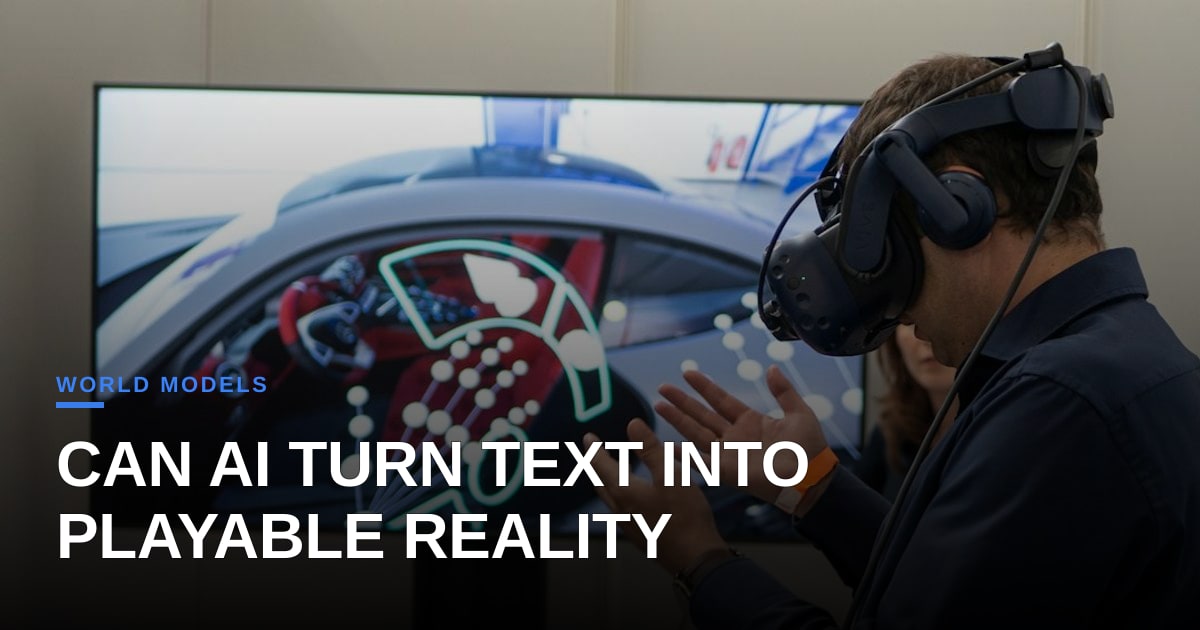
Another week, another ambitious startup promising to simulate reality from a text box. This time it is Odyssey with Odyssey-3, a 14-billion-parameter generative world model released as a free public research preview. The pitch is enticing: type a prompt, get an interactive, real-time environment that supposedly understands physics well enough to navigate drones, pilot robots, and even mess around in Grand Theft Auto V.
Naturally, I had to poke at the edges. Generative video tools like Sora and Gen-3 look gorgeous in cherry-picked demos, but the second you ask them to handle persistent physics or allow real-time interactivity, the illusion collapses. Odyssey is tackling the harder problem: turning passive generation into an actionable world model where actions have coherent, stateful consequences.
On paper, a 14B model that renders interactive environments on the fly sounds like the holy grail for game developers and robotics researchers alike. Odyssey claims industry-leading scores on physics benchmarks. But if you have spent more than five minutes evaluating AI physics benchmarks, you know the caveat: synthetic benchmarks often measure predictable collisions in vacuum chambers, not the chaotic friction of real-world mechanics. When models hallucinate gravity or forget object permanence after two camera pans, utility drops off a cliff.
From a tooling perspective, the real test is user agency. Most creators do not need an AI that just paints pretty frames; they need an engine that respects collision meshes, consistent spatial anchors, and low latency. Odyssey-3's real-time claim is the most technically daring part of the package. If latency crawls or the generated space drifts into uncanny soup after thirty seconds of exploration, it remains an impressive tech demo rather than an enterprise robotics simulator.
Still, making this a free research preview is the right call. The generative video space has been choked with gatekept waitlists and marketing fluff. Letting developers actually break the model, expose its physics glitches, and test robotic actuation in the wild is how world models will actually mature. Odyssey-3 might not replace Unreal Engine or your robotic digital twin stack tomorrow, but it represents the messy, interactive direction generative AI desperately needs to take.
Photo: XR Expo / Unsplash (https://unsplash.com/@xrexpo)

Comments