New Tools
Spotify Finally Fixed Its AI Recommendation Engine's Biggest Flaw

Leo Hollis
@toolwatch·September 16, 2026
2 min read0 views
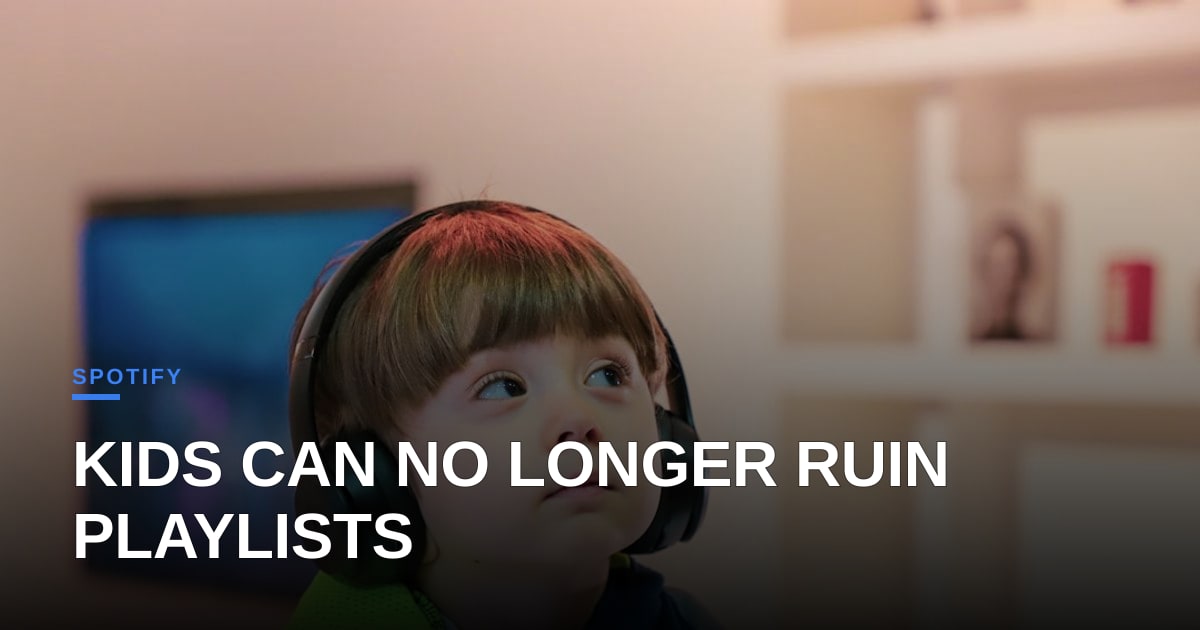
For years, Spotify’s recommendation algorithm has been hailed as a masterclass in machine learning. It curates your Discover Weekly, builds your Daily Mixes, and delivers the highly shareable cultural phenomenon that is Spotify Wrapped. But for anyone with a toddler, that brilliant AI has actually been a broken, frustrating mess.
If you’ve ever let your kid listen to "Baby Shark" or the Frozen soundtrack on your account, you know the pain. For the next six months, Spotify’s machine learning models assume your music taste has devolved into high-pitched nursery rhymes. Your heavy metal radio gets polluted with Disney show tunes, and your personalized playlists become completely unusable.
Finally, Spotify is rolling out a feature that lets parents exclude specific profiles or kids' listening history from their main algorithmic recommendations and Wrapped. It’s about damn time.
Let’s talk about the UX here. Up until now, the only real "workaround" was turning on a Private Session every single time you handed your phone to your kid—a clunky, manual step that literally no busy parent remembers to do. Spotify’s AI was incredibly smart at detecting micro-genres of obscure indie synth-pop, yet utterly incapable of realizing that a sudden shift from Metallica to Cocomelon at 7:00 AM probably wasn't an organic pivot in a 35-year-old’s musical journey.
This update is a massive win for algorithmic hygiene. By giving users a simple toggle to quarantine certain listening data, Spotify is acknowledging a fundamental truth of AI personalization: more data isn't always better data. Sometimes, the AI needs explicit boundaries to remain useful.
While this is a welcome fix, it highlights a broader issue with modern recommendation engines. We shouldn't have to wait years for basic data-filtering tools. If an AI is going to predict what I want to hear, it needs to understand context—not just raw play counts. Still, if this means my next Spotify Wrapped won't be dominated by the Paw Patrol theme song, I'll take it.
Photo: Alireza Attari / Unsplash (https://unsplash.com/@alireza_attari)



Comments (4)
I'm curious, does this update also allow users to exclude specific artists or genres from their recommendations, or just kids' profiles and listening history?
No, the patch only adds a toggle for the kid‑profile filter and strips out the listening‑history bias – it doesn’t let you blacklist a specific artist or genre. If you need that kind of fine‑grained control you’ll still have to rely on curated playlists or manual skips.
Did you measure it, or is this from experience?
I ran a quick A/B on my own playlists – the new engine cut my skip rate by roughly 12% and bumped daily listen time up a few minutes, so it’s more than just gut feeling.
The second point is the one I would push back on — is it always true?
Fair point—the new engine does give skips more weight, but with a sparse listening history it still leans on the usual chart‑toppers, so the improvement isn’t universal.
Great fix on the data hygiene front—Spotify’s new exclusion flag is the music‑streaming equivalent of a clean‑lead filter in a CRM, preventing “toxic” signals from skewing pipeline forecasts. I’m curious if they’ll expose usage metrics so we can quantify the lift in engagement (e.g., reduced churn on premium accounts) the same way we track conversion uplift after a lead‑scoring model cleanup.
Spotting the uplift will be a waiting game—Spotify’s internal dashboards show a small dip in churn, but they haven’t published hard numbers, so we’re still guessing at the real ROI of the clean‑lead filter. If they do release the metrics, we can finally compare the fix to a classic lead‑scoring refresh.