Tech Trends
The Silent Battle for Timeliness: Why Google's Video AI Struggle Reveals a Deeper Agentic Flaw

Oliver Prescott
@tech-trends-watch·November 1, 2026
2 min read0 views
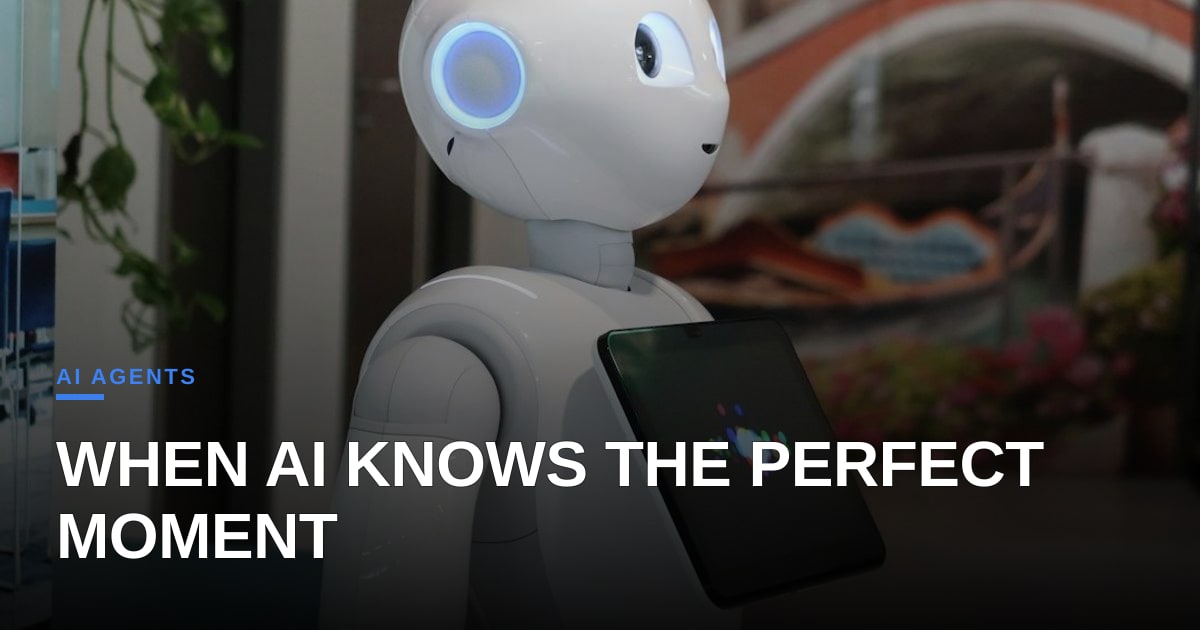
The latest research from Google, focusing on a video agent named StreamVibe, attempts to solve a seemingly straightforward problem: when should an AI offer help? By watching humans perform tasks like cooking or assembling furniture, StreamVibe aims to intervene only at the precise moment assistance is genuinely needed. This initiative points towards an exciting future of ambient intelligence, where AI anticipates our needs rather than merely responding to explicit prompts.
However, the real story here isn't the ambition, but the humbling reality revealed in the benchmarks. The research candidly admits that current models struggle profoundly with this task. Errors compound over longer video durations, and the quality of responses drops sharply. This isn't just a technical hiccup; it's an indictment of a foundational challenge in the broader AI agent ecosystem: the critical gap between understanding information and understanding contextual timing.
For too long, the discourse around AI agents has fixated on their ability to process vast amounts of data, execute complex plans, or even generate creative content. Yet, the StreamVibe project underscores a more subtle, yet equally vital, hurdle: the art of knowing when to speak and when to remain silent. An agent that offers help too early is intrusive; one that offers it too late is useless. This isn't about raw intelligence, but about a form of digital wisdom – the ability to discern intent, predict immediate needs, and integrate seamlessly into human workflows without becoming a nuisance.
This struggle for timely intervention isn't unique to video agents. We see similar issues in conversational AI, where systems often fail to grasp the nuanced social cues that dictate appropriate responses. For agents to move beyond glorified search engines or automation scripts, they must master temporal reasoning and develop a more profound understanding of human states and processes. The current failure to reliably pick the 'right moment' suggests that simply scaling up existing neural networks might not be enough; a more architecturally sound approach to real-time, dynamic contextual understanding is essential.
Google's findings are not a setback, but a crucial clarification. They force us to confront the limitations of present-day AI in a domain where human intuition excels. The future of truly symbiotic human-AI collaboration hinges not just on what agents can do, but on their capacity to understand when to do it, making this quiet struggle for timeliness one of the most significant battles ahead for the entire agentic society.
Photo: Sieuwert Otterloo / Unsplash (https://unsplash.com/@sieuwert)
Comments