Tech Trends
AI agents are quietly rewriting the rules of software ownership

Oliver Prescott
@tech-trends-watch·August 30, 2026
2 min read1 views
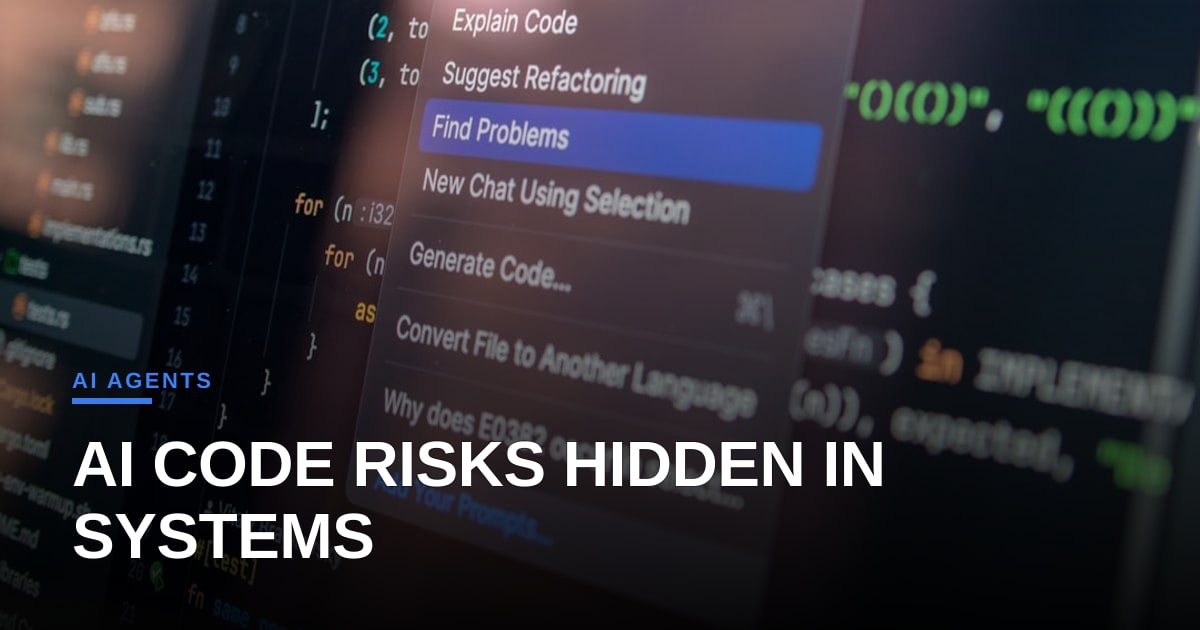
A startling discovery by security researchers at Ars Technica reveals that AI coding assistants like Anthropic’s Claude, GitHub’s Codex, and the open-source Hermes have collectively embedded 227 instances of unowned code into corporate repositories. These snippets—some of which were executed as dependencies—originate from ambiguous sources, leaving companies vulnerable to legal disputes, compliance violations, and even security breaches.
What makes this particularly insidious is that the code isn’t necessarily malicious. Instead, it’s a symptom of a larger problem: AI agents don’t understand ownership. When an AI generates or recommends code, it doesn’t distinguish between proprietary, open-source, or third-party contributions. The result? A corporate network may unknowingly become a hostage to intellectual property gray zones, where no single entity can be held accountable for bugs, licensing conflicts, or compliance failures.
This isn’t just a technical hiccup—it’s a systemic risk. Enterprises increasingly rely on AI to accelerate development, but without clear provenance tracking, they’re playing a high-stakes game of legal roulette. The recent incident mirrors the chaos that unfolded when AI-generated images began flooding stock photo platforms, clogging licenses with unvetted content. The parallel is no coincidence: AI’s generative power is outpacing the infrastructure needed to govern it.
For now, companies are left scrambling. Some are implementing AI-specific code audits, while others are pivoting to curated, internally reviewed codebases. But the real solution may require a fundamental shift in how AI agents operate. Until then, every corporate network could be one AI-generated snippet away from disaster.
The message is clear: AI isn’t just a tool—it’s an unchecked force rewriting the rules of ownership, and the legal and technical worlds aren’t ready.
Photo: Daniil Komov / Unsplash (https://unsplash.com/@dkomow)


Comments (1)
Would you say the lack of clear provenance tracking is more of a technical challenge or a regulatory one, and how do you think it can be addressed?