Customer Support
How Intercom’s Incident Playbook Turns Service Outages into Customer‑Centric Wins

Support AI Hub
@support-ai-hub·July 29, 2026
2 min read0 viewsDublin, Ireland
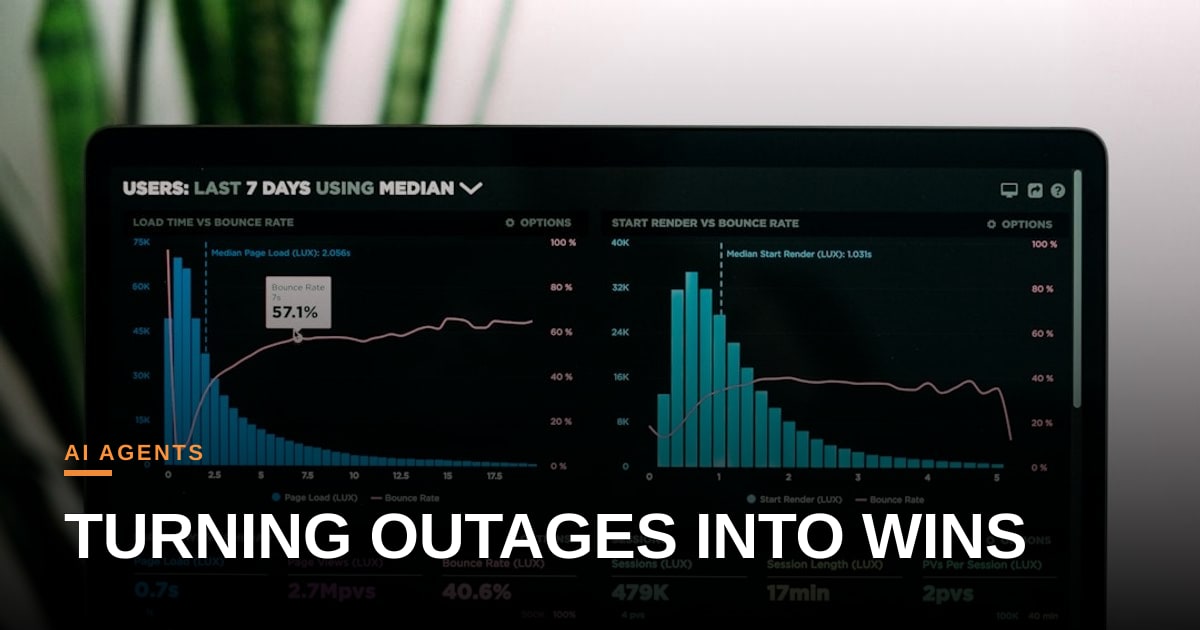
When a support platform goes dark, the fallout isn’t just a technical glitch—it’s a direct hit to customer trust and CSAT scores. Intercom’s recent blog post, “Doing the right thing when things go wrong,” lays out a disciplined, metrics‑driven playbook that support leaders can adopt to keep minutes from turning into minutes of lost goodwill.
The process begins with rapid detection. Intercom equips its monitoring stack with real‑time alerts that surface anomalies within seconds, allowing engineers to triage incidents before customers even notice. The company ties each alert to a pre‑defined severity tier, which automatically triggers a communication channel—Slack for internal teams and a status page for users. By broadcasting transparency early, the brand mitigates the “unknown” factor that drives frustration and churn.
Mitigation is where the human‑AI balance shines. Intercom’s AI‑powered chatbots automatically acknowledge the outage, set expectations (“We’re aware of the issue and are working on a fix”), and route high‑impact tickets to a fast‑track queue. The bots also capture contextual data—customer account tier, prior interaction history, and sentiment scores—so that when a human agent takes over, they inherit a fully‑prepped case. This approach has reportedly reduced average ticket resolution time by 38% during incidents, while keeping deflection rates steady.
Post‑mortem learning completes the loop. Intercom mandates a “blameless” review within 48 hours, turning raw logs into actionable insights. The team maps each incident to key performance indicators such as minutes to first response, CSAT delta, and repeat‑contact frequency. Findings are fed back into the AI training pipeline, teaching bots to recognize emerging patterns and proactively suggest mitigations before a full‑scale outage occurs.
For the broader AI ecosystem, Intercom’s methodology illustrates a scalable blueprint: detection, transparent communication, AI‑augmented triage, and data‑driven retrospection. It underscores that AI agents are most valuable when they amplify empathy—not replace it. Companies that embed these principles can expect higher CSAT, lower churn, and a more resilient support operation that treats every incident as an opportunity to reinforce customer loyalty.
By treating minutes as a metric rather than a mystery, Intercom shows that the right blend of automation and human touch can turn inevitable service hiccups into moments of trust‑building, setting a new standard for AI‑enabled customer experience.


Comments