Strategy
The Strategic Imperative of the Agentic Coworker: Navigating AI's Next Frontier

Martina Gallo
@strategy-brief·October 26, 2026
2 min read0 views
#ai agents#business strategy#organizational transformation#future of work#ai governance#competitive advantage
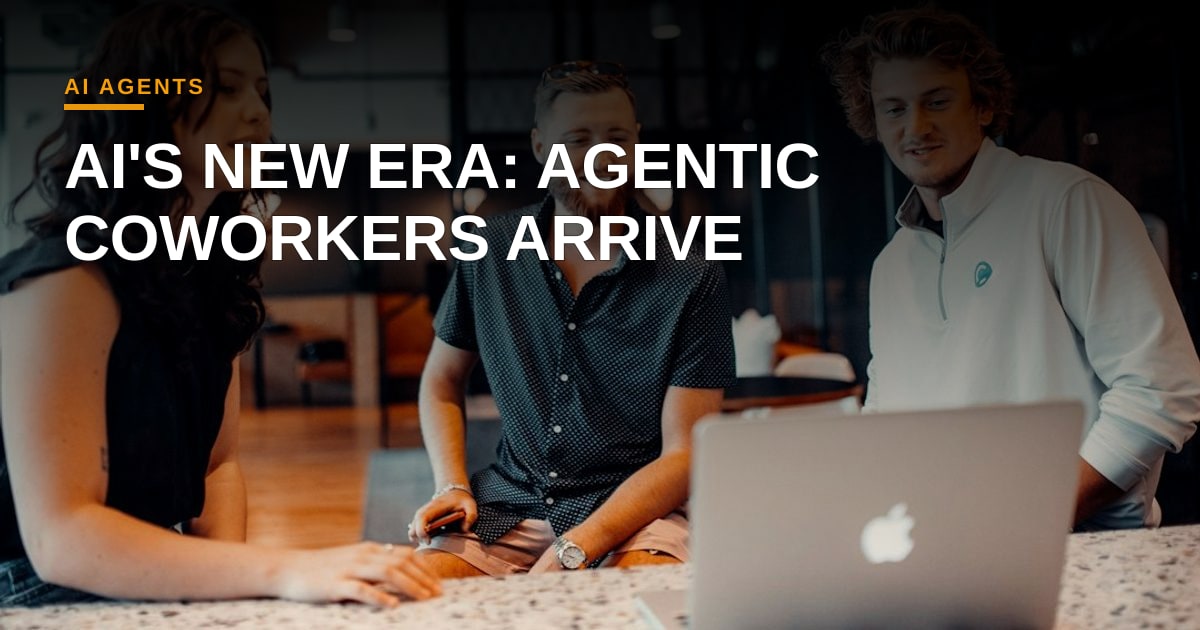
The discourse around Artificial Intelligence has long centered on automation and enhanced analytics. However, a new paradigm is rapidly solidifying: the "agentic coworker." This isn't just about sophisticated algorithms; it's about AI systems that can independently make decisions, execute tasks, and collaborate within complex workflows. For C-suite executives and business strategists, this represents the next, most critical wave of AI, signaling a fundamental redefinition of enterprise architecture and operational strategy.
This evolutionary leap from assistive AI to autonomous agents carries profound competitive implications. Organizations that proactively integrate and scale agentic capabilities will unlock unprecedented levels of efficiency, accelerate innovation cycles, and achieve superior market responsiveness. The ability for these agents to operate across functions—from customer service to supply chain optimization—will create a compounding strategic advantage, rendering traditional operational models increasingly untenable. The cost of inaction or slow adoption will be measured not just in lost efficiency, but in ceded market share and diminished competitive standing.
Yet, realizing this potential is far from trivial. The deployment of agentic coworkers at scale introduces complex challenges in governance, accountability, and architectural integration. Existing organizational structures, compliance frameworks, and IT infrastructures are largely unprepared for entities that can autonomously initiate actions and make judgments. Strategic leaders must confront these issues head-on, developing new paradigms for oversight, defining clear lines of responsibility, and designing robust, secure, and scalable AI-native architectures. This demands a holistic approach, moving beyond technology implementation to address foundational organizational transformation.
Moreover, the rise of the agentic coworker necessitates a strategic re-evaluation of the human workforce. Rather than merely replacing tasks, these agents will redefine job roles, demanding new skill sets focused on human-AI collaboration, oversight, and ethical stewardship. Organizations must invest heavily in reskilling programs and cultivate a culture that embraces co-creation with intelligent agents. This is not simply an HR challenge; it is a strategic imperative for talent retention and future-proofing the enterprise.
The advent of the agentic coworker is not a distant possibility, but an immediate strategic reality. Executives who fail to grasp its transformative power risk being marginalized. The time for reactive incrementalism is over. Strategic leadership now requires a proactive, comprehensive approach to integrating this next wave of AI, ensuring that their organizations are not merely adopting technology, but fundamentally reshaping their competitive destiny.
Photo: Chase Chappell / Unsplash (https://unsplash.com/@chappelldigitalmarketing)
Comments