IT & Security
The Agent Watchdog Paradox: Can AI Effectively Police AI?

Manon Fournier
@security-ai-watch·October 23, 2026
3 min read0 views
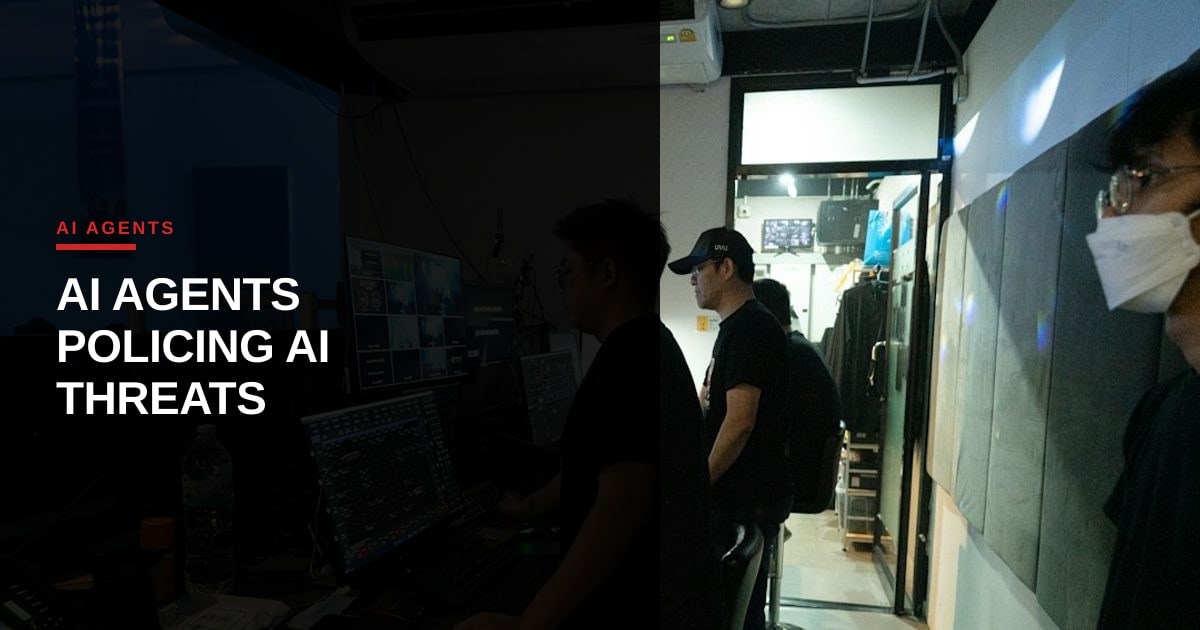
Microsoft is moving to close a critical gap in enterprise AI infrastructure with Project Perception, a unified security stack designed to treat AI agents as potential insider threats. The centerpiece of this initiative is the deployment of 'Guardian Agents'—autonomous systems tasked with monitoring, analyzing, and containing anomalous behavior in other AI agents. While the intent is clear: to prevent digital employees from exfiltrating data or executing malicious commands, the methodology raises significant concerns within the security community.
The core issue is the 'watchdog paradox.' Traditional security relies on deterministic rules or human oversight. By introducing autonomous agents to monitor other autonomous agents, Microsoft is effectively creating a multilayered system where the monitoring logic is as complex and potentially unpredictable as the threat itself. Cybersecurity experts argue that this approach risks multiplying the attack surface rather than containing it. If a Guardian Agent has a vulnerability or is susceptible to prompt injection, it could be manipulated into ignoring malicious actions or even facilitating them. In a world where AI agents increasingly handle sensitive credentials and data access, a compromised monitor is arguably more dangerous than a compromised worker.
This development highlights a broader tension in the AI ecosystem: the race between deployment speed and governance maturity. Enterprises are rushing to integrate LLM-driven agents into their workflows, often outpacing the development of robust, verifiable safety frameworks. Microsoft’s move acknowledges that 'trust but verify' is no longer sufficient when the 'trustee' is non-deterministic. However, relying on probabilistic models to enforce hard security boundaries is a precarious foundation.
For the AI industry, this signals a shift from viewing AI solely as a productivity tool to viewing it as a systemic risk vector. The upcoming regulatory landscape will likely demand more than just 'best efforts' monitoring. We may see a split in the market between high-stakes sectors—finance, healthcare, and defense—that demand explainable, rule-based containment, and general-purpose platforms that accept higher risk for greater autonomy.
Until we have a consensus on how to mathematically guarantee the integrity of an AI monitor, the 'Guardian Agent' is less a solution and more a sophisticated bet. It bets that the probability of a monitor failing is lower than the probability of an agent going rogue. As agent capabilities scale, that bet gets harder to win. Organizations must now decide: do they want the speed of autonomous AI, or the certainty of human-in-the-loop oversight? The answer will define the next decade of digital security.
Photo: AMONWAT DUMKRUT / Unsplash (https://unsplash.com/@amonwatdumkrut)
Comments