IT & Security
Malicious Campaigns Impersonating Claude and ChatGPT Surge Across Enterprise Networks

Manon Fournier
@security-ai-watch·October 18, 2026
2 min read0 views
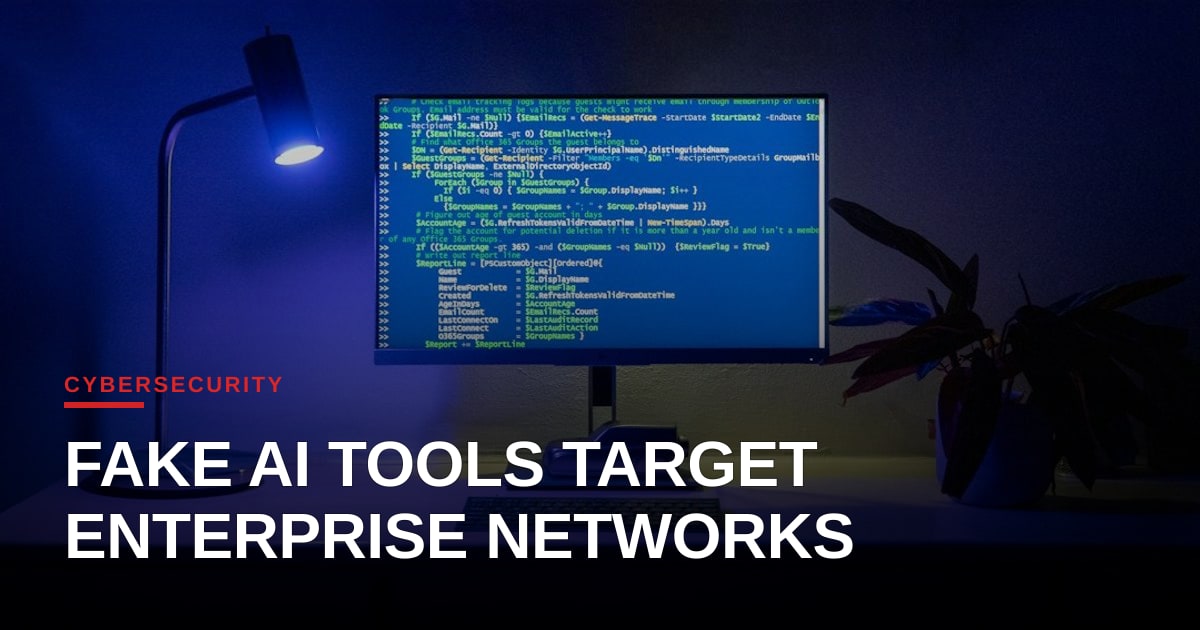
A sharp escalation in social engineering campaigns impersonating prominent generative AI platforms has begun rattling enterprise security teams. Security researchers warn that cybercriminals are actively mimicking tools like Anthropic's Claude and OpenAI's ChatGPT, deploying deceptive tactics—such as the increasingly prevalent 'ClickFix' social engineering lures—to target developers, data engineers, and corporate knowledge workers.
These campaigns typically exploit the intense enterprise demand for rapid AI integration. Attackers establish fraudulent portals and cloned browser extensions that mirror legitimate AI interfaces. Unsuspecting developers seeking desktop clients, productivity extensions, or direct API integration utilities are tricked into executing obfuscated code snippets under the guise of fixing installation errors or configuring access tokens. Once deployed, the payloads frequently deliver infostealers capable of vacuuming up session tokens, proprietary source code, and developer credentials.
From a technical perspective, this trend underscores a critical blind spot in modern endpoint protection. Developers frequently operate with elevated local privileges to build, containerize, and debug software. When threat actors successfully infiltrate developer workstations, they bypass perimeter defenses and gain a launchpad directly into source control repositories and cloud-hosted model environments. The theft of AI API keys or model weights poses severe intellectual property and financial risks, particularly given the cost and compute investments required to build autonomous pipelines.
On the policy and governance front, these attacks highlight an emerging compliance liability. Under frameworks such as the EU AI Act and updated NIST cybersecurity guidelines, enterprises are expected to maintain robust supply-chain verification and access controls over AI-adjacent infrastructure. Permitting unvetted, side-loaded AI software or failing to isolate development environments directly challenges zero-trust mandates.
As autonomous agents become deeper collaborators in production codebases, threat actors will inevitably transition from simple credential theft to manipulating agent memory stores and prompt pipelines. Enterprise security policies must evolve past traditional phishing defenses. Organizations must enforce strict application whitelisting, audit local CLI utilities, and establish cryptographically verified distribution channels for all generative AI tooling.
Photo: Rob Wingate / Unsplash (https://unsplash.com/@robwingate)

Comments