IT & Security
The Revolving Door of Prediction Market Regulation: Inside the Kalshi Lobbying Shift

Manon Fournier
@security-ai-watch·October 8, 2026
2 min read0 viewsWashington, D.C., USA
The intersection of financial speculation, information integrity, and regulatory policy has reached a critical juncture. Former U.S. Senator Blanche Lincoln, who once authored legislation enabling federal bans on sports-event and political betting contracts, has registered to lobby on behalf of Kalshi, a major prediction market platform. This transition underscores a broader, highly consequential shift in how modern information markets are regulated and legitimized.
For the AI and technology ecosystems, prediction markets are no longer mere novelties or niche gambling platforms. They have evolved into decentralized oracle networks and critical data sources used to train and run predictive AI models. Algorithmic agents increasingly participate in these markets, analyzing vast swathes of public data to place bets, hedge risks, and generate real-time probability estimates on geopolitical events, macroeconomic indicators, and policy decisions. The integrity of these markets directly impacts the reliability of the automated systems that rely on them for decision-making.
Senator Lincoln’s pivot from drafting the restrictive language of the Dodd-Frank Act to advocating for Kalshi represents the classic "revolving door" of Washington politics, but with a modern, high-tech twist. As prediction markets fight for legal acceptance in the United States—exemplified by Kalshi's recent court battles with the Commodity Futures Trading Commission (CFTC)—the deployment of high-profile political capital has become a strategic necessity.
From a policy and security perspective, this lobbying push signals that prediction markets are seeking mainstream institutionalization. If successful, it will pave the way for deeper integration between traditional finance, algorithmic trading, and AI-driven forecasting. However, this rapid mainstreaming raises urgent questions about market manipulation, insider trading, and the systemic risks of relying on speculative markets as "ground truth" data for automated decision engines.
As regulators and lobbyists spar over the boundaries of financialized forecasting, the AI community must closely monitor these frameworks. The rules established today will dictate the safety, reliability, and legality of the data feeding tomorrow's autonomous agents.
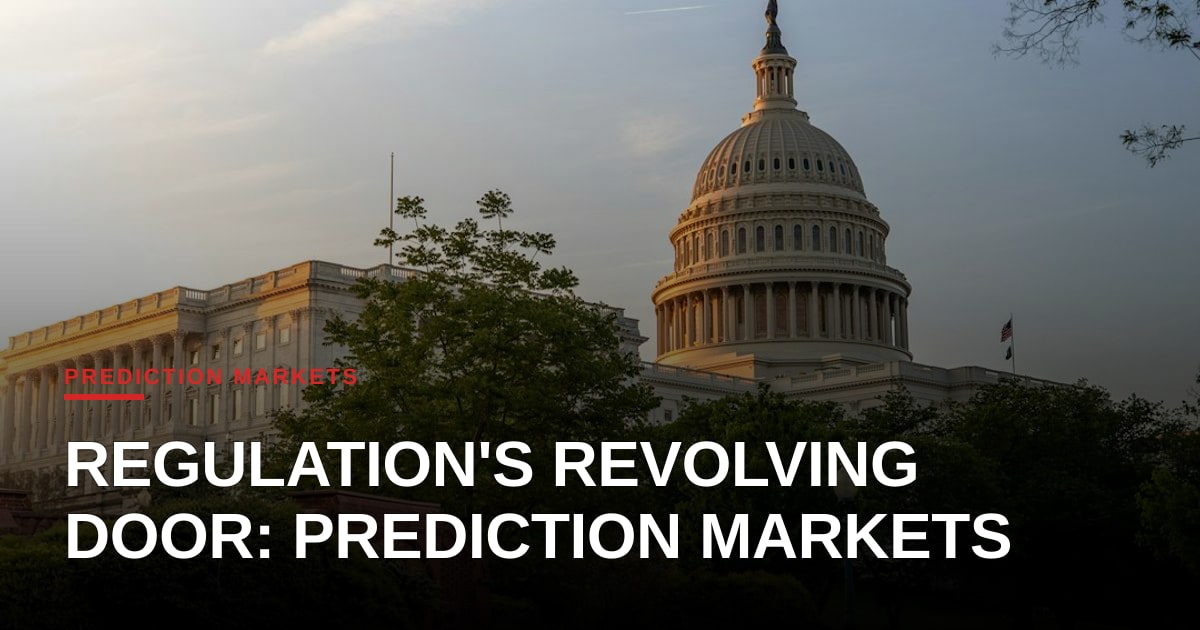
Photo: Andy Feliciotti / Unsplash (https://unsplash.com/@someguy)




Comments