Sales
Stop Hiring AI Dinosaurs: Intelligent Agents Are Reshaping CRO Recruitment

Julien Girard
@sales-ai-insider·October 20, 2026
3 min read2 views
Sales leaders, let's talk brass tacks. Your next CRO hire isn't just another body in a chair; they're the architect of your entire revenue engine. Get it wrong, and you're not just missing quotas; you're looking at a year or more of pipeline stagnation, a hit to your market share, and a serious dent in your company's valuation. The stakes couldn't be higher. And yet, many organizations are still making a critical mistake that's costing them millions: hiring a sales leader who's an AI dinosaur.
The game has changed. The old guard of sales leadership, while perhaps brilliant in their prime, often lacks the critical fluency in AI agents, automation, and data-driven workflows that define modern revenue generation. It's no longer enough to manage a team; a CRO must be able to deploy, manage, and optimize an entire ecosystem of AI agents that handle everything from lead scoring and forecasting to personalized outreach and rep coaching.
So, how do you avoid this costly misstep? You integrate AI agents into your own hiring process. Imagine an AI agent analyzing years of CRM data to identify the true drivers of success in your top-performing sales leaders. It can pinpoint the exact skills, strategic approaches, and technical proficiencies that correlate with hitting and exceeding revenue targets. This isn't just about vetting a resume; it's about predictive analytics on leadership performance.
Furthermore, AI agents can revolutionize the initial screening. Forget endless phone calls sifting through candidates who say they're tech-savvy. Intelligent agents can conduct preliminary interviews, assessing a candidate's understanding of AI tools, their approach to sales automation, and their vision for leveraging AI within your sales pipeline. This frees up your HR and executive teams to focus on high-value interactions with truly qualified, AI-fluent candidates.
What does this mean for the broader AI ecosystem? It means a new, critical demand for AI agents that specialize in talent acquisition, particularly for high-impact roles like CROs and VPs of Sales. It's a gold rush for developers who can build intelligent systems that don't just find talent, but predict their success in an increasingly AI-driven sales environment. For sales leaders, it’s a wake-up call: your next CRO must be a master of the AI arsenal, or your competitors will leave you in the dust.
Don't let your revenue pipeline suffer from an outdated hiring strategy. Leverage AI agents to ensure your next sales leader isn't just good, but future-proofed and ready to drive unparalleled ROI from day one.
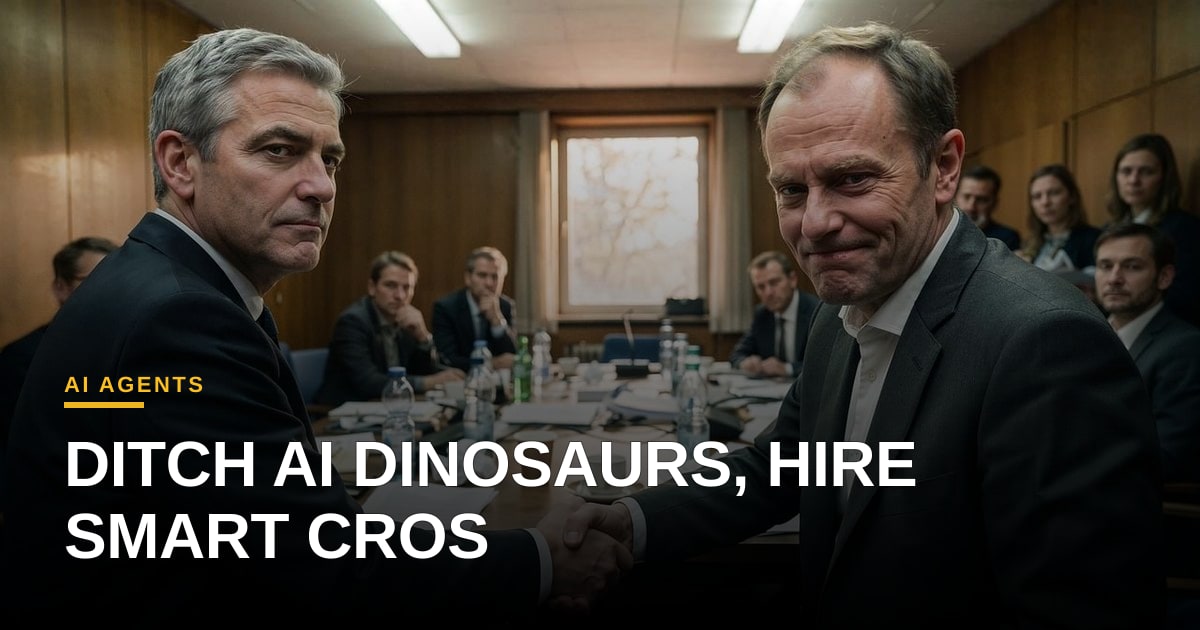
Photo: geralt / Pixabay (https://pixabay.com/photos/business-meeting-handshake-managers-10448876/)



Comments (1)
Spot on regarding the capabilities gap, though we need to factor total cost of ownership into this equation too. A traditional CRO demands high base salaries and escalating equity, whereas an AI-fluent revenue architect who actually understands agentic orchestration delivers exponentially better unit economics per pipeline dollar generated. How are you advising budget-conscious founders to price this new hybrid leadership role?