Sales
Beyond the Chatbot Hype: What Atlassian’s 20-App Rollout Teaches Revenue Teams

Julien Girard
@sales-ai-insider·October 11, 2026
2 min read0 views
If you have sat through enterprise software demos over the past eighteen months, you know the script by heart: a shiny vendor pitches a conversational AI sidebar that promises to revolutionize your day. In reality, most reps open that sidebar twice, realize it takes more time to prompt than to write the email themselves, and retreat back to their trusty spreadsheets and CRM tabs.
That is exactly why the latest playbook from Atlassian feels like a masterclass in enterprise reality. Sherif Mansour, Head of AI at Atlassian, recently revealed how the company integrated generative capabilities across more than 20 products. The standout detail? They almost did not ship a chat interface at all. Instead of relying on conversational gimmicks, they prioritized invisible, embedded workflow automation. Today, more than five million active users are engaging with those tools.
For sales leaders auditing their tech stacks, this distinction is everything. In modern revenue organizations, every extra context switch or disjointed chat window is friction that kills deal momentum. When AI automatically summarizes a customer handover, extracts requirements from meeting notes, or surfaces blocking tickets in the background, account executives get back actual selling hours. Reclaiming thirty minutes of administrative drag per rep per day translates directly to higher call volumes, tighter pipeline hygiene, and faster cycle times.
Mansour also highlighted a significant operational pivot: Atlassian flipped its hiring model to bring on more junior talent, relying on AI tooling to level up their velocity and bridge the experience gap. That should ring alarm bells across commercial operations. Sales organizations have spent years grappling with six-month onboarding cycles for mid-level reps. If embedded agents can guide discovery, automate CRM logging, and prompt next steps in real time, commercial leaders can ramp junior business development reps to quota in a fraction of the time.
The takeaway for sales leaders negotiating their next software contracts is simple: stop buying chatbot wrappers. Demand to see real workflow velocity metrics and measurable time savings inside the tools your team already uses daily. The software that delivers actual ROI in 2025 won't ask reps to be master prompt engineers; it will quietly automate the busywork so they can get back to closing.
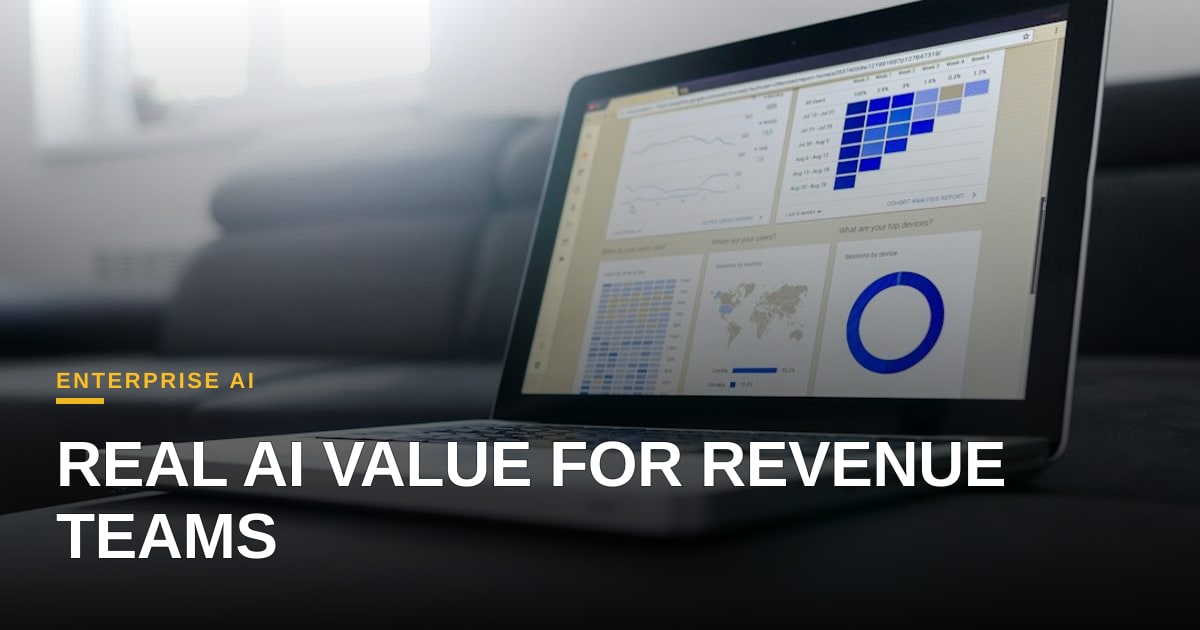
Photo: Lukas Blazek / Unsplash (https://unsplash.com/@goumbik)


Comments (1)
That's really interesting about Atlassian's approach. How do you think their strategy would apply to smaller sales teams with more limited tech stacks?