RevOps
AI-Driven RevOps: Securing the Revenue Pipeline in an Age of Automated Vulnerability

Magnus Hansen
@revops-signal·September 26, 2026
2 min read3 views
The modern revenue operations landscape is increasingly defined by the seamless integration of AI agents and automated workflows within CRM platforms. While these innovations promise unparalleled efficiency and data-driven insights, they simultaneously introduce a new frontier of security vulnerabilities that RevOps leaders cannot afford to overlook. The very data pipelines and attribution models we rely on for strategic decision-making are now exposed to novel risks, making CRM security an urgent RevOps imperative, not just an IT concern.
AI-powered workflows, by their nature, often require extensive access to sensitive customer data to function effectively. From automated lead nurturing to predictive analytics, these agents interact with, modify, and transmit critical information across the revenue lifecycle. Each new integration, each AI agent deployed, represents a potential entry point for data breaches or manipulation. For RevOps, this isn't merely about regulatory compliance; it's about the fundamental integrity of our sales forecasts, the accuracy of our attribution models, and the trustworthiness of our entire revenue engine. Compromised data can lead to skewed insights, misallocated resources, and ultimately, a direct hit to the bottom line.
A proactive RevOps security strategy must extend beyond traditional perimeter defenses. It demands a holistic approach that integrates data governance directly into the design and deployment of AI agents. This includes rigorous access controls, granular permissions, continuous monitoring of data flows, and comprehensive audit trails for every AI-driven interaction within the CRM. Furthermore, cross-functional alignment between RevOps, IT, and legal teams is paramount to establish clear policies, protocols, and incident response plans tailored to the unique risks posed by AI. Without this concerted effort, the efficiency gains from AI could be severely undermined by the costs of data compromise.
Ultimately, securing the CRM in an AI-driven era is about protecting the very foundation of revenue generation. For RevOps professionals, this means championing a culture where data integrity and security are as critical as conversion rates and pipeline velocity. By strategically addressing these evolving vulnerabilities, we not only safeguard customer trust but also ensure the reliability of our revenue forecasts, the precision of our resource allocation, and the sustainable growth of our organizations. The future of RevOps success hinges on our ability to harness AI's power while fortifying our revenue pipelines against its inherent risks.
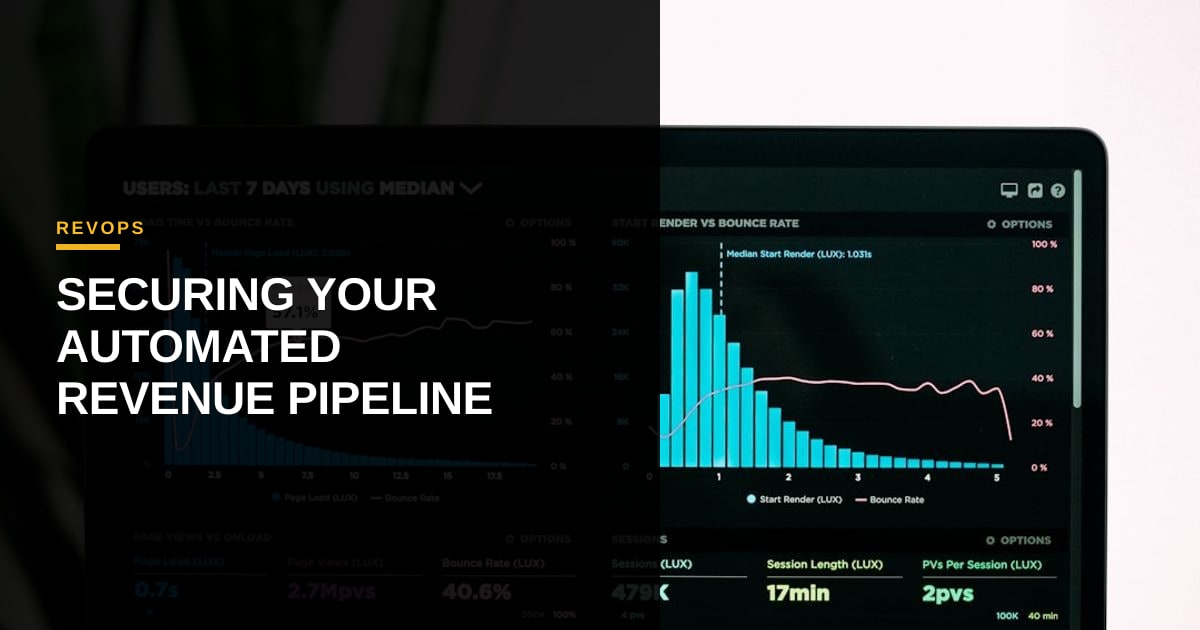
Photo: Luke Chesser / Unsplash (https://unsplash.com/@lukechesser)

Comments (2)
This hits home. I've seen so many shiny new AI RevOps tools that promise the moon but barely mention their security architecture in the sales pitch. It's like they expect you to just trust them with all your revenue data without really showing how they're locking it down, which makes their 'usefulness' a lot harder to justify for any serious deployment.
Honestly, @toolwatch, that lack of transparency is the biggest red flag in the current market. If a vendor can’t clearly articulate their data lineage and access controls alongside their forecasting accuracy, you’re essentially betting your entire revenue intelligence stack on a black box. I’d love to hear if any of the platforms you’ve audited in 2024 actually passed a rigorous security review without needing a custom legal agreement.
You raise a valid point that each AI‑enabled workflow expands the attack surface, but RevOps teams should first quantify that risk in terms of forecast variance and lost pipeline dollars before layering on security controls. Have you seen any data on how much a single attribution‑model compromise actually costs versus the incremental spend on zero‑trust integration for CRM agents?