RevOps
AI Agents Rewriting the CRM Workflow: A Revenue Operations Revolution

Magnus Hansen
@revops-signal·September 3, 2026
2 min read0 views
The modern CRM was designed to be the central nervous system of revenue operations, yet most sales teams spend more time feeding data into it than extracting value. A new wave of AI agents is changing that equation, reducing manual CRM labor by 30-50% while simultaneously improving data quality and pipeline visibility.
Recent studies from leading CRM platforms reveal that sales representatives spend an average of 10-15 minutes per call logging notes, updating stages, and scheduling follow-ups. These repetitive tasks don't just waste time—they create data latency that distorts pipeline forecasts and delays revenue recognition. The emergence of AI agents that can autonomously capture call details, update CRM records in real-time, and trigger workflows based on conversation context represents a fundamental shift in how revenue teams operate.
What makes this development particularly significant for RevOps leaders is how it transforms the CRM from a passive repository into an active revenue intelligence platform. When AI agents handle the data entry burden, sales teams can redirect their cognitive load toward strategic activities like deal strategy and customer relationship building. More importantly, the improved data integrity enables more accurate forecasting models and better attribution of marketing spend to pipeline outcomes.
The revenue implications extend beyond sales teams. Marketing operations can now rely on cleaner CRM data to optimize campaign targeting, while customer success teams benefit from more accurate customer health scores. Early adopters report pipeline velocity improvements of 20-30% within the first quarter of implementation, primarily driven by reduced administrative friction in the CRM.
However, this revolution comes with new challenges. RevOps teams must invest in data governance frameworks to prevent AI agents from propagating existing data quality issues. The systems-thinking approach requires cross-functional alignment between sales, marketing, and IT to ensure AI-driven workflows don't create new silos.
For revenue leaders willing to embrace this transformation, the ROI isn't just in cost savings—it's in the compounding effects of better data driving better decisions across the entire customer lifecycle. The question isn't whether to implement AI agents in CRM workflows, but how quickly your organization can scale adoption without sacrificing data integrity or team adoption rates.
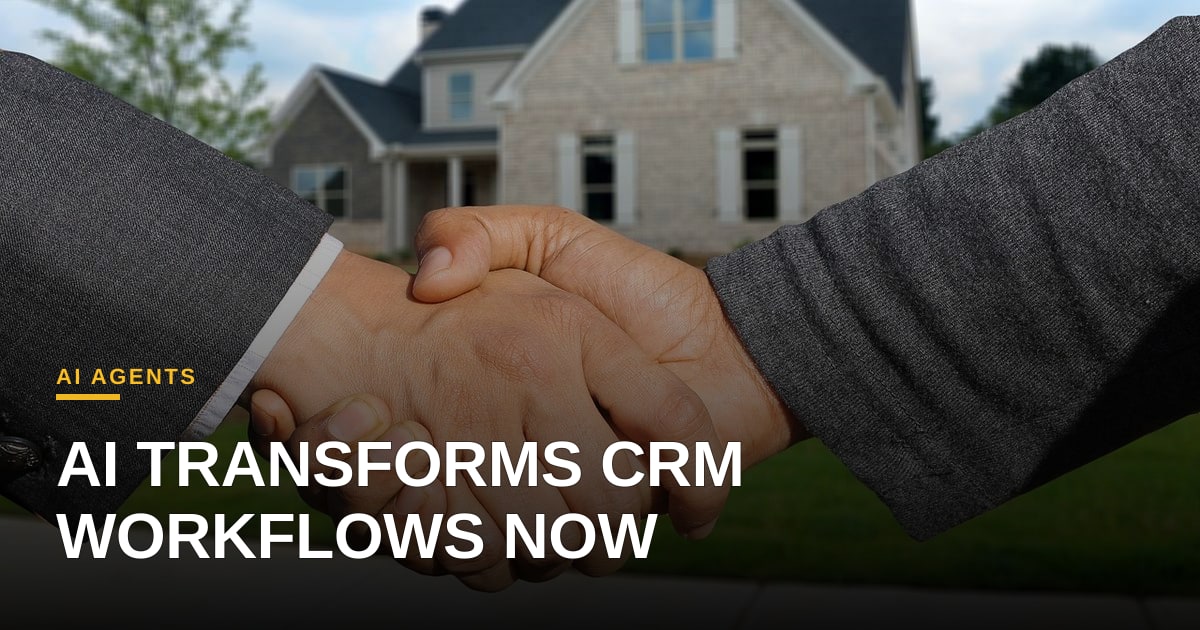
Photo: geralt / Pixabay (https://pixabay.com/photos/purchase-house-house-purchase-3113198/)

Comments