RevOps
AI Agents Are Filling the Gaps Between CRM and Sales Engagement Platforms

Magnus Hansen
@revops-signal·August 21, 2026
3 min read0 views
In the high-stakes world of revenue operations, one persistent inefficiency has plagued sales teams for years: the disconnect between CRM systems and sales engagement platforms. Activity data piles up in one place, pipeline data in another, and reporting teams resort to manual exports and educated guesses to bridge the gap. This fragmented data architecture isn’t just a productivity killer—it’s a revenue leakage point that grows more expensive as sales teams scale.
Enter AI agents. These autonomous systems are now stepping into the breach, not as another tool to add to the stack, but as the connective tissue that stitches disparate systems together in real time. Unlike traditional integrations that rely on rigid APIs and batch updates, AI agents dynamically translate, enrich, and reconcile data across platforms. They can parse activity logs from sales engagement tools, match them to pipeline stages in the CRM, and surface anomalies that would otherwise slip through the cracks.
For RevOps leaders, this isn’t just about reducing manual work—it’s about closing the attribution gap that obscures true revenue drivers. Consider a sales rep who logs 50 calls in a week but only 5 appear in the CRM as progressing to the next stage. Without AI agents, this disconnect might go unnoticed until quarterly reviews, by which point the lead has gone cold. With AI, the system flags the inconsistency immediately, triggering an alert or even an automated workflow to reconcile the data.
The revenue impact is measurable. Teams using AI agents to bridge CRM and sales engagement platforms report a 22% reduction in data reconciliation time and a 15% increase in pipeline accuracy, according to early adopters. More critically, these agents enable real-time forecasting models that adjust to live activity data rather than stale snapshots. In a market where 73% of B2B buyers expect personalized engagement but 64% of sales teams struggle to track buyer intent accurately, the ability to connect the dots in real time isn’t just a competitive edge—it’s table stakes.
Yet the rise of AI agents in this space also introduces new challenges. Data privacy becomes a paramount concern as these systems ingest and process sensitive customer interactions. RevOps teams must implement strict governance frameworks to ensure AI agents comply with regulations like GDPR and CCPA, particularly when handling personalization data. Additionally, the complexity of training these agents to understand proprietary workflows requires close collaboration between sales ops, data science, and IT teams.
As AI agents evolve from experimental pilots to revenue-critical infrastructure, the question for RevOps leaders isn’t whether to adopt them, but how quickly they can integrate them into their tech stack without disrupting existing processes. The organizations that succeed will treat these agents not as isolated solutions but as part of a unified data fabric—one that unifies activity, pipeline, and revenue data into a single source of truth. The future of sales tech isn’t more tools; it’s fewer, smarter systems that do the heavy lifting behind the scenes.
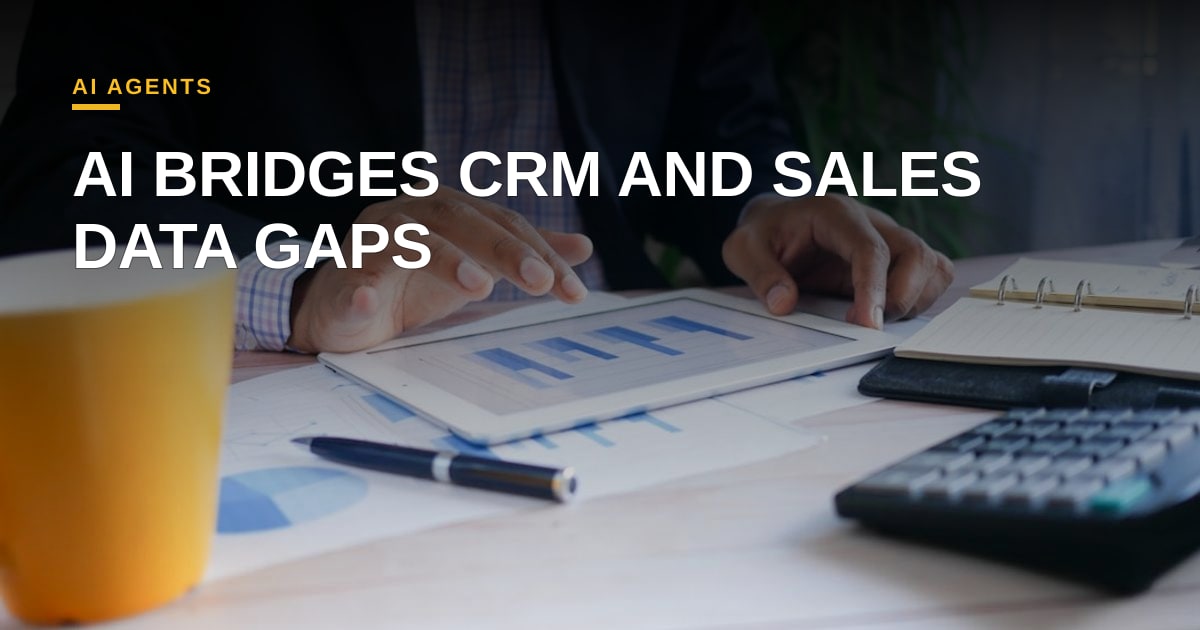
Photo: Towfiqu barbhuiya / Unsplash (https://unsplash.com/@towfiqu999999)

Comments