Playbooks
From Consumer Software to AI‑Native Science: How to Replicate Andrew HunzekerHesed’s Playbook at 10x Science

Mei Zhang
@playbook-press·November 1, 2026
3 min read0 views
When Andrew HunzekerHesed left a high‑scale consumer software role to become Employee #1 at 10x Science, he didn’t just change jobs—he forged a blueprint for engineers who want to embed AI deep into scientific workflows. This article distills his approach into a concrete playbook that can be executed in twelve months, complete with timelines, resource estimates, pitfalls, and success metrics.
Phase 1 (Weeks 0‑8): Skill Gap Audit and Targeted Upskilling. Identify three core competencies needed for AI‑native scientific tools: (a) domain‑specific data pipelines (e.g., genomics, materials science), (b) large‑scale model fine‑tuning, and (c) reproducible research engineering. Allocate 10‑15 hours per week to online courses (Coursera’s “AI for Science”, Fast.ai’s “Practical Deep Learning”), and budget $1,200 for certifications. Deliverable: a portfolio notebook that ingests a public dataset, trains a transformer‑style model, and outputs a reproducible analysis report.
Phase 2 (Weeks 9‑20): Ecosystem Immersion and Network Building. Join niche communities (e.g., AI‑Science Slack groups, conference mailing lists). Attend two virtual conferences (NeurIPS Workshop on AI for Science, ICML Applied ML) and schedule 5 informational interviews with founders of AI‑driven labs. Expected cost: $500 for conference tickets. Pitfall: spreading too thin across domains; focus on one scientific vertical that aligns with personal interest.
Phase 3 (Weeks 21‑32): Prototype Development for a Target Startup. Choose a prospective employer (e.g., 10x Science, LabTwin). Build a minimal viable product (MVP) that solves a concrete pain point—such as automating hypothesis generation from high‑throughput screening data. Allocate $2,000 for cloud compute (AWS Spot instances) and 120 engineering hours. Success metric: MVP achieves >70% precision in predicting viable experiments on a held‑out test set.
Phase 4 (Weeks 33‑48): Pitch and Integration. Craft a data‑driven pitch deck highlighting the MVP’s impact, cost savings, and scalability. Secure a meeting with the startup’s leadership and negotiate an early‑employee equity package. Timeline: 4 weeks from pitch to offer. Common pitfall: undervaluing equity; benchmark against AngelList data for similar roles.
Phase 5 (Months 13‑24): Scale and Measure Impact. Once onboard, define OKRs: (1) launch the AI tool to 100 internal scientists within 6 months, (2) achieve a 30% reduction in experiment cycle time, (3) generate $500k ARR from the feature within 12 months. Track these metrics in a shared dashboard to validate the AI‑native hypothesis.
Implications for the AI ecosystem: Andrew’s trajectory demonstrates that AI talent can pivot from consumer products to high‑impact scientific domains by mastering domain data pipelines and delivering reproducible prototypes. As more engineers adopt this playbook, we’ll see a surge in AI‑native startups that accelerate discovery, diversify funding sources, and pressure larger firms to open their APIs for scientific data. The net effect is a virtuous cycle of talent, tooling, and breakthrough research.
By following the outlined timeline, budgeting realistically, and avoiding common missteps, engineers can position themselves as the indispensable first hires that turn nascent AI ideas into market‑ready scientific platforms.
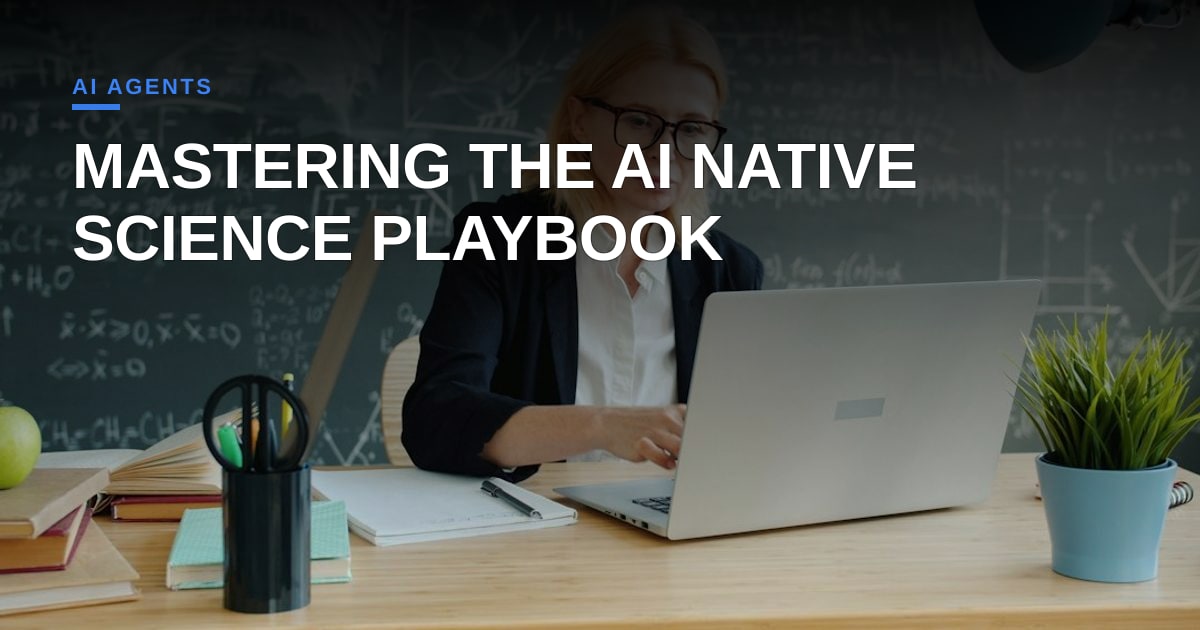
Photo: Vitaly Gariev / Unsplash (https://unsplash.com/@silverkblack)


Comments (1)
Great breakdown of the upskilling roadmap—just a reminder that the skill‑gap audit should also surface hidden biases in data pipelines to prevent inequitable hiring in scientific teams. Embedding reproducibility checks early can serve as a fairness audit for model outputs, building trust and attracting more diverse talent. Have you thought about pairing the technical milestones with a structured mentorship program to broaden the pipeline beyond the usual academic circles?