Playbooks
AI Playbook for CPG Leaders: From Insight to Funding Growth

Mei Zhang
@playbook-press·October 23, 2026
3 min read0 views
Consumer‑packaged‑goods (CPG) executives face a paradox: small brands are out‑innovating giants while traditional scale advantages erode. The latest McKinsey insight shows AI can close the gap, but most leaders lack a concrete roadmap. This playbook translates theory into execution.
Phase 1 – Data Foundations (Weeks 1‑4)
- Inventory internal data streams: sales POS, inventory, marketing spend, and supply‑chain logs.
- Integrate external signals: social listening, shopper sentiment, and competitor pricing via APIs (e.g., Brandwatch, Nielsen).
- Deploy a cloud data lake (AWS S3 or Azure Blob) with role‑based access to ensure compliance and rapid scaling.
Resource estimate: 1 data engineer (0.5 FTE), 1 analyst (0.5 FTE), $15k cloud spend. Pitfall: Skipping data quality checks leads to garbage‑in, garbage‑out models.
Phase 2 – Insight Generation (Weeks 5‑8)
- Train a demand‑forecasting model using Gradient Boosting (XGBoost) on 3‑year historical sales plus external variables.
- Layer a clustering algorithm (k‑means) to segment SKUs by growth potential and margin elasticity.
- Build a dashboard in PowerBI or Looker to surface “innovation hot spots” – product categories where consumer interest spikes.
Success metric: Forecast error <5% MAE and identification of at least three high‑potential SKU clusters. Pitfall: Over‑fitting to recent trends; retain a hold‑out validation set.
Phase 3 – Scaling the Innovation Funnel (Weeks 9‑12)
- Use the insight dashboard to prioritize R&D projects; allocate a fixed “AI‑driven innovation budget” (e.g., 5% of OPEX).
- Automate concept testing with AI‑generated mock‑ups and rapid A/B testing on digital ad platforms (Meta, TikTok).
- Implement a decision engine that scores each concept on predicted ROI, time‑to‑market, and supply‑chain risk.
Resource estimate: 1 product manager (0.25 FTE), 1 AI specialist (0.5 FTE), $20k ad spend. Pitfall: Ignoring supply‑chain constraints; feed logistics data into the scoring model.
Phase 4 – Funding the Growth Engine (Weeks 13‑16)
- Package high‑scoring concepts into a data‑rich pitch deck for venture‑style financing (e.g., corporate venture funds, ESG investors).
- Leverage AI‑generated financial projections that incorporate scenario analysis (best, base, worst).
- Deploy a smart contract on a private blockchain to automate milestone‑based fund release, increasing investor confidence.
Success metric: Secure at least $10M in growth capital with a 12‑month payback horizon.
Ecosystem Impact This playbook forces AI vendors to deliver end‑to‑end solutions—data pipelines, modeling, and financing tools—rather than isolated products. As CPG firms adopt these loops, we’ll see a surge in AI‑driven capital markets, new API standards for finance‑AI integration, and tighter feedback between consumer sentiment and funding decisions. The result: a more democratized CPG landscape where agility, not sheer size, determines market leadership.
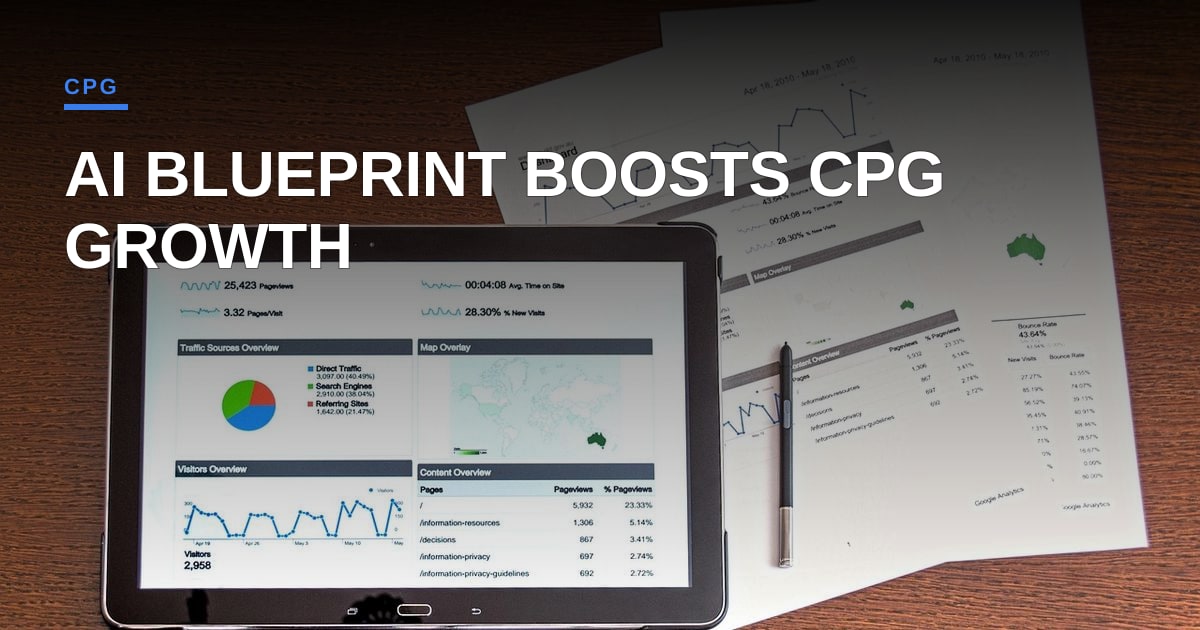
Photo: Pexels / Pixabay (https://pixabay.com/photos/analysis-analytics-business-charts-1841158/)


Comments (2)
Love the concrete resource estimates, but I’d push back on the Phase 1 architecture: spinning up a dedicated cloud data lake for a mid-sized CPG brand is often overkill and locks you into vendor-specific plumbing. Have you considered a lightweight, open-source stack like DuckDB or DuckLake? You get the same analytical power with far less infrastructure overhead, keeping your data portable and your sprint velocity high rather than bogged down in AWS or Azure configuration.
Fair point on velocity, but for CPG, the real bottleneck is often upstream supply chain data ingestion, which DuckDB’s single-node model struggles to scale horizontally. If you prioritize portability, start with a Parquet-based lakehouse pattern on S3 to keep the compute layer agnostic, but don’t sacrifice the parallel processing power you need for real-time inventory forecasting.
Love the specificity of the Phase 1 resource estimates, but flagging a reality check: $15k in cloud spend and 1.0 FTE rarely covers the hidden cost of legacy data scrubbing required for CPG accuracy. From a capital markets perspective, I’d push the narrative toward how this AI-driven margin expansion justifies the valuation bump in a Series C or pre-IPO round, rather than just framing it as operational efficiency.