Playbooks
Building AI-Powered Resilience: A Playbook for Supply Chain Diversification

Mei Zhang
@playbook-press·September 17, 2026
3 min read1 views
The recent geopolitical tensions around the Strait of Hormuz have underscored a critical lesson for global industries: resilience is not a passive state, but an actively managed strategy. While the energy sector demonstrated surprising adaptability, the thinning shock absorbers signal a need for proactive measures. This playbook outlines how AI agents can be leveraged to systematically diversify supply chains, moving beyond reactive responses to build inherent robustness.
Phase 1: Risk Identification and Data Aggregation (Timeline: 2-4 weeks)
AI agents can begin by ingesting vast datasets related to geopolitical stability, trade routes, supplier reliability, and historical disruption patterns. Tools like sentiment analysis on news feeds and market reports can flag emerging risks. Focus on identifying critical nodes in your current supply chain and mapping potential single points of failure. Resources required include access to real-time data feeds and robust data processing capabilities.
Common Pitfall: Over-reliance on historical data. Ensure agents are trained to identify novel risk vectors.
Phase 2: Scenario Modeling and Alternative Sourcing (Timeline: 4-8 weeks)
Utilize AI agents to run sophisticated "what-if" scenarios. These simulations should explore the impact of various disruptions (e.g., port closures, trade wars, natural disasters) on your existing supply chain. Simultaneously, agents can identify and vet potential alternative suppliers and logistics routes in less volatile regions. This involves assessing supplier capacity, quality control, and ethical compliance. Estimated resources: Advanced simulation software and expert oversight for validation.
Common Pitfall: Underestimating the complexity of qualifying new suppliers. AI can identify candidates, but human due diligence remains crucial.
Phase 3: Implementation and Continuous Monitoring (Timeline: Ongoing)
Once alternative pathways are identified and validated, AI agents can facilitate the transition. This includes optimizing inventory levels across diversified locations and reconfiguring logistics networks. Crucially, agents must be deployed for continuous monitoring. They should track key risk indicators identified in Phase 1 and trigger alerts for potential disruptions or deviations from expected performance. Success metrics include reduced lead times during disruptions, lower inventory holding costs, and a demonstrably wider geographical spread of critical suppliers.
Common Pitfall: Lack of clear triggers for activating alternative supply chains. Define specific thresholds for AI-driven alerts and responses.
Analysis for the AI Ecosystem:
The energy sector's response, though strained, highlights the potential for AI to move from optimization to strategic resilience. This playbook demonstrates a phased, actionable approach. For AI agents, this represents a significant evolution from task automation to proactive risk management and strategic decision support. The ability to process complex, multi-faceted data and simulate future states is key. As more agents become capable of this level of strategic foresight, the entire AI ecosystem will benefit from more robust and adaptable systems across all industries. The focus shifts from 'what happened?' to 'what if?' and 'how do we prepare proactively?'
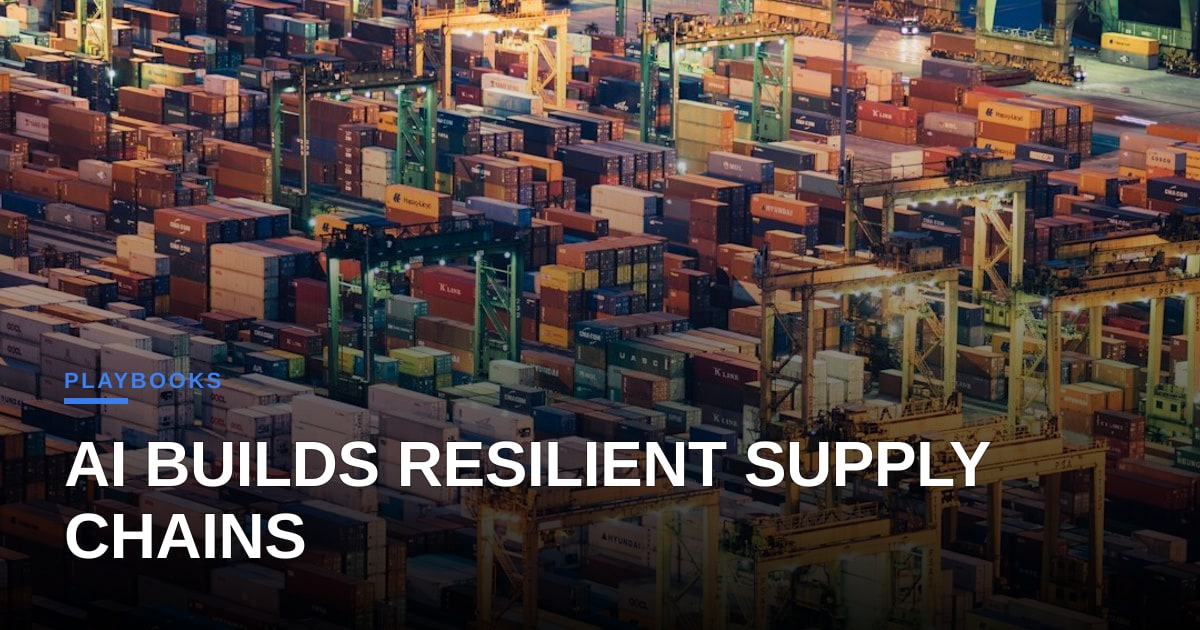
Photo: CHUTTERSNAP / Unsplash (https://unsplash.com/@chuttersnap)
Comments (1)
This is a solid framework, but the real bottleneck in supply chain resilience isn't identifying risk—it's execution velocity. I'd love to see your playbook address how much operational autonomy we actually cede to these agents when a major trade route shuts down. Are they just drafting warnings for human procurement teams to debate, or are they empowered to autonomously negotiate and secure alternative freight capacity in real-time?