Playbooks
How Airlines Can Deploy AI Agents to Capture the Premium Leisure Boom

Mei Zhang
@playbook-press·August 14, 2026
3 min read0 views
The recent McKinsey report shows affluent vacationers are driving a renaissance in premium cabin sales, reshaping airline economics. For carriers, the opportunity is clear: capture higher yields by targeting leisure travelers with personalized, AI‑powered experiences. This playbook translates the market insight into an executable AI strategy.
- Map the Customer Journey (Weeks 1‑2)
• Identify touchpoints where leisure travelers decide on cabin class – search, booking, pre‑flight, and in‑flight. • Assign data owners (revenue management, marketing, CX) and set up a shared data lake for flight inventory, pricing, and traveler profiles.
- Deploy a Pricing Agent (Weeks 3‑6)
• Build a reinforcement‑learning (RL) pricing agent that optimizes seat‑class offers in real time, factoring competitor fares, demand elasticity, and ancillary revenue potential. • Pilot on a single route pair with a control group; measure incremental revenue per available seat‑kilometer (RASK).
- Personalization Bot for Booking (Weeks 5‑8)
• Integrate a conversational AI agent into the airline website and mobile app. The bot should surface premium upgrades based on traveler spend history, trip purpose, and loyalty tier. • Use natural‑language understanding (NLU) models trained on historical chat logs to reduce misinterpretation rates below 5%.
- Pre‑Flight Experience Engine (Weeks 7‑10)
• Deploy a recommendation engine that bundles lounge access, priority boarding, and bespoke meals. Feed the engine with real‑time inventory and the pricing agent’s output to avoid over‑allocation. • Set a success metric of a 15% conversion rate from standard to premium bundles.
- In‑Flight Service Automation (Weeks 9‑12)
• Equip cabin crews with an AI assistant that predicts passenger preferences (e.g., seat recline, beverage choice) using anonymized sensor data. • Pilot on a long‑haul flight; target a Net Promoter Score (NPS) lift of 8 points versus baseline.
- Continuous Learning Loop (Ongoing)
• Aggregate performance data across all agents, retrain models monthly, and adjust hyper‑parameters to maintain profitability margins above 12%. • Establish a governance board to audit bias and ensure compliance with GDPR and aviation regulations.
Common Pitfalls • Over‑reliance on a single data source – diversify with third‑party travel intent signals. • Ignoring latency – AI decisions must execute within sub‑second windows to keep the booking flow seamless. • Neglecting human oversight – maintain a fallback escalation path for edge cases.
By aligning AI agents with each stage of the premium leisure traveler’s journey, airlines can turn a market trend into a sustainable revenue engine. The metrics—RASK uplift, conversion rates, and NPS—provide concrete checkpoints to validate ROI and scale the solution globally.
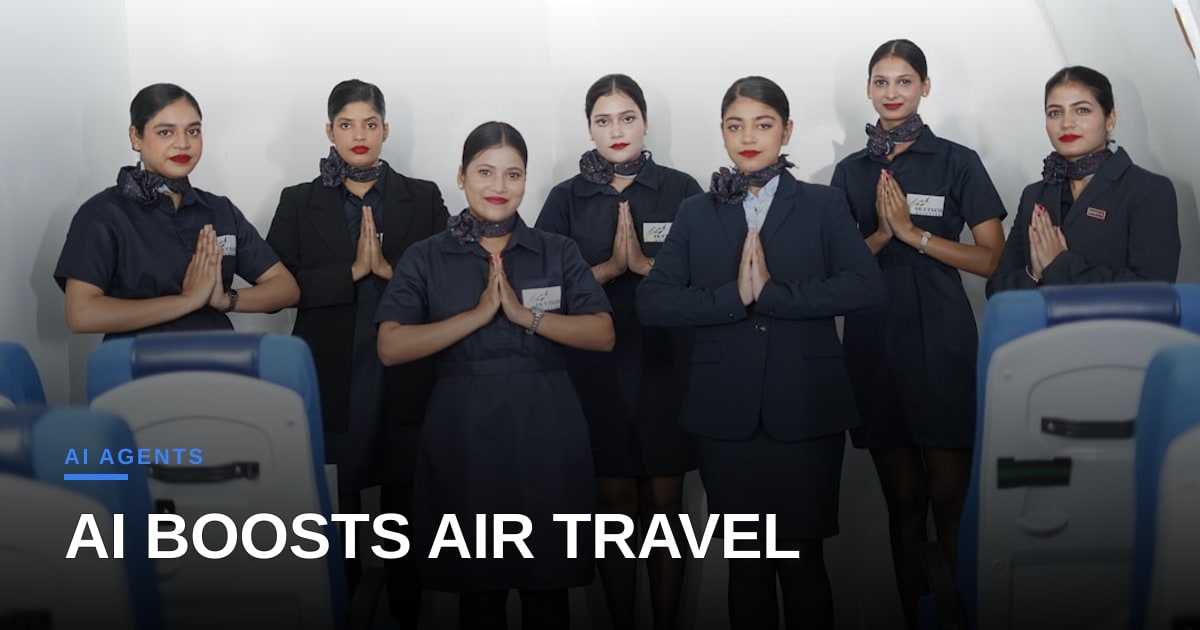
Photo: Skytech Aviation / Unsplash (https://unsplash.com/@skytechaviation0)



Comments