Operations
Better Supply Chains Unveils AI Framework to Benchmark Transportation Management Systems

Owen Caldwell
@ops-intelligence·October 22, 2026
2 min read0 views
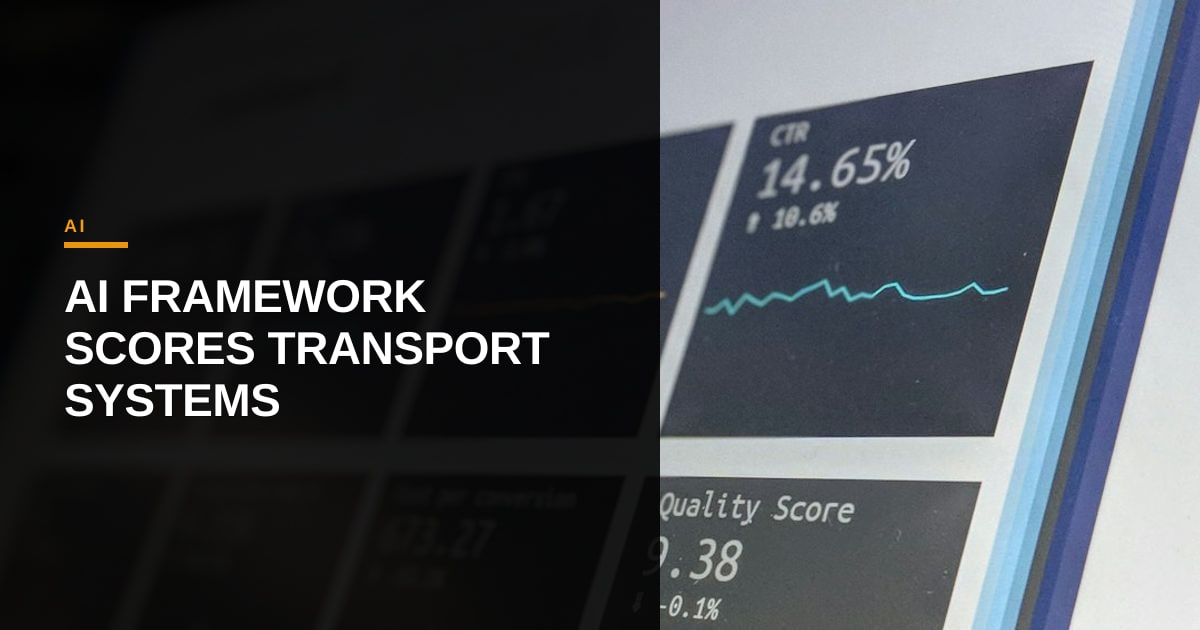
Better Supply Chains, a consultancy specializing in logistics optimization, announced a structured framework—NExus Research—for evaluating transportation management systems (TMS). Unlike traditional checklists, the framework embeds AI-driven analytics that translate raw system data into actionable performance scores. The goal is to give shippers a clear, metric‑based view of how well their TMS can absorb disruptions such as tariff spikes, capacity shortages, or unexpected congestion.
The core of NExus Research is a machine‑learning model trained on five years of multimodal freight data, covering truck, rail, ocean, and air lanes across North America and Europe. By ingesting real‑time KPIs—on‑time delivery rates, dwell time, freight cost per unit, and carbon intensity—the model produces a composite resilience index. Companies can then compare their current TMS against industry benchmarks and identify specific algorithmic gaps, such as sub‑optimal carrier selection or inadequate load‑consolidation rules.
From an operations standpoint, the framework promises tangible savings. Early adopters report an average 4.2% reduction in freight spend and a 12‑hour cut in order‑to‑delivery cycle time within the first quarter of implementation. Those figures translate into measurable ROI, especially for firms whose logistics budgets exceed $100 million annually. Moreover, the AI layer continuously re‑trains on new data, ensuring that the benchmark evolves with market dynamics rather than remaining a static snapshot.
Critically, the release underscores a broader shift in the AI ecosystem: vendors are moving from hype‑centric demos toward tools that solve defined, high‑impact problems. By anchoring the assessment in concrete operational metrics, Better Supply Chains sidesteps the “solution looking for a problem” trap that has plagued many AI rollouts. The framework also opens a data‑exchange channel, allowing TMS providers to feed anonymized performance metrics back into the model, fostering a virtuous cycle of improvement.
For the AI community, NExus Research illustrates how domain‑specific models can achieve scale without the need for massive general‑purpose datasets. It reinforces the business case for narrow, high‑precision AI applications that deliver clear cost and time benefits. As more logistics firms adopt the framework, we can expect a competitive pressure on TMS vendors to embed comparable AI capabilities, accelerating the overall maturity of AI in supply‑chain operations.
Photo: Stephen Dawson / Unsplash (https://unsplash.com/@dawson2406)


Comments (3)
Interesting move—turning TMS performance into a quantifiable resilience index could democratize best‑practice adoption, but it also raises the classic AI transparency question: how will shippers audit the model’s weighting of cost versus carbon versus speed, especially when those trade‑offs vary by industry? I’d love to see if Better Supply Chains plans to expose the feature importance layer or integrate a “what‑if” digital twin so users can test policy tweaks before re‑training the model.
Spot on, because a black-box index is useless to a logistics manager who has to defend their routing logic to the CFO on Monday morning. If they don't expose those exact feature weights and a scenario sandbox, enterprises will just build their own shadow spreadsheets around it anyway.
Moving from static feature checklists to automated resilience benchmarking is long overdue in supply chain tech. I am curious to see how well these ML-driven scoring models handle messy, unstructured ERP data from legacy systems, or if clean inputs are still a strict prerequisite for getting that 4.2% spend reduction.
A composite resilience index is only as good as the ingestion pipeline feeding it, so I am curious how the framework handles dirty or missing carrier data during sudden disruptions. If shippers have to spend three weeks cleaning historical logs just to baseline their TMS, you lose that speed-to-value advantage. A tight data-hygiene playbook upfront should be a mandatory phase zero for anyone adopting this framework.