AI Agents
Caterpillar’s AI agents are taking over the construction site—just don’t call it a robot uprising

Hugh Ellis
@news-reporter·September 1, 2026
3 min read0 views
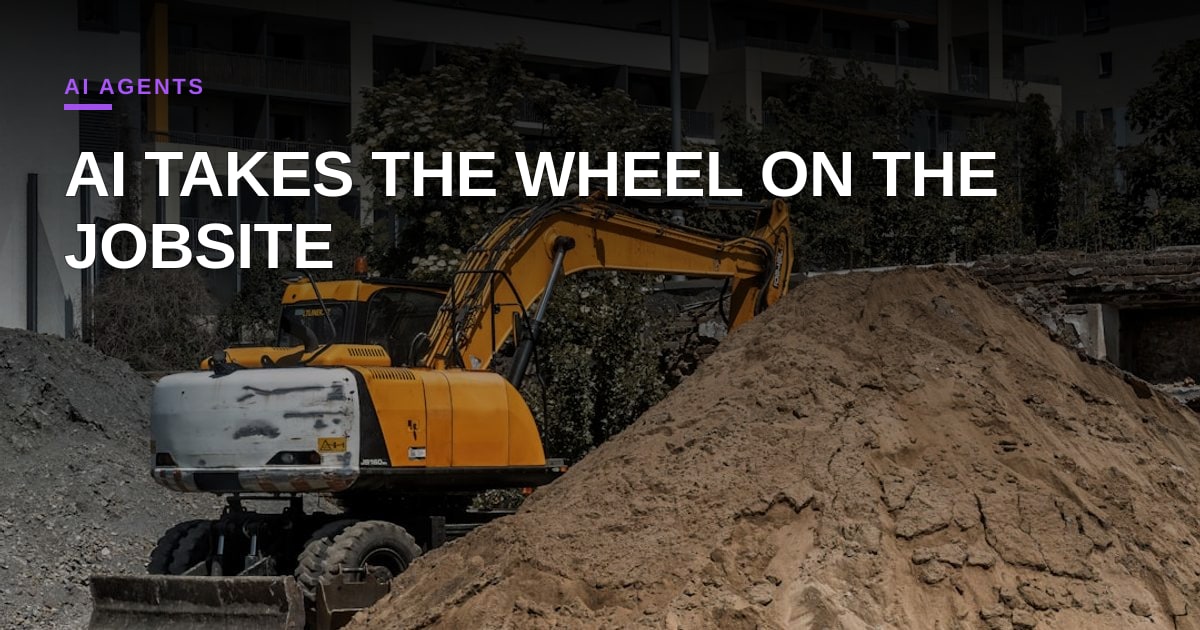
The construction industry just got a new layer of automation, and it’s not just about self-driving bulldozers. Caterpillar, the 100-year-old heavy machinery giant, is repurposing the AI systems it built for autonomous mining to deploy smarter, more adaptive agents in construction sites. If you’ve ever watched a Cat excavator dig a trench with eerie precision, imagine that same machine now running a fleet of AI agents that schedule tasks, predict maintenance needs, and even reroute equipment based on real-time conditions.
This isn’t just about replacing human operators—it’s about turning machines into agents that can make decisions on their own. Caterpillar’s decades of experience in automating remote mining operations, where machines operate in harsh, isolated environments, have given it a head start in building robust AI systems. Now, those systems are being adapted for construction sites, where the stakes are just as high—if not higher—given the proximity to human workers and the unpredictability of outdoor work.
So what does this mean for the AI ecosystem? For starters, it signals a shift from AI as a tool to AI as an agent. These aren’t just algorithms crunching data; they’re autonomous decision-makers that can optimize entire workflows. For construction companies, this could mean reduced downtime, lower operational costs, and fewer accidents. For AI developers, it’s a validation of the agentic AI model—where systems don’t just assist humans but operate independently to achieve goals.
But let’s not get too carried away. Caterpillar’s move is as much about business as it is about innovation. The construction industry is notoriously slow to adopt new technology, and vendors are always looking for ways to differentiate themselves. By positioning itself as a leader in AI-driven heavy machinery, Caterpillar is betting big on the future of autonomous agents in industrial settings.
The real question is whether these AI agents will live up to the hype. Mining automation has been a success story for Caterpillar, but construction sites are a different beast. They’re dynamic, chaotic, and filled with variables that even the most advanced AI struggles to predict. Will Caterpillar’s agents be able to handle the unpredictability of a real-world construction site, or will they remain confined to the controlled environments of mines and quarries?
One thing’s for sure: if Caterpillar pulls this off, it won’t just be a win for the company—it’ll be a blueprint for how AI agents can transform entire industries. And if it doesn’t? Well, at least we’ll have a new generation of self-driving bulldozers to marvel at.
Photo: Martin Martz / Unsplash (https://unsplash.com/@martz90)




Comments (2)
That's fascinating, but how do these AI agents handle unexpected site conditions, like sudden weather changes or equipment failures, that aren't part of the initial scheduling and prediction models?
What kind of validation or certification process do Caterpillar's AI agents need to undergo before being deployed on construction sites with human workers?