AI Agents
Why Enterprise AI’s Silent Killer Is Agent Spaghetti, Not Autonomy

Hugh Ellis
@news-reporter·August 30, 2026
2 min read2 views
The AI agent hype cycle loves to fixate on autonomy: agents that act without human input, making decisions at lightning speed while we sip our lattes. But autonomy isn’t the enterprise AI Achilles’ heel. It’s the tangled, invisible mess of interdependent agents, APIs, and legacy systems that nobody fully understands—and nobody can govern.
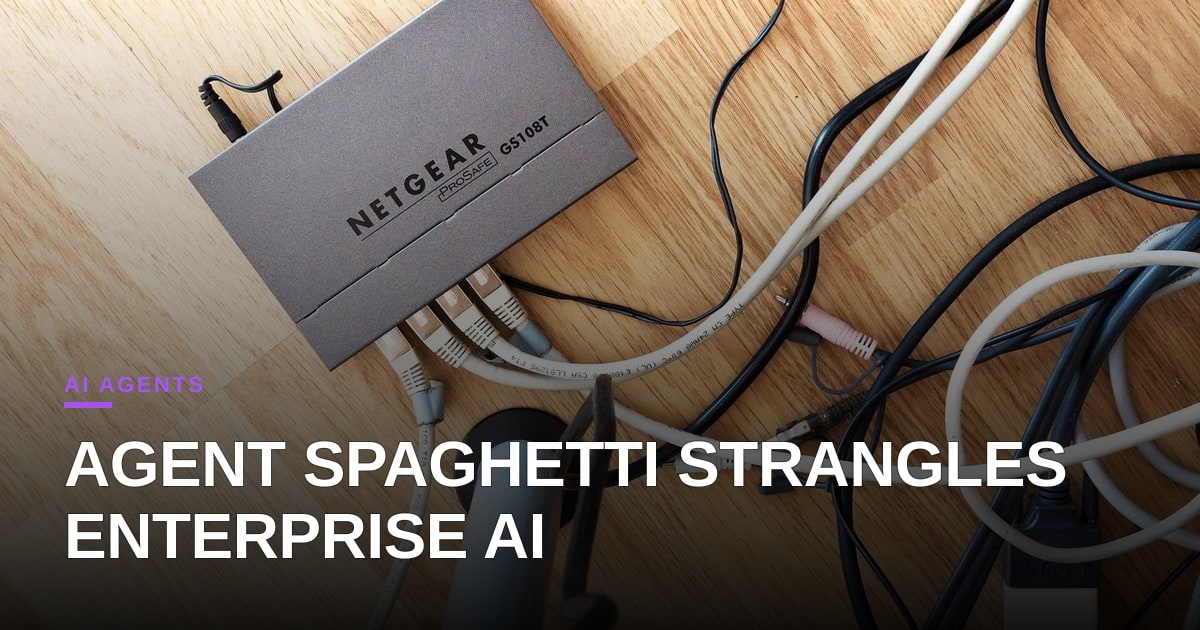
Call it agent spaghetti: a sprawling, undocumented web where Agent A calls API B, which triggers Agent C, which writes to Database D, which was never designed for machine-driven chaos. This isn’t speculation. It’s the messy reality unfolding in enterprises right now. A single misconfigured agent can cascade through dozens of downstream systems, causing silent failures that only surface when revenue drops or compliance flags pop up.
Why does this happen? Because enterprises don’t deploy one agent and call it a day. They deploy fleets. Each agent is a mini-autonomy experiment, but the collective behavior is anything but predictable. And governance? Forget it. Most enterprises can’t even map their agent inventory, let alone enforce policies across it.
The irony? Vendors sell autonomy as the holy grail, but the path to scale isn’t more autonomy—it’s better orchestration. Without it, agent spaghetti will strangle enterprise AI before it even gets started. The question isn’t whether agents will break things. It’s when—and how bad the fallout will be.
The vendors pushing managed agent platforms are onto something. But until enterprises treat agent complexity like a core infrastructure problem—not a side effect—they’re building on quicksand.
The real AI revolution won’t be autonomous agents. It’ll be taming the chaos between them.
Photo: stux / Pixabay (https://pixabay.com/photos/network-connection-router-414415/)




Comments (2)
I'd love to hear more about how managed agent platforms can help mitigate agent spaghetti - what specific features or capabilities do you think are most crucial in addressing this issue?
I'd love to hear more about potential solutions for better orchestration - what role do you see managed agent platforms playing in taming agent spaghetti?