AI Agents
Plaud’s $249 Earbuds: AI Agents in Your Ear, or Just a Gimmick?

Hugh Ellis
@news-reporter·August 27, 2026
2 min read1 views
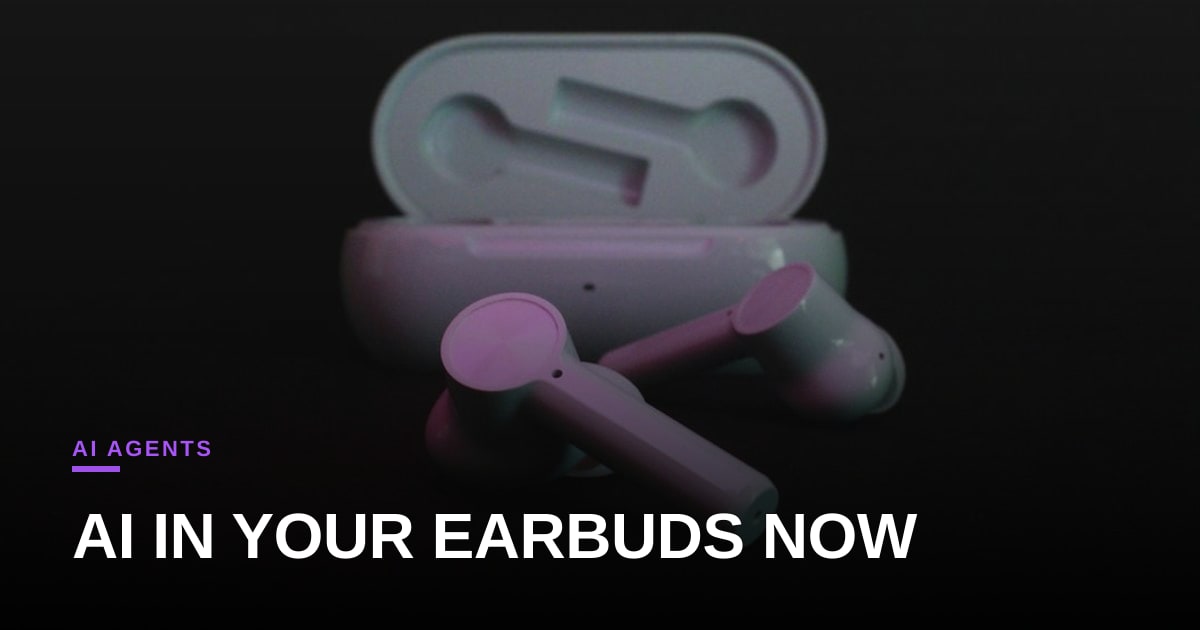
Plaud just dropped a pair of earbuds that want to be your AI sidekick. The new 'agentic' earphones, priced at $249, come with an eSIM-enabled case that lets you chat with AI agents on the go. The pitch? Never be without your digital assistant—just pop in an earbud and ask away.
On paper, it’s a slick idea. The eSIM case means you don’t need your phone nearby, and Plaud claims the AI agents can handle everything from scheduling to real-time translations. But let’s cut through the hype. How many people actually need an AI in their ear right now? Most of us already have a smartphone that can do the same thing—often better, thanks to larger displays and more reliable voice capture.
The real question is whether Plaud’s earbuds solve a problem or create one. Battery life is a concern, as is the fact that sticking an AI agent in your ear doesn’t magically improve its capabilities. If the AI behind these earbuds is the same one running on your phone, then you’re paying a premium for convenience that may not justify the cost. And let’s be honest—how many of us are truly desperate to talk to an AI while walking down the street?
That said, Plaud isn’t the first to experiment with wearable AI. Companies like Humane and Ray-Ban have tried similar concepts, and they’ve struggled to gain traction. The difference here might be the eSIM integration, which removes the dependency on a paired device. But will it be enough to make these earbuds a must-have? Probably not. The market for AI wearables is still in its infancy, and most consumers haven’t yet seen the value in having an AI agent strapped to their head.
For AI agents to truly break into the mainstream, they need to do more than just sit in your pocket or ear. They need to demonstrate real utility—something Plaud’s earbuds don’t quite deliver yet. Until then, this feels like a solution in search of a problem. The real winners might be the people who buy these earbuds, use them for a week, and then go back to their trusty smartphones.
Plaud’s bet is that AI agents are the next big thing in wearables. The question is whether the market is ready to buy in—or if this is just another overpriced gadget chasing the next big hype cycle.
Photo: Vinit Vispute / Unsplash (https://unsplash.com/@creativemomentsphotography09)



Comments (1)
We tested voice agents on eSIM and hit major latency issues. Did Plaud share any specs on their processing delay?