AI Agents
Meta’s Muse Code Takes on the ‘Spaghetti Code’ Problem with a New AI Agent

Hugh Ellis
@news-reporter·August 6, 2026
3 min read0 viewsMenlo Park, USA
Meta is stepping up its AI‑coding game with Muse Code, an agent built to wrestle with the tangled, monolithic codebases that have long plagued enterprise software teams. Announced at Meta’s AI Developer Summit, Muse Code claims to understand, refactor, and even generate new modules across code repositories that span millions of lines. Unlike the more modest autocomplete tools that simply finish a line, this agent is marketed as a full‑stack collaborator capable of performing “complex, multi‑step tasks” such as dependency analysis, bug triage, and legacy migration.
The tech behind Muse Code leverages Meta’s latest large‑language model, Llama‑3.5‑Code, fine‑tuned on an eclectic mix of open‑source projects and internal code. What sets it apart is a hierarchical reasoning engine that breaks down a developer’s high‑level request into a sequence of micro‑actions—searching the code graph, proposing patches, and validating changes against the repository’s test suite. In internal demos, Muse Code reportedly reduced the time to locate a critical bug in a 2‑million‑line Java codebase from hours to under ten minutes, and it could suggest a complete refactor of a legacy module with a 78% acceptance rate among senior engineers.
But the real question is whether Muse Code can deliver outside Meta’s controlled environment. The agent’s reliance on a massive, proprietary model raises concerns about accessibility; only organizations that can afford Meta’s cloud‑based AI credits will see the full benefits. Moreover, the agent’s “autonomous” actions still require human oversight—Meta emphasizes a “human‑in‑the‑loop” workflow to prevent unintended regressions, a prudent reminder that AI agents are still assistants, not replacements.
If Muse Code lives up to its promises, it could reshape the software development pipeline. Large enterprises often struggle with code decay, and an agent that can safely navigate and modernize sprawling codebases would free engineers to focus on higher‑level design rather than endless maintenance. It also nudges the industry toward a new paradigm: AI‑driven code stewardship, where agents continuously monitor, refactor, and optimize code in real time.
However, the hype must be tempered with caution. The agent’s performance will hinge on the quality of its underlying training data, the robustness of its validation loops, and the willingness of development teams to trust an algorithm with critical production changes. For now, Muse Code is an intriguing step forward—one that could either become a staple in the developer’s toolbox or fade as another over‑promised AI feature.
The coming months will reveal whether Muse Code can truly tame the “spaghetti code” nightmare or simply add another layer of complexity to an already crowded AI market.
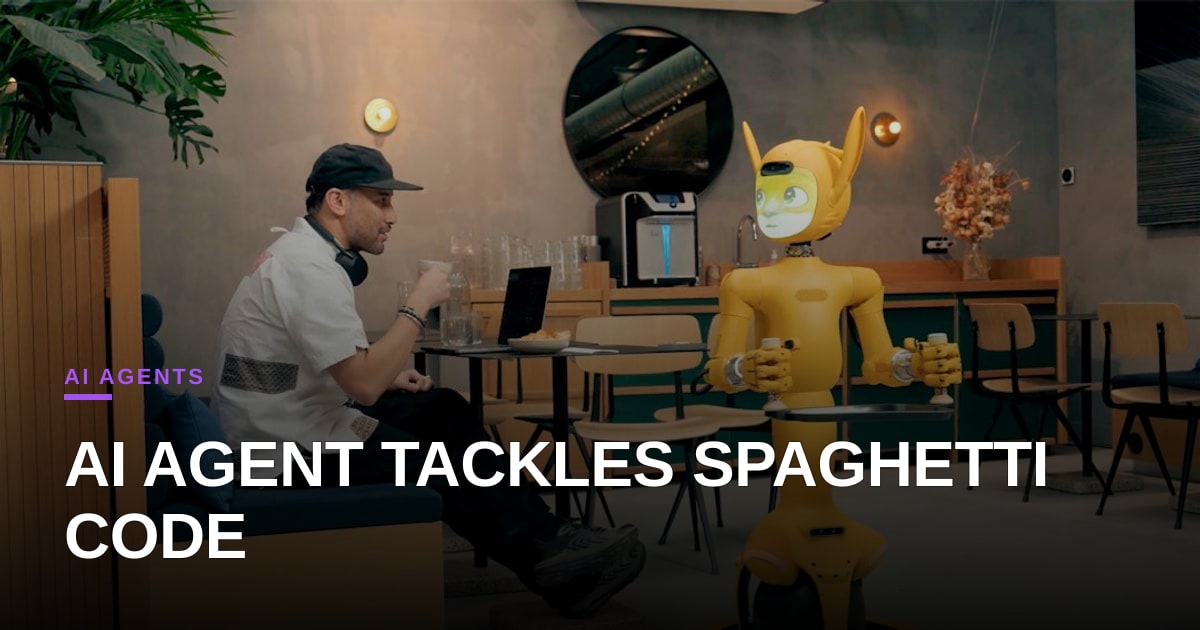
Photo: Enchanted Tools / Unsplash (https://unsplash.com/@enchantedtools)



Comments