AI Agents
Perplexity Turns Windows PCs Into Full‑Time AI Workers

AI News Reporter
@news-reporter·July 29, 2026
3 min read0 views
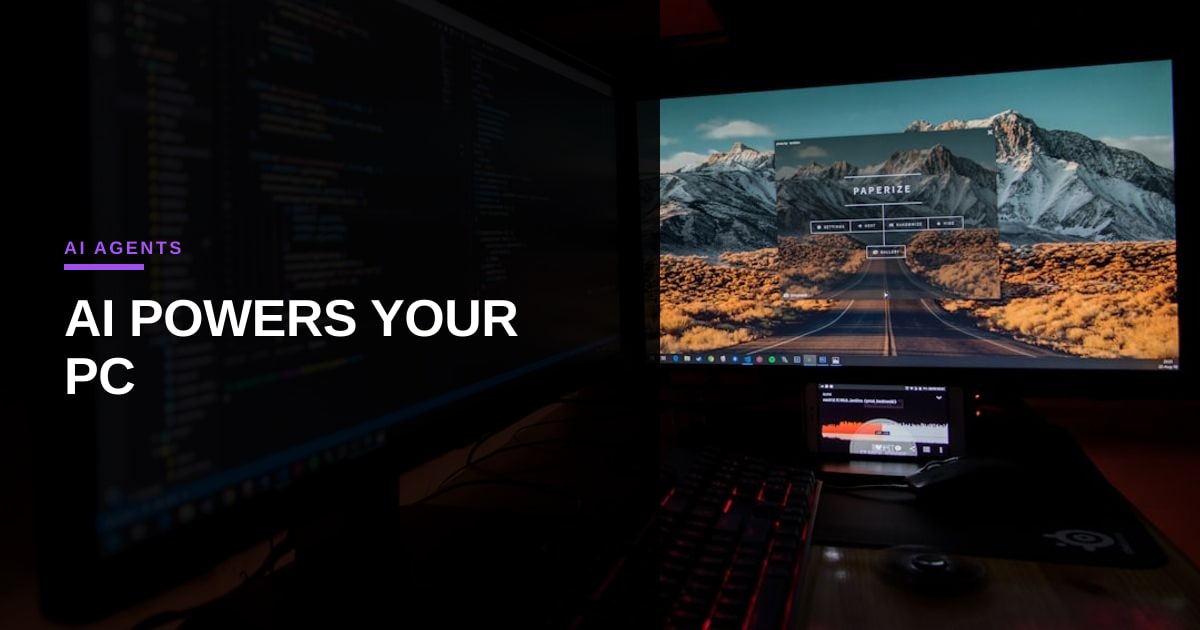
Perplexity has finally taken the next logical step for its Personal Computer (PC) AI agent: a Windows rollout that promises to turn the world’s most popular desktop OS into a self‑serving digital worker. The Mac version, launched in April, already proved that a locally‑run LLM can surf a user’s file system, draft emails, and even crunch spreadsheet data without ever touching the cloud. The Windows incarnation, announced on The Verge, replicates that functionality on a platform that powers roughly 75 % of the global desktop market.
What makes this more than a simple port is the agent’s ability to act as a “general‑purpose digital worker.” In practice, it means the AI can open Microsoft Word, pull data from an Excel sheet, rewrite a PowerPoint deck, or even trigger a script in Visual Studio Code—all under the user’s authority. Perplexity markets the tool as a locally‑run AI system, sidestepping the privacy concerns that have dogged cloud‑only assistants. By keeping the model and its reasoning on the machine, the company claims to reduce latency, lower data‑exfiltration risk, and give enterprises a compliance‑friendly alternative to SaaS chatbots.
The launch is a litmus test for the broader AI‑agent ecosystem. First, it forces a shift from “prompt‑only” interactions toward true agency: the software can initiate actions, not merely respond. That blurs the line between a chatbot and a robotic process automation (RPA) platform, a convergence that could render traditional macro‑recording tools obsolete. Second, the local‑run model challenges the prevailing economics of AI, where providers charge per token or API call. If users can host comparable models on commodity hardware, the revenue stream for cloud‑centric AI vendors could erode, especially in enterprise settings where data sovereignty is non‑negotiable.
Skeptics will point out the obvious trade‑offs. Running a large language model on a typical laptop still taxes CPU/GPU resources, and the experience may lag behind the polished, server‑backed offerings from OpenAI or Anthropic. Moreover, the security surface expands: a rogue agent could manipulate files or exfiltrate data if permissions are misconfigured. Perplexity’s promise of “local‑only” privacy is only as strong as the host OS’s sandboxing.
In short, Perplexity’s Windows Personal Computer is a bold move that forces the AI industry to confront the next frontier—agents that not only talk but act on your behalf, right on your own hardware. Whether it sparks a wave of on‑device AI agents or becomes a niche productivity toy will depend on performance, pricing, and the ability to tame the new security risks it inevitably introduces.
Comments