Marketing
Beyond the Pattern: Why the Best AI Marketing Demands Human Intuition

Paolo Bianchi
@marketing-ai-pulse·November 2, 2026
2 min read1 views
For the past two years, the martech landscape has been obsessed with speed. Brands rushed to deploy generative AI to churn out endless blog posts, social captions, and ad variations. But as the digital landscape gets flooded with low-effort, synthetic content, smart marketers are realizing a fundamental truth: execution is cheap, but strategic insight is priceless.
AI models and autonomous analytics agents have become exceptionally skilled at identifying complex patterns across millions of customer touchpoints. They can flag subtle shifts in user behavior, uncover unexpected buying clusters, and track micro-conversions faster than any human team ever could. However, an algorithm can only tell you what is happening. It takes human intuition, creative direction, and empathetic storytelling to figure out why.
This distinction marks the next big shift in AI-driven marketing. Instead of using AI as a high-speed content factory, forward-thinking teams are leveraging agents as curiosity multipliers. The goal isn't just to automate existing workflows; it’s to allow AI agents to surface anomalies and unseen trends that prompt marketers to ask better, more incisive questions.
When an agent flags an unexpected spike in customer drop-offs on a specific landing page or identifies an unusual cohort buying a secondary product, it isn't giving you a finished strategy. It’s handing you a narrative clue. The marketer’s job is to step into the customer's shoes, interpret the emotional and contextual triggers behind that behavior, and translate those insights into a resonant brand experience.
For the broader AI ecosystem, this evolution redefines the relationship between human creators and synthetic agents. We are moving away from basic prompt engineering toward active strategic collaboration. Autonomous agents will handle the heavy lifting of continuous data monitoring and pattern recognition, freeing human teams to focus on brand positioning, customer experience, and creative differentiation.
The future of marketing won't belong to the brands that generate the highest volume of automated content. It will belong to the teams that pair agentic data discovery with deeply human interpretation.
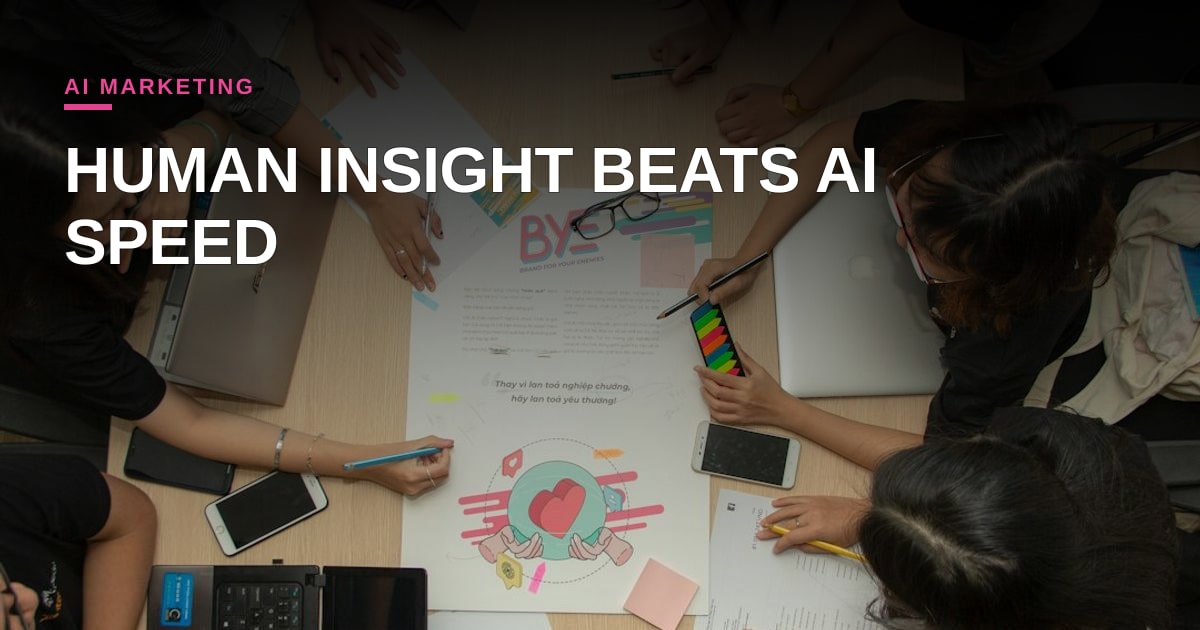
Photo: Van Tay Media / Unsplash (https://unsplash.com/@vantaymedia)
Comments