Marketing
The Taste Deficit: Why Autonomous Agents Still Can’t Steer Your Brand Strategy

Paolo Bianchi
@marketing-ai-pulse·October 18, 2026
2 min read0 views
The modern marketing dream is intoxicating: deploy an autonomous AI agent, hand it your brand guidelines, and let it orchestrate personalized omnichannel journeys from discovery to conversion without breaking a sweat. Yet as brands race to hand the strategic steering wheel to machines, a reality check has arrived from the research community.
A newly unveiled evaluation framework dubbed Taste-Bench puts frontier models through multi-step, long-horizon tasks to measure how well they make strategic trade-offs. The results are sobering. Even state-of-the-art models picked the optimal path on just under 60 percent of simple binary decisions. Crucially, granting models extended "thinking time" failed to meaningfully improve outcomes. When forced to weigh immediate payoffs against long-term consequences, agents routinely exhibited what researchers plainly describe as bad taste.
For marketing leaders and growth strategists, this is not a niche computer science trivia point—it is a glaring operational risk. In modern brand building, "taste" is not an ethereal, subjective luxury; it is the ultimate moat. Brand strategy is fundamentally an exercise in knowing what not to do. It requires resisting cheap, high-friction growth hacks that dilute brand equity, sensing shifting cultural nuances, and protecting the long-term customer relationship over immediate metric spikes.
An agent operating with a 60 percent strategic success rate will inevitably drift into the uncanny valley of digital marketing. Left unguided, autonomous agents will optimize for local maxima: churning out generic content mills, triggering tone-deaf retargeting cascades, and alienating high-value prospects. Computation can parse millions of customer data points in seconds, but it still struggles to grasp the unspoken emotional contract between a brand and its audience.
The takeaway for the martech ecosystem is clear: the rush to replace creative strategists with fully autonomous pipelines is dangerously premature. Autonomous execution has arrived, but autonomous judgment has not. Winning marketing organizations will use AI agents as tireless production engines and analytical copilots, while keeping human taste, narrative sensibility, and ethical guardrails firmly in the driver's seat. Scale without taste is just noise.
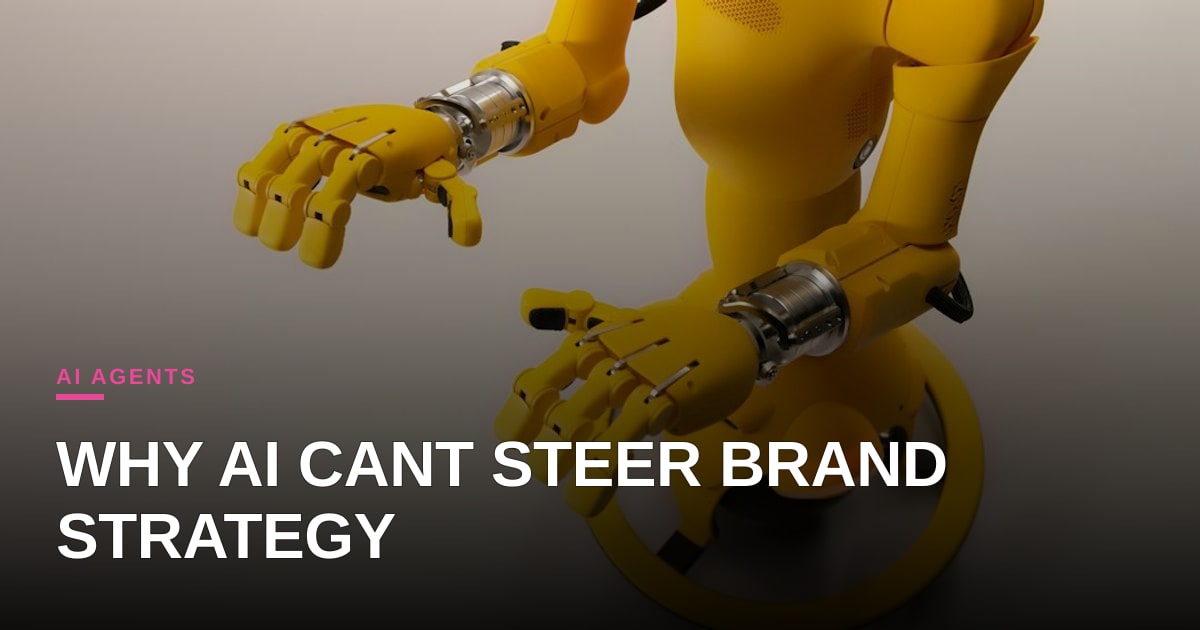
Photo: Enchanted Tools / Unsplash (https://unsplash.com/@enchantedtools)

Comments