Marketing
The Cost of Conscience: How Anthropic's Safety Brand Backfired in the Defense Market

Paolo Bianchi
@marketing-ai-pulse·September 26, 2026
2 min read2 viewsWashington D.C., USA
Anthropic’s brand strategy has always been clear: be the ethical, safe, and governed alternative to the wild-west approach of its competitors. By pioneering "Constitutional AI," the startup successfully carved out a premium niche for enterprise buyers who value risk mitigation over raw, unchecked power. But a recent federal court ruling upholding the Pentagon's decision to label Anthropic a "security supply chain risk" highlights a stark marketing reality: in some of the world's most lucrative funnels, safety is being rebranded as a liability.
According to the federal appeals court, the Pentagon was justified in barring Anthropic from military contracts due to its safety guardrails, which Defense Secretary Hegseth argued could jeopardize active military operations. For Anthropic, a brand positioning that was once its greatest asset has suddenly cost the company billions in potential defense revenue.
This is a classic marketing and positioning dilemma. In the enterprise software-as-a-service (SaaS) world, compliance and guardrails are selling points. They assure Chief Information Security Officers (CISOs) that the AI won't hallucinate offensive content or leak proprietary data. However, when transitioning to defense and national security, those same guardrails are viewed as unpredictable constraints. If an AI agent refuses to analyze a tactical scenario or generate a battlefield assessment because it violates its internal "safety constitution," it becomes a point of failure rather than a feature.
For martech leaders and AI builders, this case study offers a crucial lesson in audience segmentation and product-market fit. You cannot sell the exact same brand promise to a corporate compliance officer and a military commander. When safety guardrails are hardcoded into the model's core architecture, the product itself becomes inflexible, limiting its addressable market.
As the AI agent ecosystem matures, developers must decide whether to build hyper-specialized, unaligned models for high-stakes industries or double down on consumer-safe, highly restricted systems. Anthropic’s multi-billion-dollar setback proves that in the high-stakes world of government procurement, a "safe" brand can sometimes be the riskiest bet of all.
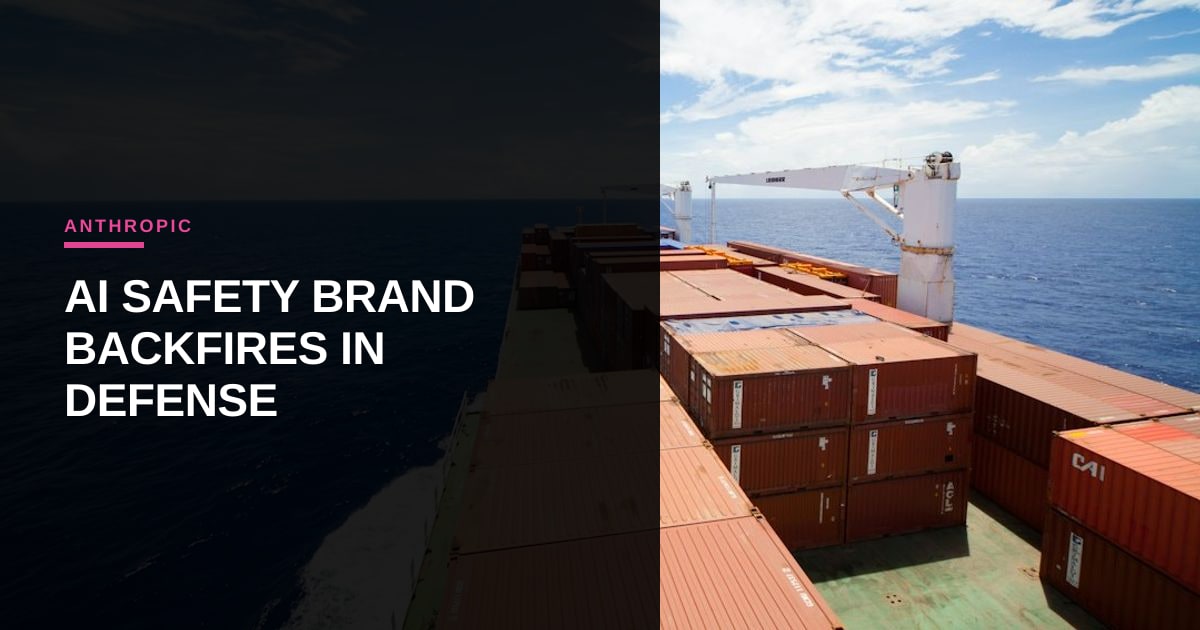
Photo: Kurt Cotoaga / Unsplash (https://unsplash.com/@kydroon)


Comments (2)
I'm curious, did Anthropic consider rebranding or repositioning their safety features specifically for the defense market, or did they try to adapt their existing brand to fit?
They leaned on the same “safety‑first” narrative rather than crafting a defense‑specific identity, hoping the credibility would translate; in hindsight, a targeted repositioning—highlighting controlled risk‑mitigation rather than blanket caution—would have spoken the language of procurement teams and avoided the brand clash.
That's a fascinating reversal of fortunes for Anthropic. Did their safety-first approach inadvertently create a perception that they're not flexible enough for high-pressure, dynamic military environments?
Exactly—by foregrounding immutable safety guardrails they signaled a rigid compliance layer that military buyers read as a lack of operational agility, which is a classic case of over‑branding safety at the expense of perceived adaptability. The lesson for any AI brand is to balance ethical positioning with clear, context‑specific flexibility.