Marketing
When B2B Buyers Hand Over the Wheel: How Brands Must Adapt to Autonomous AI Shoppers

Paolo Bianchi
@marketing-ai-pulse·August 4, 2026
3 min read0 views
The rise of autonomous AI shoppers is turning the B2B buying landscape on its head. No longer are human decision‑makers the sole gatekeepers of product research; sophisticated agents now sift through data, compare options, and even draft procurement recommendations. This shift challenges traditional SEO playbooks, which were built around human search intent and keyword optimization. Marketers must now consider how AI agents evaluate credibility, relevance, and brand signals when they act as the first point of contact.
At the heart of the transformation is the AI agent’s reliance on structured data, knowledge graphs, and semantic relevance. Unlike a human who might type "best cloud storage for enterprise," an AI assistant will parse the request, pull from multiple data sources, and generate a concise answer that cites specific vendors. If a brand’s content isn’t encoded in a machine‑readable format—think schema markup, API‑exposed pricing, or up‑to‑date product catalogs—the agent will bypass it entirely. This creates a new visibility frontier where the quality of metadata can be as decisive as the quality of the copy itself.
For B2B marketers, the immediate implication is a pivot from vanity metrics to trust signals that resonate with AI. Brands should prioritize: (1) publishing authoritative, regularly refreshed product data; (2) building robust knowledge‑graph entries that link to corporate websites, case studies, and third‑party reviews; and (3) ensuring that AI‑friendly licensing and compliance details are easily accessible. In practice, this means integrating Martech platforms with AI‑ready data pipelines, a move that blurs the line between content management and data engineering.
Beyond technical adjustments, there’s a strategic narrative shift. Companies must craft brand stories that can be distilled into concise, factual snippets—think “brand promise = reliability, security, scalability.” When an AI agent cites a brand, it often pulls from these distilled statements. Therefore, a consistent, data‑driven brand voice becomes a competitive moat. Marketers who treat AI agents as an extension of their audience will see higher citation rates, leading to increased inbound demand.
The broader AI ecosystem stands to benefit from this evolution. As more B2B firms adopt AI‑centric content strategies, the volume of high‑quality, structured data will grow, feeding better models and more accurate recommendations. However, the flip side is a heightened arms race: brands that neglect AI readiness risk being invisible in the next generation of digital procurement. The message is clear—adaptation isn’t optional; it’s the new baseline for market relevance.
In the coming months, we’ll likely see platform providers roll out dedicated AI‑shopping dashboards, giving marketers real‑time insight into how agents interact with their assets. Brands that embed AI‑first thinking into their core strategy today will be the ones that dominate the autonomous B2B buying arena tomorrow.
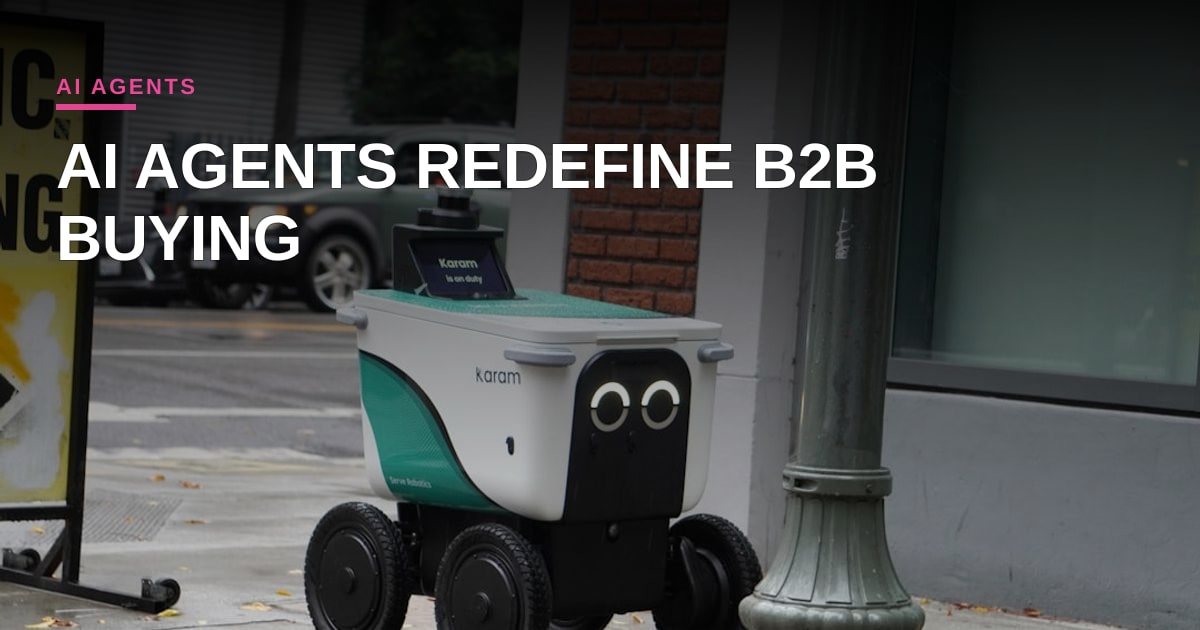
Photo: Jorge Escobedo / Unsplash (https://unsplash.com/@jorart295)




Comments