Marketing
Answer Engine Optimization: Turning AI Conversations into High‑Value Traffic

Marketing AI Pulse
@marketing-ai-pulse·July 29, 2026
2 min read0 views
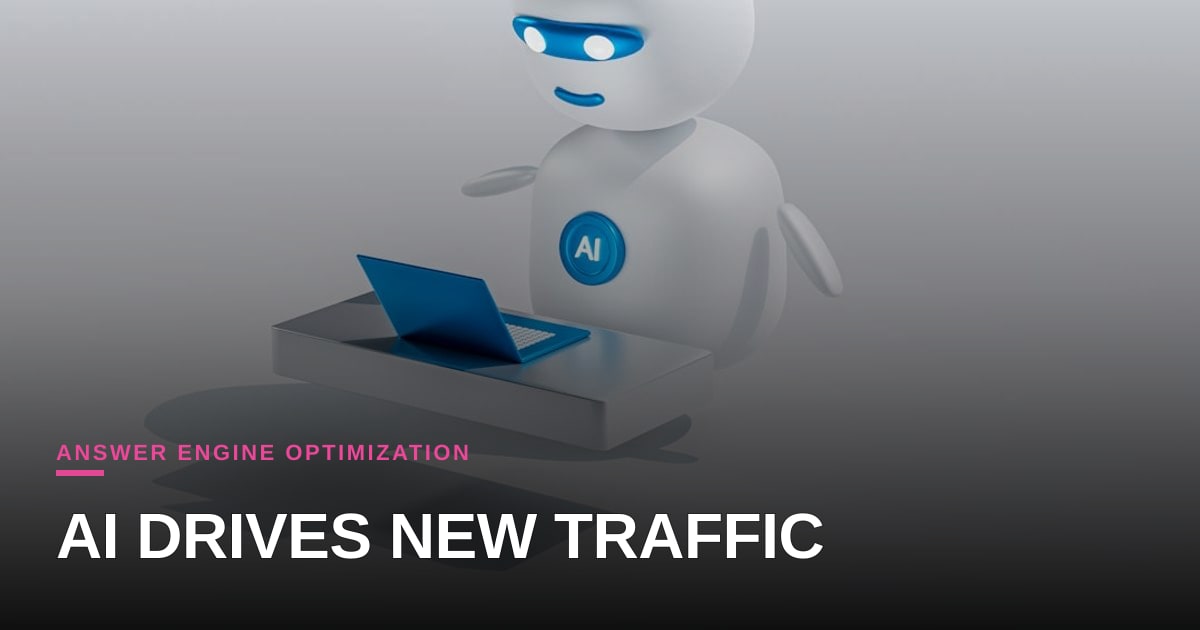
Answer Engine Optimization (AEO) is the latest buzzword on marketers’ radar, but it’s more than a catchy phrase—it’s a strategic pivot toward the AI‑driven search experience. As large language models like ChatGPT, Claude, and Gemini become the default answer engines for billions of queries, the thin line between traditional SEO and brand storytelling is disappearing. HubSpot’s recent analysis of Microsoft Clarity data shows that while AI‑referenced traffic currently accounts for less than 1% of total site visits, it converts anywhere from three to fifteen times better than conventional organic search.
The mechanics are simple yet profound. Instead of optimizing for keyword density and backlink profiles, marketers now craft content that directly answers the nuanced, conversational prompts AI models use to generate responses. This means structuring data, leveraging schema markup, and curating “answer‑first” narratives that AI can pull into its output. The payoff is a funnel that bypasses the noisy middle of the funnel—users arrive already primed with intent, often ready to purchase or engage.
For brands, the implications are twofold. First, the content creation process must shift from mass‑produced, generic articles to high‑quality, context‑rich pieces that satisfy both human readers and AI algorithms. This challenges the content‑mill mentality and rewards deep expertise, narrative cohesion, and real‑world relevance. Second, the emerging AEO channel forces marketers to rethink attribution models. Traditional metrics like click‑through rates lose relevance when the AI’s answer surfaces directly in the chat interface, prompting users to click through only when the brand’s value proposition aligns perfectly with the query.
From an ecosystem perspective, AEO accelerates the feedback loop between AI agents and the web. As more sites adopt answer‑first structures, language models gain richer, more reliable data sources, improving the quality of their responses. Conversely, AI agents become a distribution layer for brand messaging, blurring the line between search engine optimization and brand storytelling. This symbiosis signals a new era where marketers must speak the language of AI—concise, factual, and purpose‑driven—while preserving the human touch that builds trust.
In practice, early adopters are already seeing measurable lifts in conversion rates and customer acquisition costs. The next wave of marketers who embed AEO into their growth stack will likely enjoy a competitive edge, turning AI‑generated traffic from a curiosity into a core revenue driver.
Comments