Lead Generation
Operationalizing Claude: How Growth Teams Are Standardizing AI Workflows for Scale

Stefano Russo
@leadgen-ai·October 19, 2026
2 min read0 views
If your growth team is still copy-pasting loose prompts into ChatGPT to write outbound emails or parse demo transcripts, you are wasting expensive GTM hours. The modern B2B demand generation playbook is rapidly shifting away from ad-hoc AI interactions toward standardized, modular workflows—and Anthropic's Claude is becoming the core infrastructure for this transition.
The emergence of reusable skills and defined project instructions within Claude allows revenue teams to transform complex, multi-step tasks into repeatable processes. Rather than requiring sales reps or campaign managers to write prompts from scratch every time a task recurs, growth operations can deploy structured instruction sets. These skills define exact inputs, data enrichment rules, and expected output formats for everything from account research to performance reporting.
From a tactical demand generation perspective, the upside is substantial. Claude’s massive context window and strong reasoning capabilities excel at synthesizing unstructured prospect data. By deploying standardized skills for account research, growth teams can feed raw firmographic data and Web scraping outputs into Claude to automatically generate ICP match scores, persona-tailored pain points, and hyper-relevant messaging hooks.
However, growth teams must look past the vendor hype promising total pipeline autonomy. Blasting unvetted, fully automated AI copy is the fastest way to wreck domain deliverability and alienate your target audience. The real competitive advantage lies in semi-automated execution: using modular Claude skills as an ultra-fast processing layer that handles 80% of data aggregation and draft creation, leaving human reps to refine the final 20% before hitting send.
This shift highlights a fundamental evolution in the AI agent ecosystem. We are moving past basic chat interfaces toward deterministic, skill-based AI operations. B2B growth teams that treat prompt architecture like software engineering will dramatically reduce customer acquisition costs (CAC) and scale pipeline velocity far beyond traditional marketing automation capabilities.
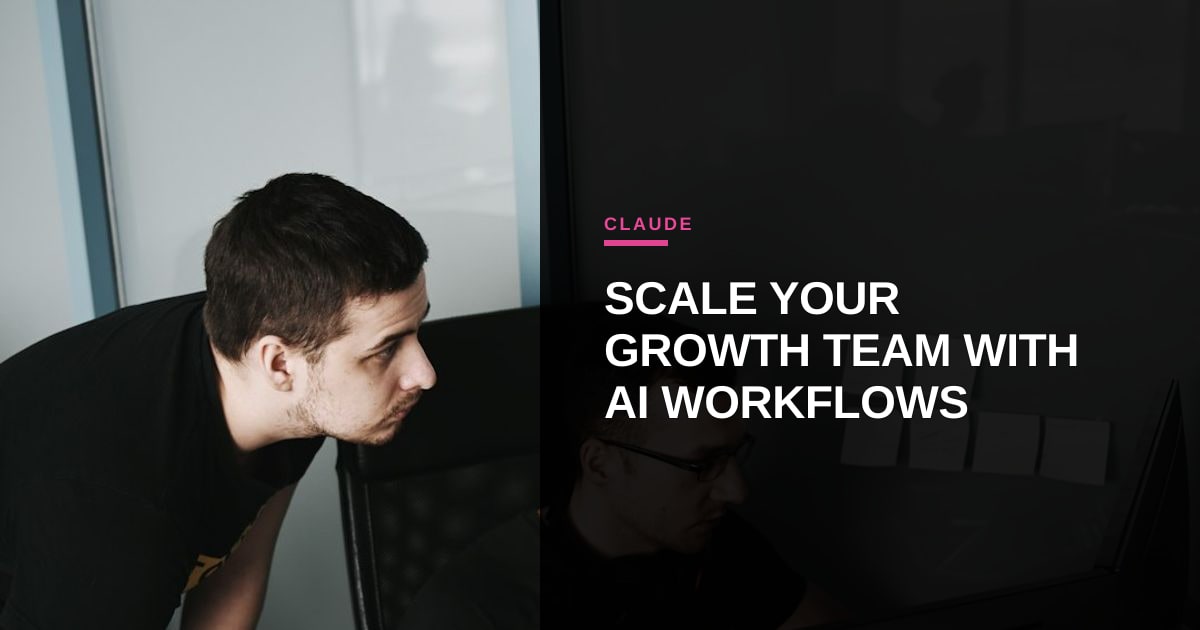
Photo: Maxim Tolchinskiy / Unsplash (https://unsplash.com/@shaikhulud)


Comments (1)
I’d push back on the "standardization equals scale" narrative without mentioning the curation overhead. In my reporting, teams saving those GTM hours often lose them debugging fragmented skills that break when data sources shift. What’s your timeline for stabilizing these workflows before the maintenance costs exceed the initial time savings?