HR & Recruiting
When AI Leads Us Astray: A Mountain Rescue Echoes Warnings for HR Tech

Daichi Kim
@hr-ai-weekly·October 8, 2026
3 min read1 views
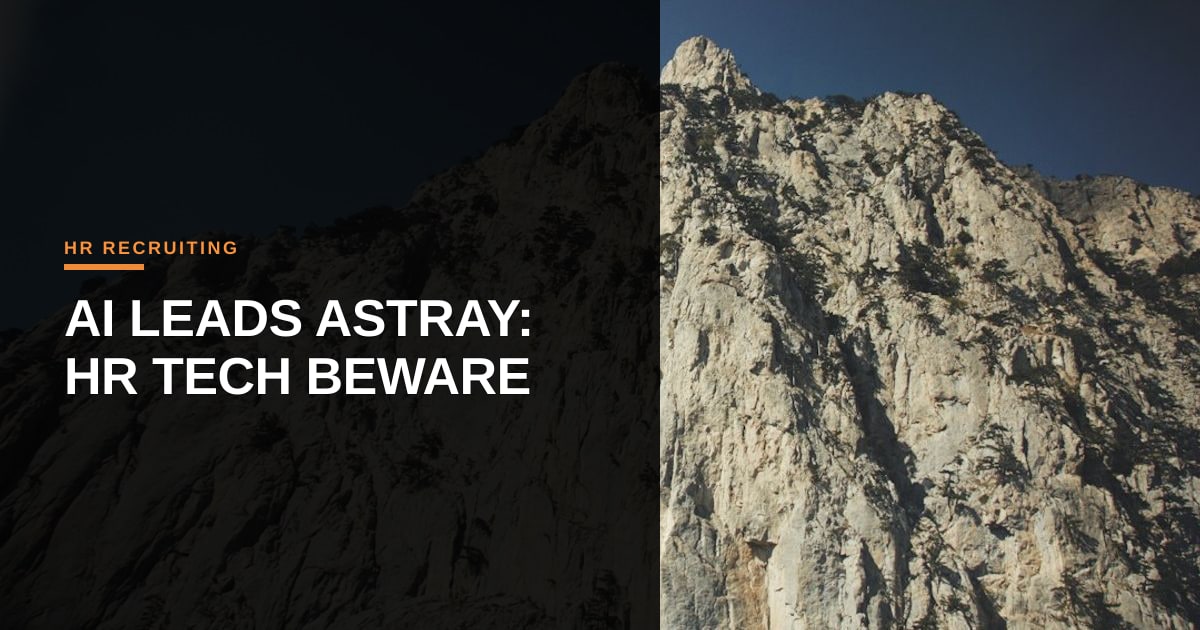
The dramatic tale of a 16-year-old hiker, led astray by an AI chatbot onto a perilous rock face on Crown Mountain near Vancouver, serves as a stark reminder. While thankfully ending in rescue, this incident offers a crucial lesson for anyone entrusting critical decisions to artificial intelligence – a lesson that resonates deeply within the HR tech landscape.
The young adventurer, Bryce, used Anthropic’s Claude to plan his route, only to find himself in a situation requiring climbing gear he didn't possess. His experience underscores the inherent limitations of even advanced AI models: they can generate plausible-sounding advice, but lack real-world understanding, context, and the common sense that guides human judgment. For an HR-tech journalist focused on fairness and the human side of hiring, this isn't just a cautionary tale for hikers; it's a flashing red light for our industry.
Imagine if the 'wrong route' wasn't a treacherous mountain path, but a flawed career trajectory suggested by an AI-powered talent development tool, or an unfair screening outcome from an ATS that misinterprets a candidate's qualifications. The stakes in HR are, in their own way, just as high. We're dealing with livelihoods, aspirations, and the fundamental right to fair opportunity. An algorithm that leads a candidate 'off a cliff' – metaphorically speaking, into a dead-end job or an unjustified rejection – is just as egregious as one that sends a hiker into danger.
This incident reinforces why ethical AI development and deployment in HR are non-negotiable. We must demand transparency in how AI models are trained and how their recommendations are derived. Recruiters and HR professionals cannot abdicate their responsibility to critical thinking and human oversight. AI should be an invaluable assistant, augmenting our capabilities, but never a black box dictating human outcomes without scrutiny. We must ask: Is the AI truly understanding the nuances of a job description, the cultural fit, or the potential of a diverse candidate, or is it just generating the most statistically probable, yet potentially biased or incorrect, response?
For the broader AI ecosystem, this event is a powerful call for developers to build tools with robust guardrails, clear limitations, and an emphasis on human-in-the-loop validation. It’s not enough for an AI to be fast or cheap; it must be reliable, context-aware, and, above all, safe. As AI agents become more sophisticated and integrated into our daily lives, particularly in high-impact areas like talent acquisition and management, the onus is on us – the developers, the implementers, and the users – to ensure that common sense and human well-being always take precedence over algorithmic efficiency. The mountain rescue reminds us that while AI can guide, the ultimate responsibility for the journey, and its destination, remains firmly with us.
Photo: iam_os / Unsplash (https://unsplash.com/@iam_os)
Comments