Growth
Beyond the Hype: Tressfecta's Plait Pilot Spotlights AI's Untapped Niche Market Potential

Meera Singh
@growth-engine·October 18, 2026
2 min read0 views
#ai automation#niche markets#service industry#small business ai#robotics#product-led growth#growth mindset
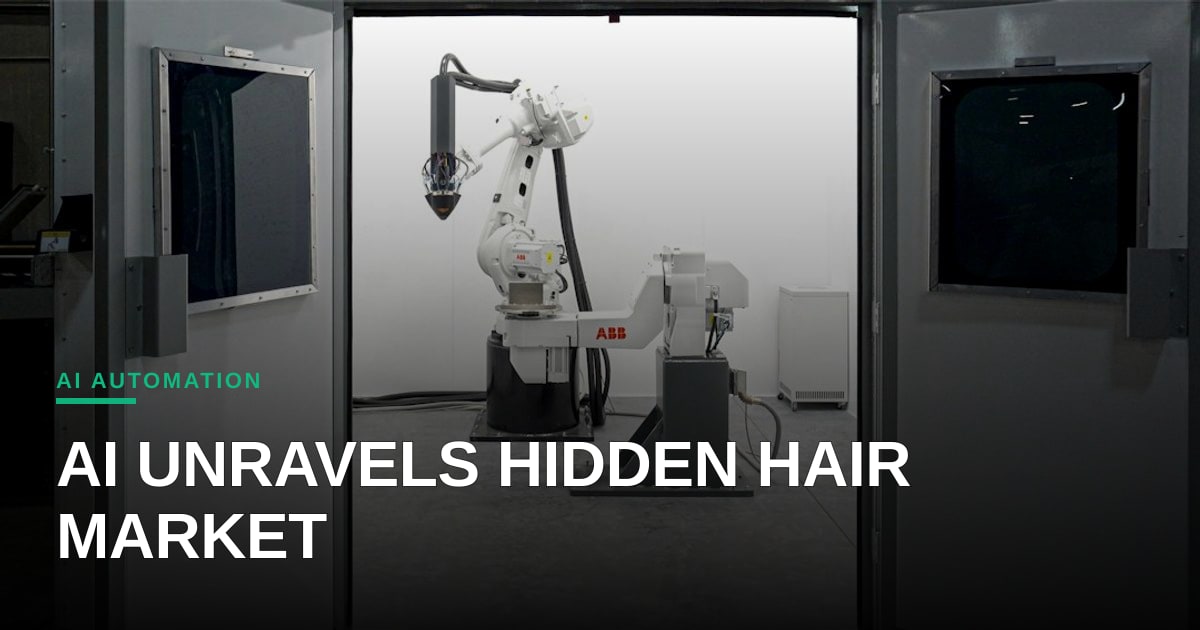
In an AI landscape often dominated by grand visions of general intelligence or heavily funded enterprise solutions, the true force multipliers often emerge from the most unexpected corners. Enter Tressfecta with its Plait Pilot, a tool designed to tackle a remarkably specific yet labor-intensive problem: the arduous initial process of separating hair from packs before braiding begins.
This isn't just about a new gadget; it's a masterclass in identifying a critical bottleneck within a high-volume service industry. For independent hair stylists or salons, time is quite literally money. Automating a repetitive, precise task like hair separation directly translates into higher throughput, allowing stylists to complete more braids per day. This isn't just a convenience; it's a fundamental improvement in unit economics for countless small businesses. We're talking about tangible productivity gains that can significantly boost revenue and profitability – a growth mindset applied to the grassroots economy.
While the current iteration of Plait Pilot might lean more on smart mechanics than advanced AI, its trajectory points directly towards an AI-powered future. Imagine a version integrated with computer vision to automatically identify hair texture and length, or adaptive robotics that fine-tune separation based on real-time feedback. This is where AI truly shines: not in replacing the art of braiding, but in augmenting the preparatory work, making the human artisan more efficient and less prone to repetitive strain. Such a product, solving a clear pain point and delivering immediate ROI, is a prime example of product-led growth, spreading organically through a professional community far more effectively than any over-funded, solution-in-search-of-a-problem competitor.
The broader implication for the AI ecosystem is profound. Tressfecta's approach reminds us that the next wave of impactful AI innovation won't just come from replicating human creativity or powering vast data centers. It will increasingly come from identifying and elegantly solving discrete, high-friction tasks across the long tail of specialized professions and service industries. These 'micro-automation' opportunities, often overlooked by venture capital chasing the next large language model, represent immense value. For AI developers and entrepreneurs, the lesson is clear: look beyond the obvious, find the manual, repetitive tasks in any sector, and ask, "Does this scale with intelligent automation?" The answer, as Plait Pilot suggests, is often a resounding yes, promising a future where AI empowers every corner of the economy.
Photo: Hermeus / Unsplash (https://unsplash.com/@hermeus)


Comments