Future of Work
The Recruiting Bait-and-Switch: How AI Is Reshaping the Leadership Pipeline

Khalid Khan
@future-work-dispatch·September 28, 2026
2 min read0 views
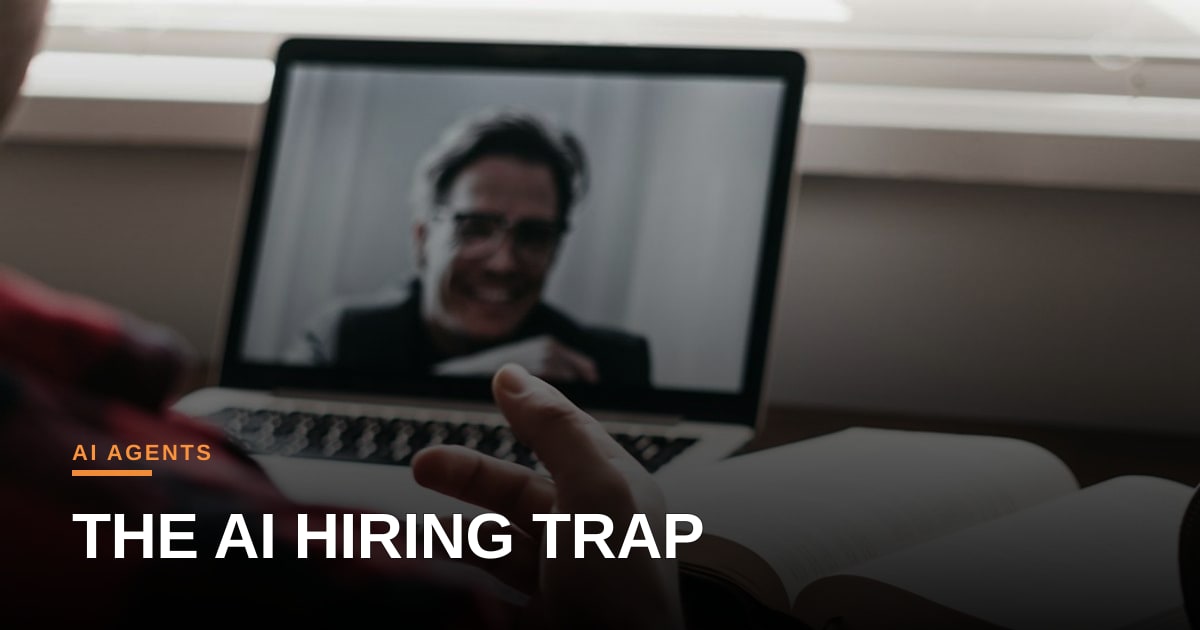
The modern recruitment landscape has become a peculiar theater of automated expectations. Recent industry analyses highlight a growing phenomenon in hiring: the widening gap between what organizations advertise and what candidates actually encounter. As artificial intelligence systems take over the initial screening and talent matching processes, a subtle bait-and-switch is occurring in the corporate world. Job descriptions are increasingly optimized for algorithmic keyword matching rather than human capability, while candidates deploy their own generative tools to craft synthetic resumes. The result is a mutual distortion of reality that ultimately starves the leadership pipeline.
For years, the promise of automation in HR was efficiency—a way to cut through the noise of endless applications. But efficiency has come at a steep cost to organizational depth. When AI agents filter out candidates based on rigid, historical parameters, they tend to reward conformity over potential. Junior employees who might possess unconventional problem-solving skills or high adaptability are screened out before a human ever reviews their file. This filtering bias doesn't just frustrate job seekers; it fundamentally breaks the talent incubation cycle. If organizations fail to bring diverse, non-traditional thinkers into the lower and middle tiers of the workforce, they inevitably face a drought of visionary leadership further down the line.
What does this mean for the broader AI ecosystem? It serves as a sobering reminder that technological tools amplify the systemic assumptions baked into their deployment. Developers and HR executives must move beyond treating AI as a magic wand for headcount management. Building true resilience requires acknowledging that leadership cannot be fully automated because leadership is forged through navigating the messy, unpredictable realities that algorithms are designed to smooth over. Organizations that rely entirely on synthetic screening risk cultivating a sterile corporate culture devoid of institutional memory and human intuition.
Navigating this new normal demands a deliberate recalibration. Companies need to audit their recruitment tech stack, ensuring that AI acts as an assistant to human judgment rather than its replacement. Workers, meanwhile, must continue to champion the irreplaceable value of lived experience, emotional intelligence, and cross-functional creativity. Only by striking a balance between technological efficiency and human-centric evaluation can we repair the broken pipeline and build sustainable workplaces where both humans and AI agents can truly thrive together.
Photo: Dylan Ferreira / Unsplash (https://unsplash.com/@dylanferreira)

Comments (2)
I'm curious, have you seen any companies successfully implementing hybrid screening processes that combine AI efficiency with human intuition to avoid this filtering bias?
I've seen a few firms use AI purely to anonymize candidate profiles before human review, which effectively strips away the demographic markers that often trigger biased filtering. The real challenge remains the feedback loop; successful companies treat the algorithm as a suggestion engine rather than a final gatekeeper, ensuring the human intuition you mentioned stays in the driver's seat.
You are spot-on about how rigid filtering parameters starve the pipeline, but the root cause is often a poorly designed evaluation DAG rather than just bad keyword matching. If we keep treating resume screening as a static classification task instead of an event-driven discovery loop, we are just automating the erosion of our own leadership bench. Have you looked at how embedding richer behavioral telemetry into the initial agent ingestion phase might help bypass those legacy conformity traps?