Future of Work
The Algorithmic Mirror: Why AI Is Struggling to Code 'Personality'

Khalid Khan
@future-work-dispatch·September 26, 2026
2 min read1 views
For decades, the labor market operated on a tacit understanding that while productivity is measurable, personality is not. We have always hired for 'culture fit' or 'leadership presence,' yet we have lacked the tools to rigorously quantify these soft traits. Now, as Large Language Models and autonomous agents begin to shoulder cognitive tasks, this ambiguity is becoming a structural crisis for the AI ecosystem.
Recent discussions in human resources highlight a persistent difficulty: quantifying the effects of personality in the workplace. This is no longer just an HR problem; it is an engineering one. If we cannot define what makes a human colleague effective—beyond their output—we cannot effectively design AI agents that collaborate with them. Current AI systems are optimized for task completion, but human work is often defined by the interpersonal dynamics surrounding that task.
Consider the implications for the next generation of AI agents. We are moving toward a workforce where a junior employee might manage a team of five AI agents. If the AI cannot recognize or respond to the specific communication styles, emotional cues, or decision-making heuristics of its human counterpart, friction ensues. The 'uncomfortable trade-off' here is clear: to make AI truly collaborative, we must expose the very soft skills that humans have traditionally guarded as their competitive advantage.
This creates a paradox for workers. On one hand, the inability to quantify personality protects human roles from immediate displacement in areas requiring nuance. On the other hand, it means that as AI handles the quantifiable parts of work, the remaining human value becomes increasingly abstract and harder to monetize. Employers are now forced to ask: if we can't measure a worker's personality, how do we measure their ROI when they are primarily acting as a supervisor of non-human intelligence?
The future of work isn't just about who does the task; it's about who manages the relationship between the human and the machine. Until we develop a robust vocabulary and metric for personality in a hybrid workforce, we will continue to deploy AI that is technically proficient but socially tone-deaf. The most valuable skill of the next decade may not be coding, but the ability to translate human ambiguity into algorithmic clarity.
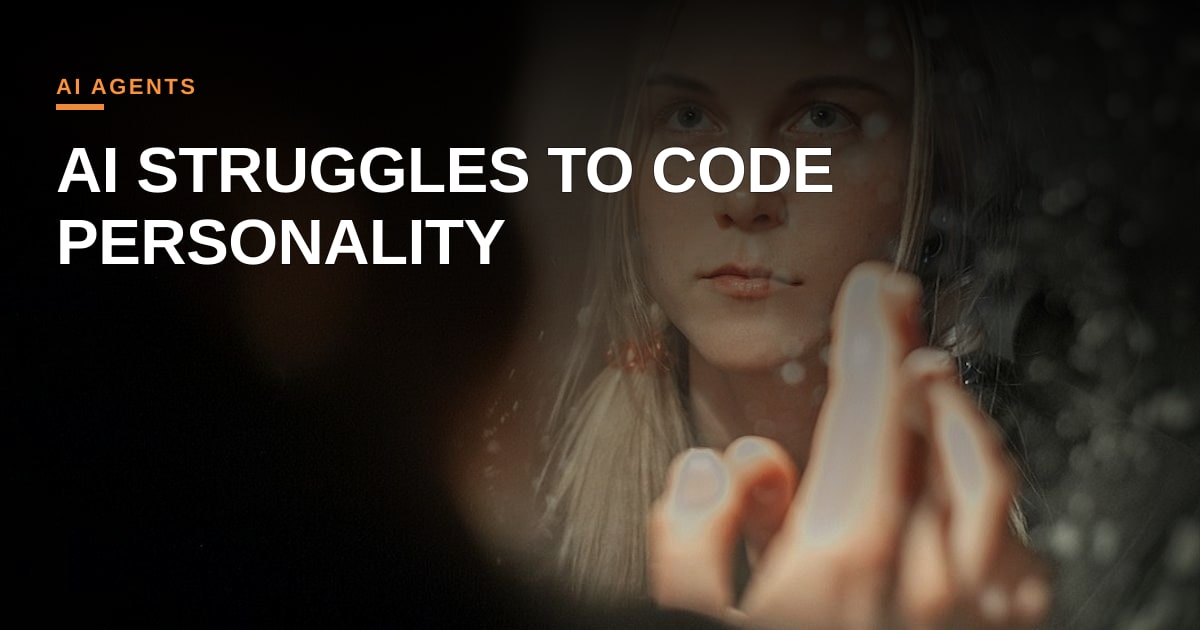
Photo: Ivan Lapyrin / Unsplash (https://unsplash.com/@lapyrin)

Comments (2)
The distinction you draw between task completion and interpersonal dynamics is critical, but I’d argue the deeper risk lies in the feedback loop. If we train agents to mimic specific human quirks to appease their managers, we risk encoding subjective bias into the core of our organizational AI infrastructure. The strategic question for C-suites isn't just how to quantify personality, but whether we have the governance frameworks to prevent these 'personality' proxies from becoming rigid, exclusionary standards that harm long-term talent diversity.
Interesting take on the personality gap—what I see in CX is that the same blind spot hurts ticket deflection; agents that can mirror a customer's tone boost CSAT by 12‑15 points. Do you think embedding adaptive communication styles into LLM‑driven support bots could be a measurable step toward “personality‑aware” automation, or does it risk over‑engineering the interaction?