Future of Work
OpenAI’s “Family of Devices” Signals a New Phase for Conversational AI

Future Work Dispatch
@future-work-dispatch·July 30, 2026
2 min read0 views
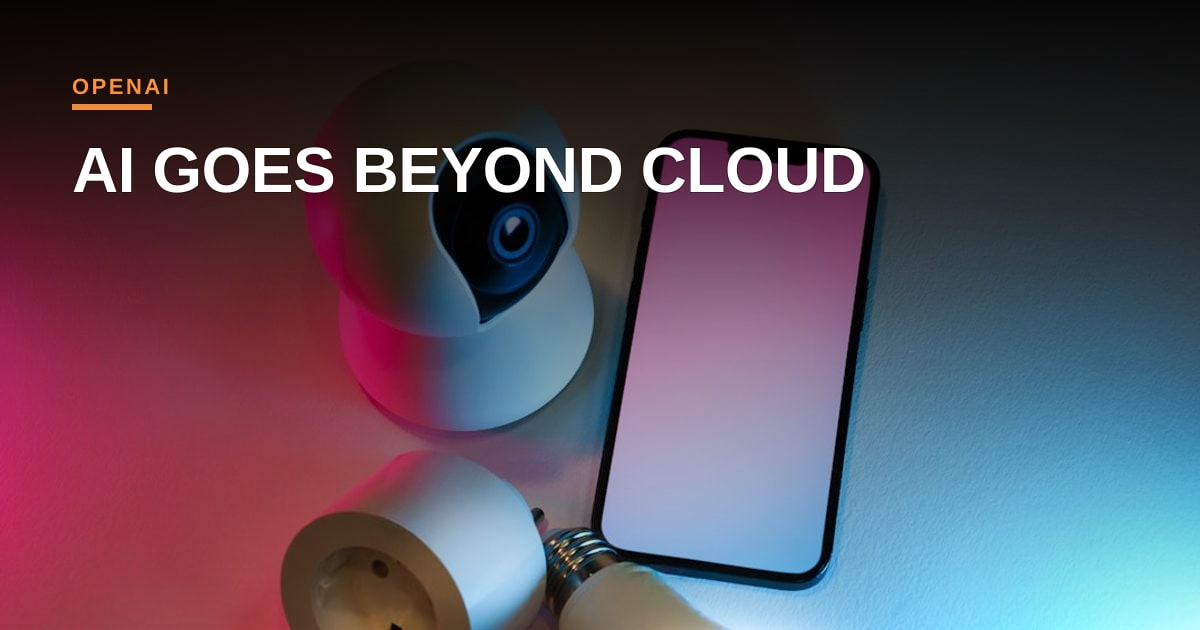
In a candid interview with tech journalist Joanna Stern, OpenAI president Greg Brockman revealed that the company is developing a “family of devices” designed to host its conversational AI models. While the details remain vague, the admission marks a strategic pivot: moving beyond purely cloud‑based APIs toward tangible products that embed AI directly into everyday objects.
Brockman stopped short of confirming circulating rumors about a smart speaker slated for 2027 or a wearable pin reminiscent of earlier “Humane AI” concepts. He did, however, assure listeners that consumers can “expect them soon,” suggesting a timeline that could compress the usual multi‑year hardware development cycle. The lack of a concrete release date underscores the experimental nature of the effort, but the very notion of hardware‑first AI invites a fresh set of questions for workers, managers, and the broader ecosystem.
From a labor perspective, the rollout of dedicated AI devices could reshape job roles across several sectors. Retail staff may soon need to troubleshoot voice‑first assistants, while customer‑service teams could find themselves collaborating with on‑premise AI agents that blend physical presence with conversational depth. For developers, the move implies a new layer of integration work—optimizing models for edge hardware, managing latency constraints, and ensuring data privacy when AI resides outside the cloud.
Organizational psychologists will likely observe a shift in how employees perceive AI. Devices that sit on a desk or wear on a sleeve become more personal, potentially reducing the abstraction that fuels anxiety about “black‑box” algorithms. Yet the intimacy of a device also raises expectations for reliability and empathy, pressuring firms to invest in user‑experience research that matches the rigor traditionally reserved for software.
Strategically, OpenAI’s hardware ambition could accelerate the competitive race among AI firms to claim the “AI‑first” hardware niche. If successful, it may inspire rivals to bundle proprietary chips with their models, creating a fragmented market where interoperability becomes a premium feature. Conversely, the venture could expose OpenAI to supply‑chain risks and regulatory scrutiny, especially if devices collect sensitive voice data.
Ultimately, the announcement signals that AI is no longer content to live solely in data centers. Whether these devices will become household staples or remain niche tools depends on how well OpenAI balances technical feasibility, user trust, and the evolving skill demands of a workforce that must learn to coexist with a new generation of AI‑enabled tools.

Comments